
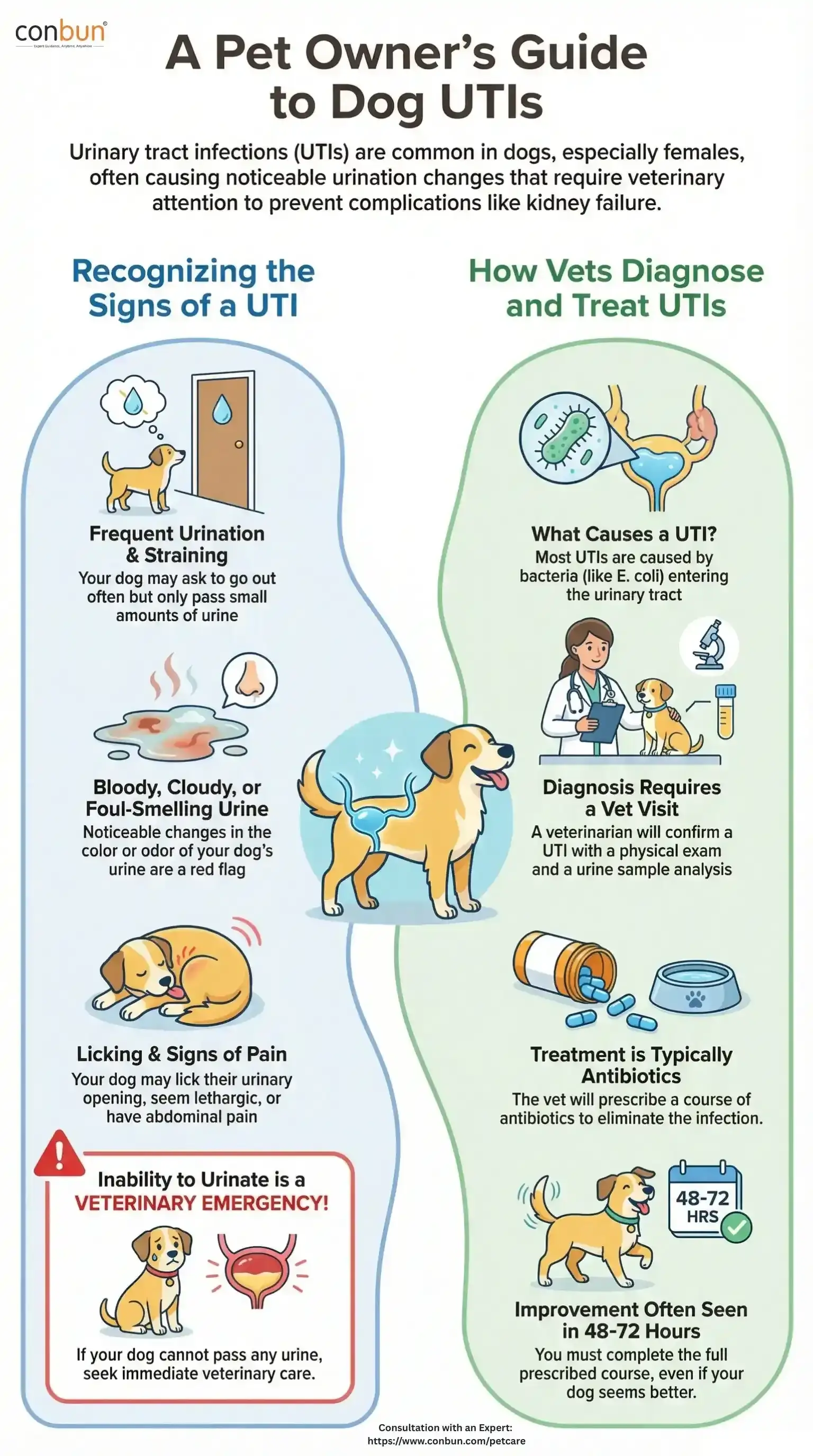
Urinary tract infections (UTIs) are a frequent concern in veterinary practice, with studies indicating that up to 27% of dogs may experience such an infection during their lifetime. While most UTIs are effectively managed with standard medications, dosages, and schedules, infections that extend to the kidneys (pyelonephritis) or prostate (prostatitis) can present significant treatment challenges. Additionally, prescribing appropriate antibiotics for pets with existing kidney disease can be complicated by reduced drug clearance. A thorough understanding of drug pharmacokinetics (PK) and pharmacodynamics (PD) is crucial for determining the most effective antibiotic therapy. This involves selecting the right antibiotic, along with the correct dose, frequency, and duration of treatment.
Recognizing the Signs of a UTI
Common clinical signs associated with urinary tract infections include:
- Dysuria: Difficulty or pain during urination.
- Hematuria: Blood in the urine.
- Pollakiuria: Increased frequency of urination.
- Stranguria: Straining to urinate.
Pathophysiology of UTIs
The vast majority of UTIs are caused by pathogenic bacteria, though fungal or viral infections are rare possibilities. Typically, bacterial lower UTIs occur as bacteria ascend from the external genitalia and urethra. Less frequently, bacteria can travel through the bloodstream and colonize the urinary tract. The body possesses several natural defense mechanisms to prevent UTIs, including complete and regular voiding of the bladder, along with inherent properties of urine like high osmolality and antimicrobial solutes, which create an inhospitable environment for microbes. Anatomical barriers and mucosal defenses further impede the adherence of harmful bacteria to the urothelium.
When pathogenic bacteria invade, they can increase the permeability of the urothelium, allowing inflammatory substances to penetrate the subepithelium and triggering the release of inflammatory cytokines. This leads to inflammation and pain, manifesting as the aforementioned signs of UTI. Successfully eradicating the causative organism allows the urothelium to return to its normal permeability and integrity.
Classifying Urinary Tract Infections
Urinary tract infections can be categorized in several ways:
- Uncomplicated UTI: This refers to sporadic bacterial cystitis in a healthy patient with normal urinary tract anatomy and function.
- Complicated UTI: This type occurs in patients with functional or anatomical abnormalities of the urinary tract, or those with risk factors for persistent or recurrent infections, treatment failure, or where treatment is proving difficult. Such conditions include immunosuppression (due to illness or medication), diabetes mellitus, hyperadrenocorticism, kidney disease, prostatitis, pregnancy, urinary incontinence, and altered bladder neurogenic function.
- Recurrent UTI: Infections that return require further investigation to determine if they are due to reinfection, relapse, or are refractory.
- Reinfection is defined as the return of a UTI caused by a different organism within 6 months of completing antibiotic therapy.
- Relapsing UTI occurs when the same organism is cultured again within 6 months of discontinuing antibiotic therapy. This suggests an underlying condition that allows for recolonization or prevents complete eradication, necessitating further diagnostic evaluation.
- Refractory UTI is diagnosed when a urine culture remains positive during appropriate antibiotic therapy, as determined by in vitro susceptibility testing. Potential causes include decreased renal drug elimination (leading to lower urine drug concentrations), inappropriate drug dosage or schedule, poor drug bioavailability (e.g., due to compounding issues or gastrointestinal disease), or poor owner compliance. In some instances, a drug may appear effective in vitro but not achieve the same effect in vivo for reasons yet unknown.
Diagnostics and Data for Antibiotic Selection
Pharmacokinetics and Pharmacodynamics (PK/PD)
Understanding PK/PD is vital for effective antibiotic therapy. Pharmacokinetics (PK) describes how the body processes a drug, encompassing absorption, distribution, metabolism, and excretion. Pharmacodynamics (PD) refers to the drug’s effect on the body, including its impact on microorganisms in the case of antibiotics.
Alterations in PK can occur due to issues with drug absorption (e.g., severe gastrointestinal disease), metabolism (e.g., liver dysfunction), protein binding (e.g., uremia, hypoproteinemia), and excretion (e.g., liver or kidney failure). The PD of an antibiotic is assessed clinically through in vitro culture and susceptibility testing.
Urine Culture and Sensitivity Testing
Ideally, all suspected UTI cases should have a urine sample collected via cystocentesis and submitted for aerobic culture and antibiotic susceptibility testing. Urine culture is considered the gold standard for diagnosing UTIs.
Two primary methods exist for determining antibiotic susceptibility: disk diffusion and serial dilution. Disk diffusion is generally considered less reliable as it does not provide the Minimum Inhibitory Concentration (MIC), whereas antimicrobial dilution methods do yield the MIC and are the preferred approach. In serial dilution, varying concentrations of an antibiotic are added to a liquid medium inoculated with the bacterial isolate. The MIC is the lowest antibiotic concentration that prevents detectable bacterial growth.
False-negative results can occasionally occur due to improper urine storage or slow organism growth (e.g., with Corynebacterium species). To prevent inaccuracies, urine should be processed for quantitative culture immediately after collection, as bacterial counts can significantly decrease after 24 hours of refrigerated storage. If immediate processing isn’t possible, a urine transport tube is recommended.
CLSI Classification
The Clinical Laboratory Standards Institute (CLSI) establishes breakpoints for classifying isolates as susceptible, intermediate, or resistant, based on drug PK and PD data. These classifications consider factors like the peak drug concentration (Cmax) achieved with a standard dose and route of administration relative to the isolate’s MIC. In some cases, CLSI breakpoints for UTIs are derived from infections in other organ systems or extrapolated from human medicine.
For drugs lacking specific UTI breakpoints, an “intermediate” classification may still indicate potential efficacy, especially if urine drug concentrations are expected to be higher than plasma concentrations. When using urine culture and susceptibility results for pyelonephritis treatment, plasma breakpoints are generally recommended over urine breakpoints.
Urine Drug Concentration
Many antibiotics are primarily excreted in the urine, achieving concentrations significantly higher than in plasma. Evaluating the urine drug concentration against the isolate’s MIC is crucial for predicting the likelihood of bacterial eradication. Table 2 in the original article provides observed urine concentrations of various antibiotics at specified dosages in healthy animals.
Investigating urine antibiotic concentrations in veterinary patients with kidney disease is an ongoing area. A reduced glomerular filtration rate (GFR) can decrease drug excretion, leading to lower urine concentrations. In polyuric patients, further dilution can occur due to increased daily urine volume. Diminished GFR can also result in higher plasma drug concentrations, potentially causing adverse effects, particularly with drugs that are significantly renally eliminated. Drugs primarily eliminated by the liver may be less affected by decreased GFR. However, uremic toxins and hypoproteinemia common in kidney disease can alter drug protein binding and affect PK/PD.
Antibiotics for Prostatitis
The protein binding and lipid solubility of an antibiotic influence its distribution within the body. Highly lipophilic drugs can readily cross cell membranes and penetrate tissues, making them most effective for treating prostatitis. The blood-prostate barrier can impede the passage of many water-soluble antibiotics, such as beta-lactams. In the early stages of prostatitis, this barrier may be compromised, allowing water-soluble antibiotics to reach the infection site. However, once initial inflammation subsides, the barrier is restored, and these antibiotics may no longer achieve therapeutic concentrations within the prostate. Lipophilic drugs like fluoroquinolones, sulfonamides, and macrolides can achieve effective concentrations in the prostate, but the choice should always be guided by urine culture and susceptibility results.
Antibiotic Selection Based on UTI Classification
Empiric Antibiotic Selection
The increasing prevalence of antimicrobial resistance makes empiric antibiotic selection challenging, especially in patients with a history of prior antibiotic treatment.
Uncomplicated UTI
Commonly recommended antibiotics for uncomplicated UTIs include amoxicillin, cephalosporins, and trimethoprim-sulfonamide. While empirical treatment is often successful, repeated treatment without culture and susceptibility results increases the risk of choosing an inappropriate antimicrobial, leading to potential adverse effects and the selection of resistant bacteria.
Complicated & Recurrent UTI
Antibiotics for complicated UTIs should never be selected empirically without culture and susceptibility results. Management of pyelonephritis, prostatitis, and relapsing or recurrent UTIs is often unsuccessful without therapy guided by culture and susceptibility data. However, initial therapy should be initiated while awaiting these results. Rational choices for initial treatment of complicated UTIs include amoxicillin, fluoroquinolones, or trimethoprim-sulfonamide.
Antibiotic Selection Based on Urine Drug Concentration
When utilizing urine drug concentration data, it’s important to consider whether a drug is time-dependent or concentration-dependent.
Time-Dependent Drugs
Beta-lactams, cephalosporins, sulfa drugs, tetracyclines, and chloramphenicol are examples of time-dependent drugs. Their effectiveness is maximized when the drug concentration at the site of infection exceeds the isolate’s MIC for 50% to 75% of the dosing interval. Drug elimination curves, often found in product inserts and pharmacology texts, can help determine appropriate dosing and frequency to meet these criteria. The plasma drug elimination curve and renal elimination rate can serve as proxies to predict the urine drug concentration curve.
While less data exists on the direct correlation between urine drug concentration and clinical efficacy, some sources suggest that urine concentration, rather than plasma concentration, is key for bacterial eradication. To ensure tissue or plasma drug concentrations consistently exceed the MIC, administering the antibiotic as a continuous IV infusion may be beneficial for critically ill patients, such as those with urosepsis or compromised immune systems.
Concentration-Dependent Antibiotics
The efficacy of concentration-dependent antibiotics, such as fluoroquinolones and aminoglycosides, is best predicted by the Cmax relative to the isolate’s MIC. These drugs are typically most effective when the Cmax is at least 8- to 10-fold higher than the MIC and are often administered once daily. Comparing the drug concentration’s area under the curve (AUC) to the MIC is another evaluation method. While a general recommendation for an AUC/MIC ratio of greater than 125 to 250 exists, some studies indicate effectiveness with ratios as low as 40. The dosage for these antibiotics is usually chosen to achieve a high peak urine concentration well above the MIC. Once-daily administration is generally acceptable and can improve owner compliance, but may not align with antibiotic stewardship principles for uncomplicated lower UTIs if less potent alternatives are available.
Duration of Therapy
The ideal duration of antibiotic therapy for uncomplicated and complicated UTIs remains undefined. While many textbooks suggest 10–14 days for uncomplicated UTIs and 4–8 weeks for complicated cases, these recommendations lack robust evidence and are often shorter in human medicine.
The International Society for Companion Animal Infectious Diseases (ISCAID) Antimicrobial Working Group recommended 7 days or fewer for uncomplicated UTIs, mirroring human treatment durations of 3–7 days. For complicated UTIs, they suggested up to 4 weeks, compared to 1–3 weeks in humans. Recent studies comparing short-duration (3 days) versus long-duration (10 or 14 days) antibiotic therapy for uncomplicated UTIs in dogs showed non-inferiority in bacterial cure rates. However, these studies compared different drugs, precluding definitive conclusions on optimal treatment times for specific medications. A systematic review in 2015 found insufficient evidence to establish evidence-based guidelines for UTI duration in small animals, highlighting the need for further research.
Monitoring Response to Therapy
While simple, uncomplicated UTIs may not require intensive monitoring, patients with complicated, relapsing, or recurrent infections demand close observation. A recommended protocol for monitoring these cases includes:
- Recheck urine culture 5 to 7 days into antibiotic therapy: This confirms the efficacy of the prescribed dose and frequency against the isolated organism. It may also detect additional isolates missed in the initial culture. Any bacterial growth at this stage indicates treatment failure, necessitating a re-evaluation of the antibiotic choice, dose, and frequency.
- Recheck urine culture 3 days before discontinuing therapy: This optional step verifies a negative culture before stopping antibiotics. Positive growth suggests a refractory infection or new inoculation, requiring investigation for underlying causes like urolithiasis, anatomical abnormalities, or neoplasia. Treatment should be adjusted accordingly.
- Recheck urine culture 7 days after discontinuing antibiotic therapy: Positive growth prompts an investigation into the causes of relapse or reinfection.
Curing complicated, relapsing, recurrent, and refractory UTIs can be challenging. However, a strong understanding of drug PK/PD and potential alterations in the animal’s metabolism and excretion can significantly improve the chances of successful treatment.
Summary
Established guidelines for appropriate antibiotic dosing in animals with kidney disease are lacking. Therefore, a solid grasp of pharmacology and the PK/PD profile of the prescribed drug is essential for creating a successful antibiotic regimen with minimal risk of adverse effects. Whenever possible, for patients with kidney disease, avoid drugs with a narrow safety margin and significant renal elimination (e.g., fluoroquinolones in cats, aminoglycosides). Instead, opt for alternative drugs (based on susceptibility results) that undergo hepatic elimination or possess a wider safety margin.
The International Society for Companion Animal Infectious Diseases (ISCAID) Antimicrobial Working Group Guidelines for Treatment of Urinary Tract Infections provide valuable insights and can be accessed at iscaid.org/wp-content/uploads/2013/10/Urinary-guidelines.pdf.
While comprehensive evidence-based guidelines for treating UTIs in small animals are still developing due to limitations in well-designed studies, this approach offers a logical framework for managing these infections. The utility of urine drug concentrations in treatment decisions remains debated, but available data suggests they can play a role in formulating effective antimicrobial prescriptions. In the absence of individual patient drug monitoring, GFR testing, and urine drug bactericidal assessments, these principles provide a basis for educated therapeutic decisions, acknowledging areas where further understanding is needed.