
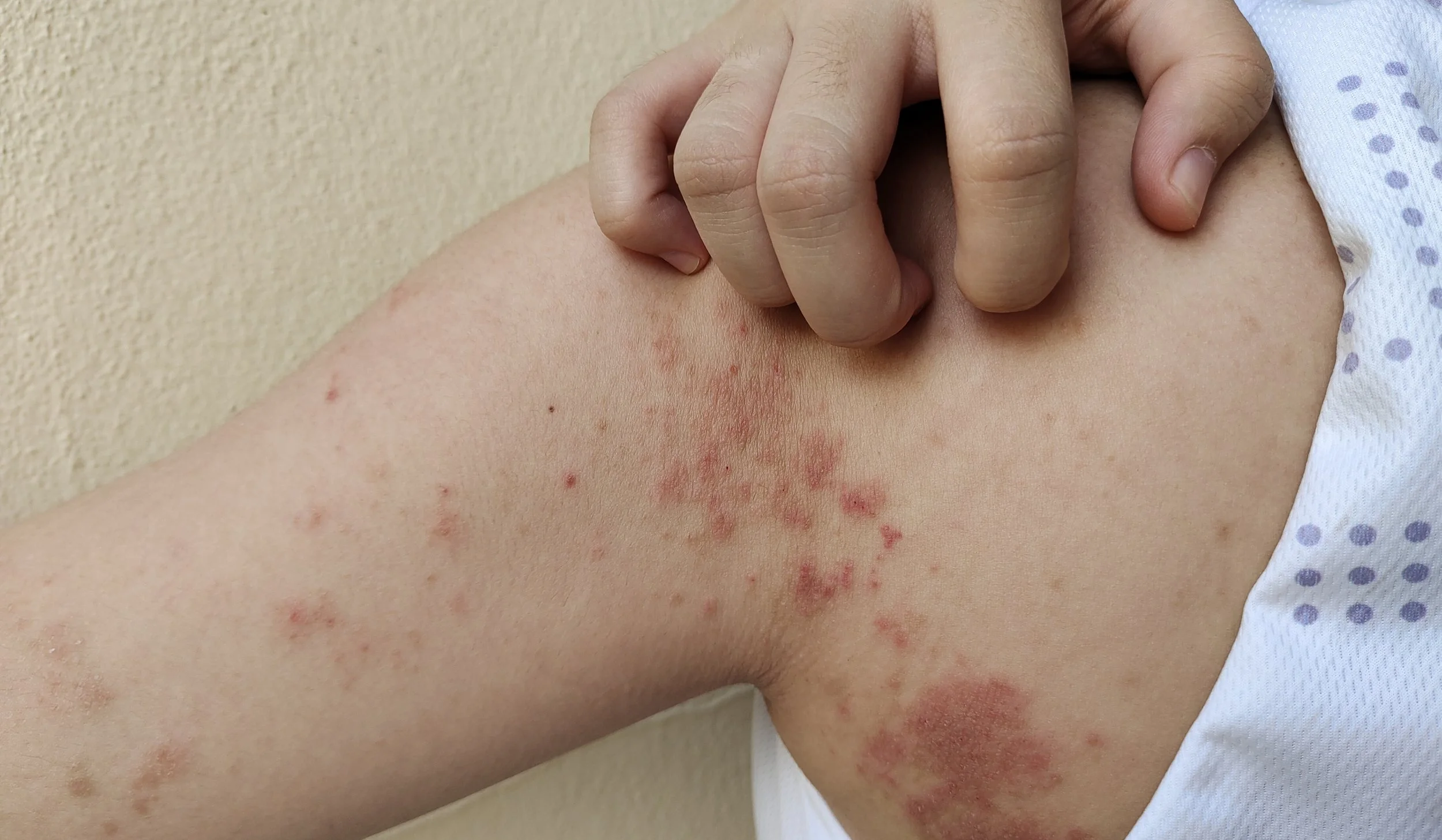
When your dog’s immune system, designed to protect them from external threats, mistakenly attacks their own body, it can lead to a range of serious health issues. Autoimmune disorders affecting the skin can manifest as painful, blistering lesions. These conditions arise when the outer epidermis and inner dermis layers of the skin separate, creating a space where blisters and pustules can form.
As these fragile lesions develop, they can erode, crust over with debris and fluid, and lead to hair loss in the affected areas. Secondary bacterial infections are also a common complication, further compromising the dog’s skin health. While the exact triggers for these autoimmune skin conditions in dogs are not always clear, recurrent severe atopic dermatitis is often a suspected precursor, predisposing dogs to these issues. Symptoms of atopic dermatitis can include itching, sneezing, rashes, watery eyes, and excessive paw chewing. Unfortunately, by the time a diagnosis is made, the original trigger may no longer be present, complicating both diagnosis and treatment.
While viruses are known triggers for autoimmune skin conditions in humans, their role in dogs is less documented. A genetic predisposition, a known factor in human autoimmune disorders, is suspected but not definitively proven in dogs. For instance, superficial pemphigus is observed more frequently in certain breeds like the Akita.
Potential Triggers and Diagnosis
Certain medications can act as triggers in individual dogs. This includes antibiotics such as sulfonamide, penicillin, and cephalosporin. Topical medications used for external parasite control, such as those containing fipronil, amitraz, S-methoprene, dinotefuran, pyriproxyfen, or permethrin, can also initiate a reaction. In cases where a medication is the culprit, discontinuing the drug may lead to the restoration of normal skin. However, other dogs require ongoing treatment to manage their condition.
Accurate diagnosis is crucial. A thorough medical history is essential to rule out drug-induced conditions and parasitic infestations that could mimic autoimmune skin disease. If these are eliminated and the cause remains unclear, a skin biopsy is the definitive method for diagnosing an autoimmune skin problem.
However, obtaining a diagnostic biopsy can be challenging. Ideally, the biopsy should capture a vesicle or pustule before it erodes. These lesions are exceptionally delicate and often are not intact when a biopsy is performed. Furthermore, any prior treatment can skew the biopsy results. Dr. William H. Miller Jr., professor emeritus of medicine, notes that even with extensive experience, an autoimmune skin disease cannot be definitively diagnosed without a biopsy.
The cost of a biopsy can be a barrier for some owners. In such situations, a veterinarian might initially try steroid treatment. If steroids are not sufficiently effective or if the lesions return after treatment cessation, a biopsy may then be considered. A significant drawback of this approach is the required 14 to 21-day washout period before a biopsy can be taken, as steroids can alter the histological findings and lead to a misdiagnosis.
Treatment Strategies and Considerations
Treatment for autoimmune skin diseases in dogs generally involves a combination of medications to achieve faster results and minimize the risk of side effects from individual drugs. Typical treatment protocols often begin with glucocorticoids (steroids like prednisone), either alone or in conjunction with potent immunosuppressive medications such as azathioprine or cyclosporine.
Steroids are readily available and easy for owners to administer. However, long-term use can lead to side effects, ranging from increased thirst and urination to more severe conditions like diabetes mellitus, liver disease, and Cushing’s disease. For dogs requiring high doses of steroids initially, pulse therapy—administering large doses intermittently—may be recommended, followed by periodic dosing instead of daily lower doses.
For milder or localized issues, topical steroids or immunomodulators like tacrolimus may be sufficient to maintain remission. Antibiotics are often necessary to combat secondary bacterial infections that thrive in compromised skin. A culture and sensitivity test is recommended to identify the most effective antibiotic. Concurrently treating underlying issues like atopy or allergic dermatitis, as well as secondary yeast or fungal infections, is vital for successful management.
Emerging treatments for canine autoimmune skin disease include acupuncture, often in combination with herbal remedies. While oclacitinib (Apoquel) shows promise, further research is needed before its widespread recommendation. A key advantage of oclacitinib is its generally lower incidence of significant side effects and improved safety profile compared to long-term corticosteroid use.
Some dogs may experience remissions of varying durations, allowing for weaning to lower medication doses or even temporary cessation of medication. However, the disease often recurs.
It’s important to note that frequent shampooing might not be beneficial. Shampoos containing a low concentration of hydrocortisone may not be potent enough. Additionally, the mechanical action involved in applying and rinsing shampoos can exacerbate fragile autoimmune skin, potentially worsening the condition.
Types of Canine Skin Autoimmune Diseases
This article was reprinted with permission from the Cornell University College of Veterinary Medicine’s DogWatch newsletter. Membership with the Riney Canine Health Center includes a subscription to DogWatch.