
Regular dog grooming goes far beyond just keeping your canine companion looking their best. It plays a crucial role in their overall health and well-being, helping to prevent common issues such as painful matting, skin irritation, and infections. Grooming sessions also offer a wonderful opportunity to bond with your dog while allowing you to check for abnormalities like lumps, ticks, or other skin problems that might otherwise go unnoticed.
If you’re new to dog grooming, having the right equipment is essential to ensure the process is efficient, effective, and enjoyable for both you and your dog. You don’t need an overwhelming collection of tools, and some grooming tasks are best left to professional groomers. However, investing in the appropriate beginner dog grooming tools can make home grooming less daunting and more manageable, creating a positive experience that strengthens the bond with your furry friend.
1. Grooming Table and Mat
A grooming table provides a stable, raised surface at an ideal height, allowing you to groom your dog safely and comfortably. Having your dog at eye level improves your grooming technique while reducing strain on your back and arms. Using a consistent grooming space helps your dog become more comfortable over time, making the experience more pleasant for both of you.
Your investment in a grooming table will depend on how often you plan to groom and the size of your dog. Purpose-built tables often feature extras like holding bars and hydraulic lift systems, but these can be prohibitively expensive for amateur groomers. A practical alternative, especially for small and medium-sized dogs, is using a grooming mat on a standard table or work surface. Just ensure you use the same setup consistently to build a routine.
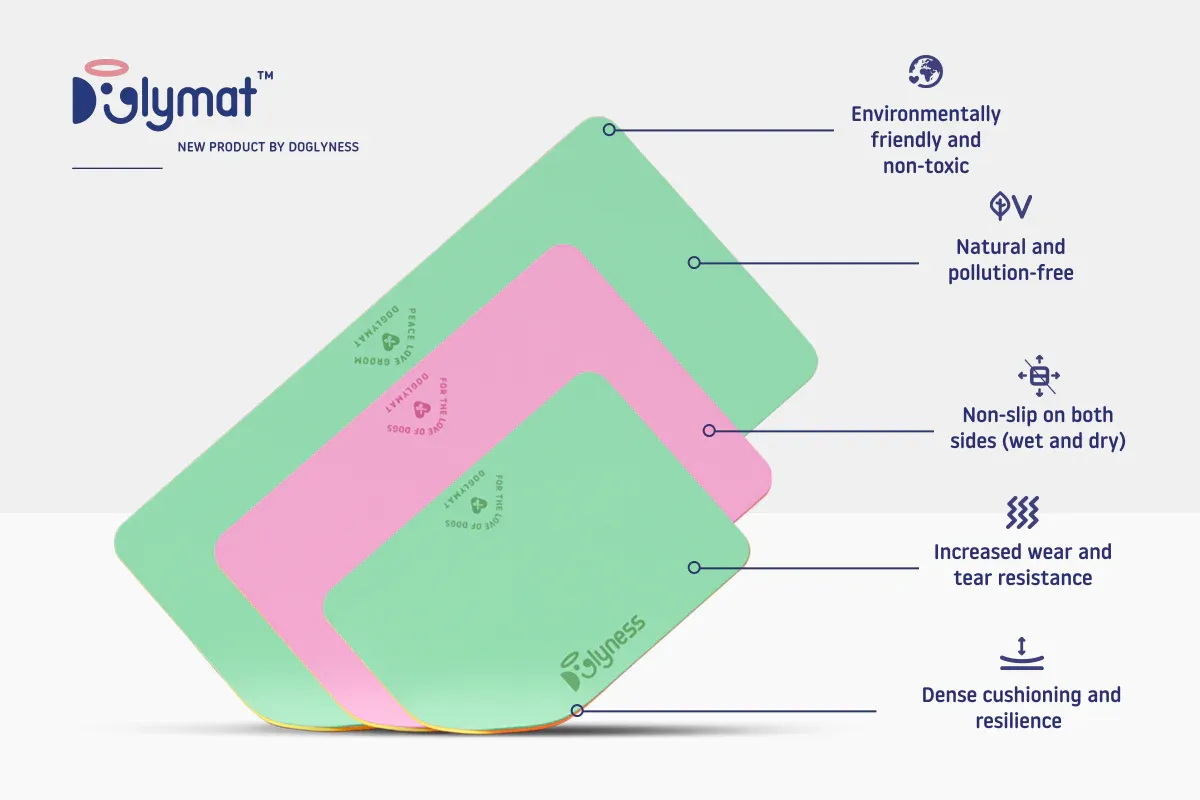
Grooming mats provide a comfortable, non-slip surface for your dog to stand or lie on during grooming, reducing stress associated with hard surfaces. Our sustainable dog grooming mat, made from natural coconut fiber and natural rubber, is durable and easy to clean—simply wipe with a cloth lightly dampened in water mixed with a drop of detergent.
2. Brushes
Dog coats vary tremendously—from short to long, curly to straight, wiry to fine, or thick. Whatever your dog’s coat type, using the correct brush or comb is essential to avoid unnecessary damage or discomfort during grooming:
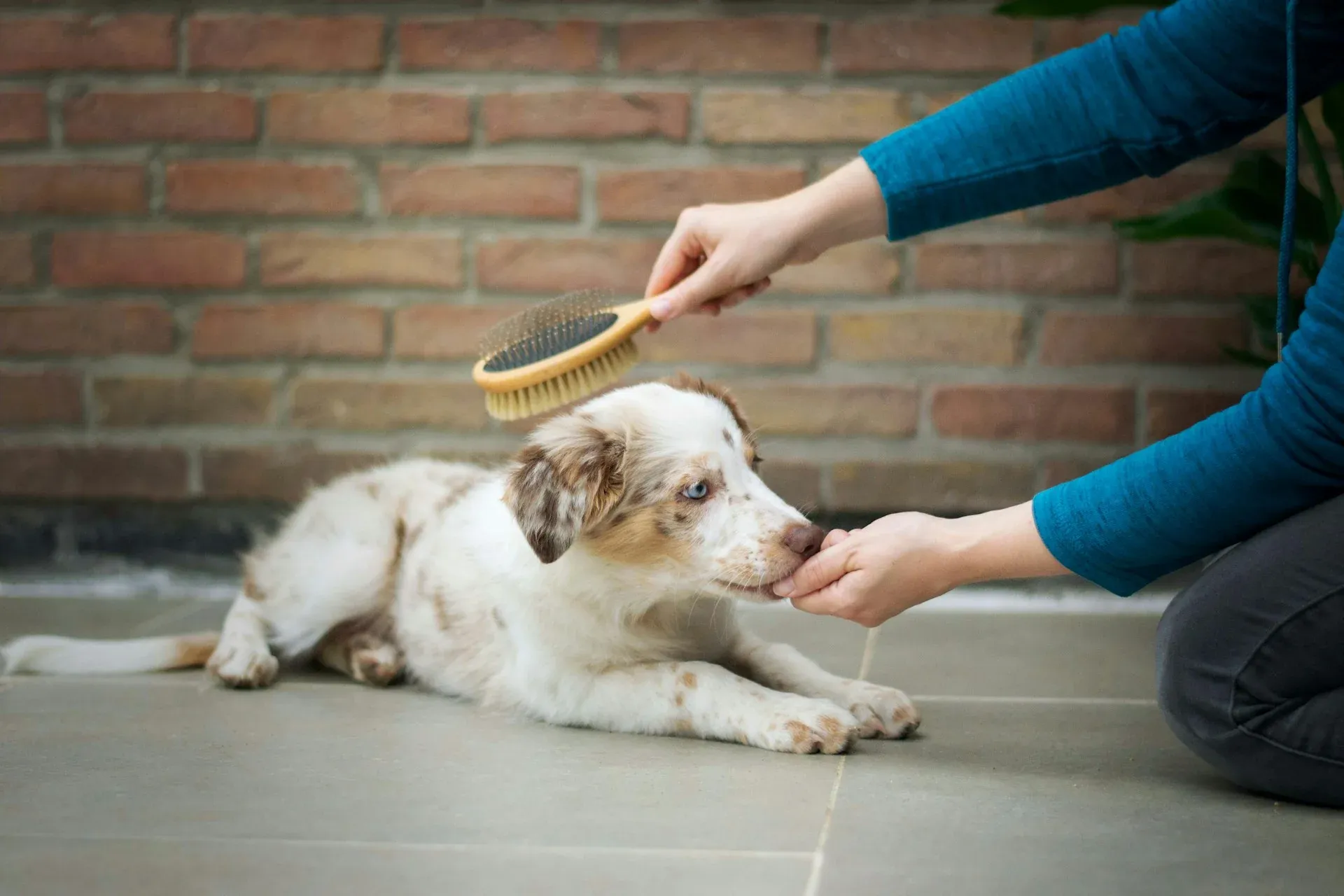
- Slicker brushes remove tangles, mats, and loose fur, making them ideal for dogs with medium to long coats or curly fur.
- Bristle brushes are perfect for smoothing and shining the coat, particularly for short-haired breeds. They help distribute natural oils across the coat, giving it a healthy, glossy appearance.
- Pin brushes gently detangle without pulling too hard on the hair, making it easier to manage and less likely to break or damage the coat.
Selecting the best brush for your dog depends on breed, coat type, and specific grooming needs. For instance, a short-haired dog might only need a bristle brush, while a long-haired breed would benefit from both a slicker and a pin brush to maintain coat condition.
Avoid using combs for detangling or mat removal. If a coat isn’t properly prepared, combing can cause significant pain since tangled areas are concentrated. Additionally, combs can be very sharp and dangerous around sensitive areas like the eyes, making accidental injury easier.
3. Ear and Eye Cleaning Supplies
Regular cleaning of your dog’s ears and eyes is essential for preventing infections and maintaining overall health. Cleaning your dog’s ears removes debris, wax buildup, and moisture that can lead to infections. It also allows you to check for signs of ear mites, redness, or unusual odors that might indicate a problem. Similarly, keeping your dog’s eyes clean removes dirt, tear stains, and discharge, preventing irritation and potential eye infections.
To clean your dog’s ears, you’ll need cotton balls and an ear-cleaning solution specifically designed for pets. These solutions gently break down wax and debris, making it easier to clean with cotton balls. Always wipe the external opening of the ear, and never push anything down into the ear canal.
Dedicated dog eye wipes are the most convenient and safe tool for cleaning your dog’s eyes. They help keep the area around the eyes clean and free from tear stains, reducing the risk of irritation and infection. Be extremely careful—any crust present in your dog’s eye corner needs to be thoroughly softened before removal. Trying to wipe out dry crust can cause painful tears in the skin. If there’s significant buildup around your dog’s eyes, schedule an appointment with your groomer for safe removal.
4. Nail Clippers and Files
Dog nails grow faster than you might realize, and regular trimming is essential for maintaining good paw health. Overgrown nails can cause significant discomfort and lead to painful injuries if they snag or break. Excessively long nails can also alter your dog’s gait, potentially leading to joint issues or posture problems over time.
Trimming your dog’s nails can be risky if you’re unfamiliar with the process. A blood vessel called the ‘quick’ runs through the nail. Cutting into the quick causes pain and bleeding and may lead to infections. It’s important to learn how to trim your dog’s nails from a professional before attempting it on your own—consider an in-person class or ask your groomer or veterinarian to demonstrate during your dog’s next appointment.
Some dogs dislike having their nails trimmed and may become anxious or fearful. If this is the case, it’s best to leave the trimming to an experienced groomer.
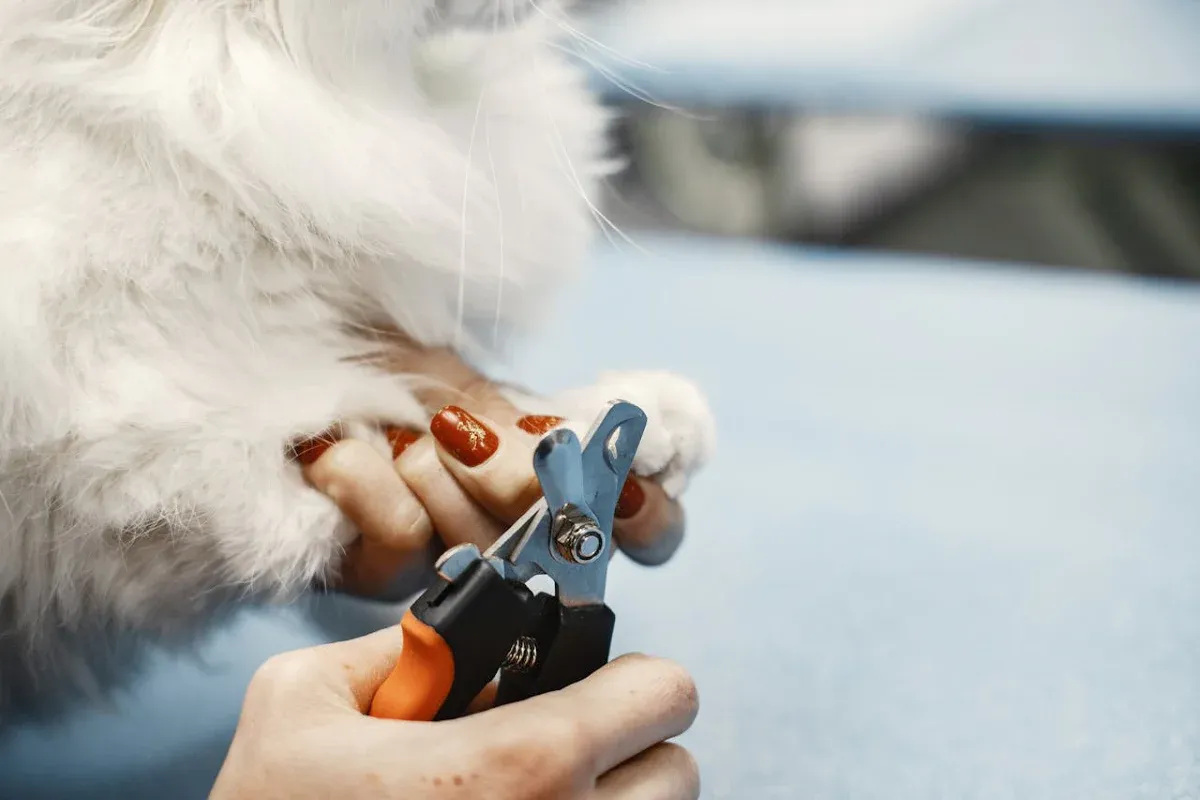
Several types of nail clippers are available, each designed for different needs:
- Guillotine clippers have a hole where the nail is inserted, with a blade that slices through when handles are squeezed.
- Scissor clippers resemble regular scissors but have a notch to hold the nail in place during trimming.
- Grinder tools use a rotating file to gradually grind down the nail, allowing for precise control and smoother edges.
5. Toothbrush and Toothpaste
Just like humans, dogs can suffer from dental issues such as tartar buildup, gum disease, and bad breath if their teeth aren’t properly cared for. Regular brushing helps remove plaque and prevent tartar formation, reducing the risk of dental problems and promoting fresh breath.
When choosing dental care tools for your dog, opt for dog-specific toothbrushes and toothpaste. Dog toothbrushes feature soft bristles and flexible shapes that allow easy access to your dog’s teeth and gums. They come in various sizes to accommodate different breeds and mouth sizes. Dog toothpaste is formulated with appealing flavors like poultry or beef, making the brushing experience more enjoyable for your pet.
6. Towels
Thorough drying is essential after bathing your dog to prevent discomfort and potential skin issues. Leaving your dog with a damp coat for extended periods can cause chilling and increase the risk of skin infections. Absorbent or microfiber towels remove excess water quickly and efficiently after a bath.
When drying, avoid vigorously rubbing your dog with the towel, as this can cause matting and tangles. Instead, use a gentle blotting technique. Press the towel firmly against your dog’s fur to absorb water, repeating this process throughout their coat from head to tail.
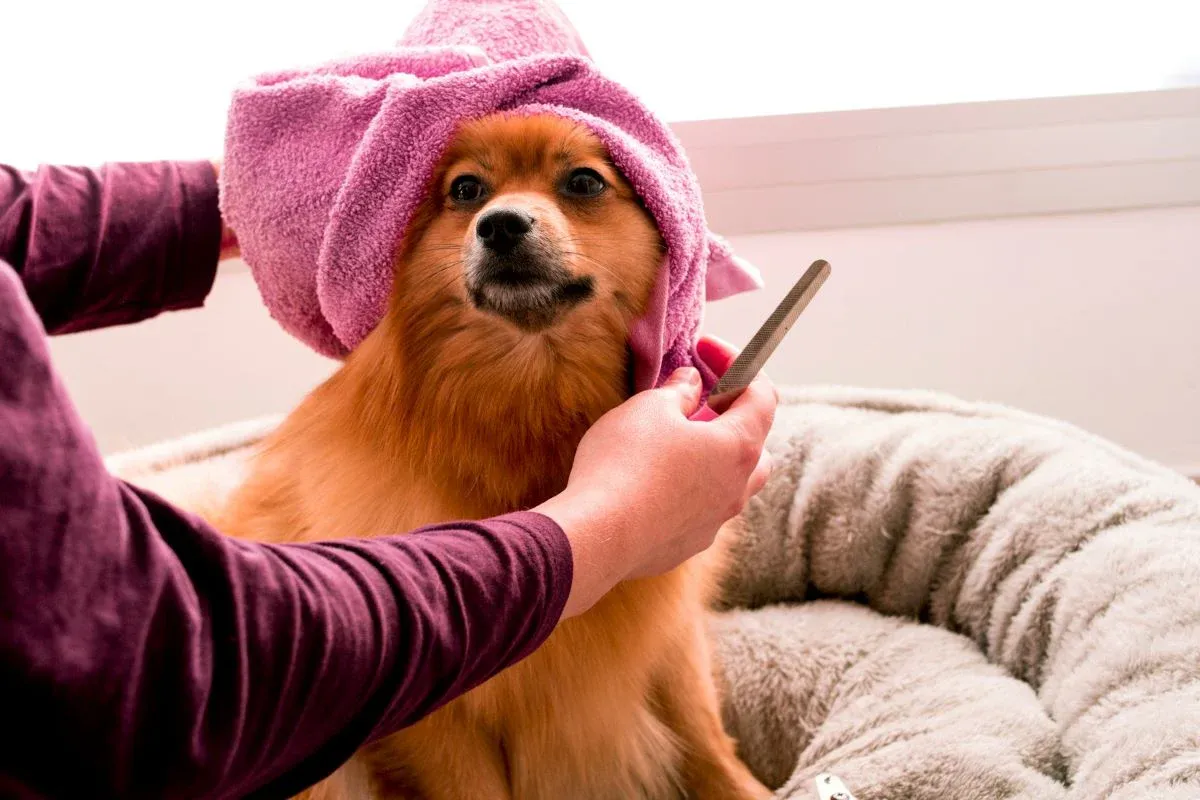 Microfiber towel being used to gently dry a dog after bathing with proper blotting technique
7. Other Essential Tools
- Pet-friendly disinfectant: Keeps grooming tools and surfaces clean and germ-free
- Tick-removing tool: Safely and effectively removes ticks from your dog’s skin
- Grooming apron: Protects your clothing from water, fur, and grooming products during sessions
- Grooming gloves: Removes loose hair while providing gentle massage
- Deshedding tool: Invaluable during high shedding periods to remove loose fur
- Paw balm: Moisturizes and protects your dog’s paw pads from dryness and cracking
- Detangling spray: Loosens knots and tangles in your dog’s coat, making grooming easier and more comfortable
Grooming Tasks Best Left to Professionals
While many grooming tasks can be done at home to maintain your dog’s skin and coat, some should be handled by expert groomers. Coat and fur trimming should be done by trained professionals. Grooming shears are extremely sharp, and sudden movements from your dog could cause injury to both of you. If mats need removal, visit a professional grooming salon to avoid potentially painful experiences for your dog.
Additionally, avoid using a pet blow dryer unless properly trained. Using a blow dryer during grooming is a learned skill—improper use can create bad tangles requiring expert removal. Blow dryers can also trigger dryer seizures in dogs, so towel drying is safest for home grooming.
While brushing, teeth brushing, ear cleaning, and nail trims (if you’re confident) are excellent home grooming tasks, some procedures are best left to professionals. Professional groomers have the experience and equipment to handle intricate trims and matted fur safely, keeping your dog comfortable and preventing potential pain. Groomers are trained to safely handle clippers and scissors around sensitive areas like the face, paws, and ears, minimizing risks.
For some dogs, grooming can be stressful. Groomers are skilled at calming anxious pups, ensuring a smoother experience at the salon. This helps your dog develop positive associations with grooming, making future visits much easier. By letting professionals handle complex tasks, you help your dog build a positive relationship with grooming overall.
Building Your Dog Grooming Toolkit
Regular grooming is an essential part of responsible dog ownership. It not only keeps your furry friend looking their best but also promotes good health and well-being. Equipping yourself with the right tools allows you to create a positive grooming routine at home. Brushing, ear cleaning, and teeth brushing are all great ways to bond with your dog while maintaining their hygiene.
Remember that some tasks are best left to the professionals. Groomers have the expertise and equipment to handle intricate trims, matted fur, and sensitive areas like the face, paws, and ears. This ensures a safe and comfortable experience for your dog while helping them develop a positive association with grooming overall. Start with the essential tools outlined here, and you’ll be well on your way to establishing a successful home grooming routine that benefits both you and your canine companion.