
The 1971 Dodge Demon arrived as a sharp-edged A-body performance car, built from the familiar Duster platform but given Dodge-specific styling, a devilish marketing identity, and real small-block V8 muscle. For enthusiasts of classic American performance, it stands out as one of the most characterful compact Mopars of the early 1970s.
Origins and Platform
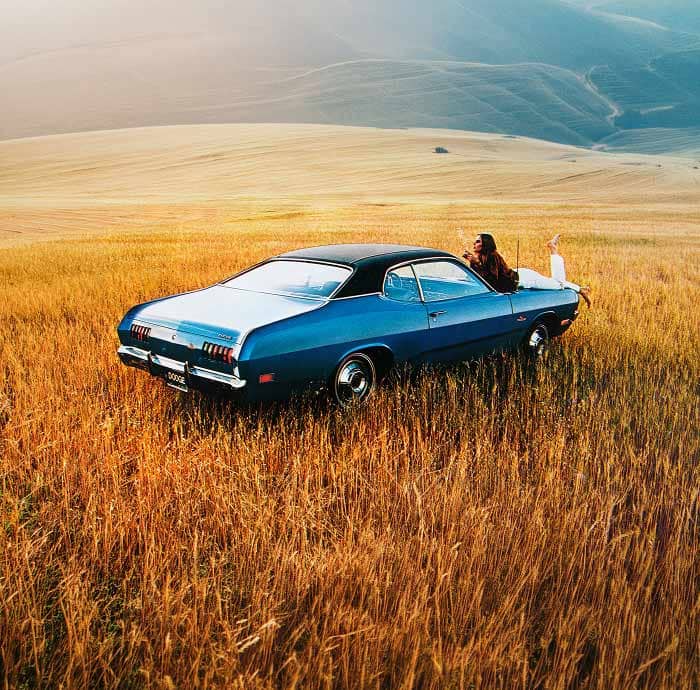
The Demon launched for the 1971 model year, one year after Plymouth introduced the Duster. Dodge based it on the same basic A-body shell, then fitted a Dart front clip and revised frenched taillights to give the car its own identity. According to the source article, the production Demon’s roots may trace back to a Chrysler of Canada prototype that adapted the Duster’s semi-fastback body with simple front-end changes.
This approach kept the car affordable while giving Dodge a fresh entry in the compact performance market. That balance of shared hardware and brand-specific styling helped the Demon look and feel like more than just a rebadged Duster.
Devilish Branding
Dodge leaned hard into the Demon name and its visual theme. Marketing materials featured a devil with a pitchfork, and dealership copy used slogans such as “Demon-stration ride—just for the devil of it.” National ads doubled down on the concept with dramatic artwork and the line, “Dodge’s new Demon brings out the Devil in you.”
The theme was memorable, but not everyone approved. The article notes that complaints about the devil imagery reached Chrysler, showing how provocative automotive marketing could be in the early 1970s.
Demon 340 Package
The headline performance version was the Demon 340, and it came with a serious list of standard equipment. Dodge included Rallye suspension, heavy-duty torsion bars, heavy-duty rear springs, a sway bar, heavy-duty shocks, 10-inch drum brakes, 14 x 5.5J wheels, E70 x 14 bias-belted tires, and dual exhausts.
Under the hood sat the 340-cid small-block V8, rated conservatively at 275 hp. Mopar engineering details included a forged steel crankshaft, double roller timing chain, windage tray, 10.5:1 pistons, high-flow cylinder heads, high-load valve springs and dampers, a dual-point distributor, a dual-plane intake manifold, a Carter four-barrel carburetor, and a viscous-drive fan. In period, that made the Demon 340 a genuine budget muscle car with strong street and strip credentials.
Real-World Performance
Car Craft Magazine tested a stock 4-speed, 3.91-geared 1971 Demon 340 at Lions drag strip and recorded a 14.41-second quarter-mile at 98.69 mph. With aftermarket mag wheels and Casler headers, the same car improved to 14.06 seconds at 102.04 mph at OCIR, weighing 3,340 pounds.
Further changes pushed the car even quicker. Removing the air filter and power-steering belt dropped the elapsed time to 13.92 seconds, and uncorked headers produced the best run of the day at 13.61 seconds and 104.52 mph. Those numbers explain why the Demon 340 earned respect as a fast, affordable Mopar even against more expensive muscle cars of its era.
Standard Models and Options
Not every Demon was a V8 street bruiser. Standard versions could be ordered with two Slant Six engines, 198-cid and 225-cid, or the 318-cid V8. Mechanically, the Demon and Duster were nearly the same Mopar A-body, with only modest differences in front-end treatment and taillights.
A Sizzler trim package became available beginning March 1, 1971, adding a little extra visual punch to the lineup. Dealer showrooms also offered MPC 1/25-scale model cars and promo pieces in Dodge colors, which helped the Demon build a recognizable presence among buyers and hobbyists.
Survivor Example
The article highlights a low-mileage 1971 Demon 340 survivor that had spent most of its life in environmentally controlled storage, sitting on blocks and remaining in near-new condition. Finished in HEMI Orange, it was originally from Connecticut and carried options such as a stereo tape-cassette system with microphone, TorqueFlite automatic, power steering, power brakes, Sure-Grip differential, and racing mirrors.
What makes this car special is not rare option rarity alone, but preservation. With only 2,900 miles on the odometer, it represents the kind of untouched A-body that is increasingly hard to find because so many were driven hard, modified, or worn out over time.
Time-Capsule Details
The engine bay is described as essentially untouched beyond original assembly-line work. The orange paint, clamps, wires, fittings, and even the Mopar fuel filter remained in place, making the car feel like a true time capsule. The source also notes that the firewall paint splat was an inspection mark, the kind of detail restoration experts often try to duplicate.
The article even lists some original option prices, including W11 Deluxe wheel covers at $25.75 and RWL tires at $48.40. The out-the-door price came to $3,651.30, which reinforces how accessible this performance car was when new.
Rare Cabin Feature
One especially unusual feature was the floor-mounted tape player with microphone. In 1971, that was a genuinely advanced piece of equipment, allowing the driver or passenger to record voice memos on the go. Dodge marketed it as useful for business and professional users who wanted to dictate notes while traveling.
The original microphone, owner’s manual, and licensing paperwork were still in the glove box on the survivor car. That detail adds personality and helps explain why the Demon still fascinates collectors: it blends performance, practicality, and period-correct quirks in one package.
1972 Changes
The Demon was only a two-year model, sold for 1971 and 1972. Visually, the 1972 cars differed through the grille, parking lamps, side emblems, and revised side-marker lights. Electronic ignition also became available in 1972.
Performance, however, softened. Compression dropped to 8.5:1, 360 heads with smaller intake valves were used on the 340, and output fell to 240 hp. Even so, both 1971 and 1972 Demons remain desirable today, with the 1971 340 generally seen as the stronger performer.
Legacy and Replacement
By 1973, the Demon name disappeared and the replacement became the Dart Sport, a straightforward name change with updated taillights, a restyled front end, and federally required energy-absorbing bumpers. The article frames this as a less provocative and less exciting identity, especially compared with the Demon’s bold branding.
That shift says a lot about the early-1970s market. The Demon captured a short but memorable moment when compact Mopars could be affordable, quick, and a little rebellious all at once.
References
Dodge. “The Demon from Dodge in 1971!” Dodge News. APA-style reference: Dodge. (n.d.). The Demon from Dodge in 1971!
Car Craft Magazine. (1971, April). Road test of a 1971 Dodge Demon 340. APA-style reference: Car Craft Magazine. (1971, April). Road test of a 1971 Dodge Demon 340.