
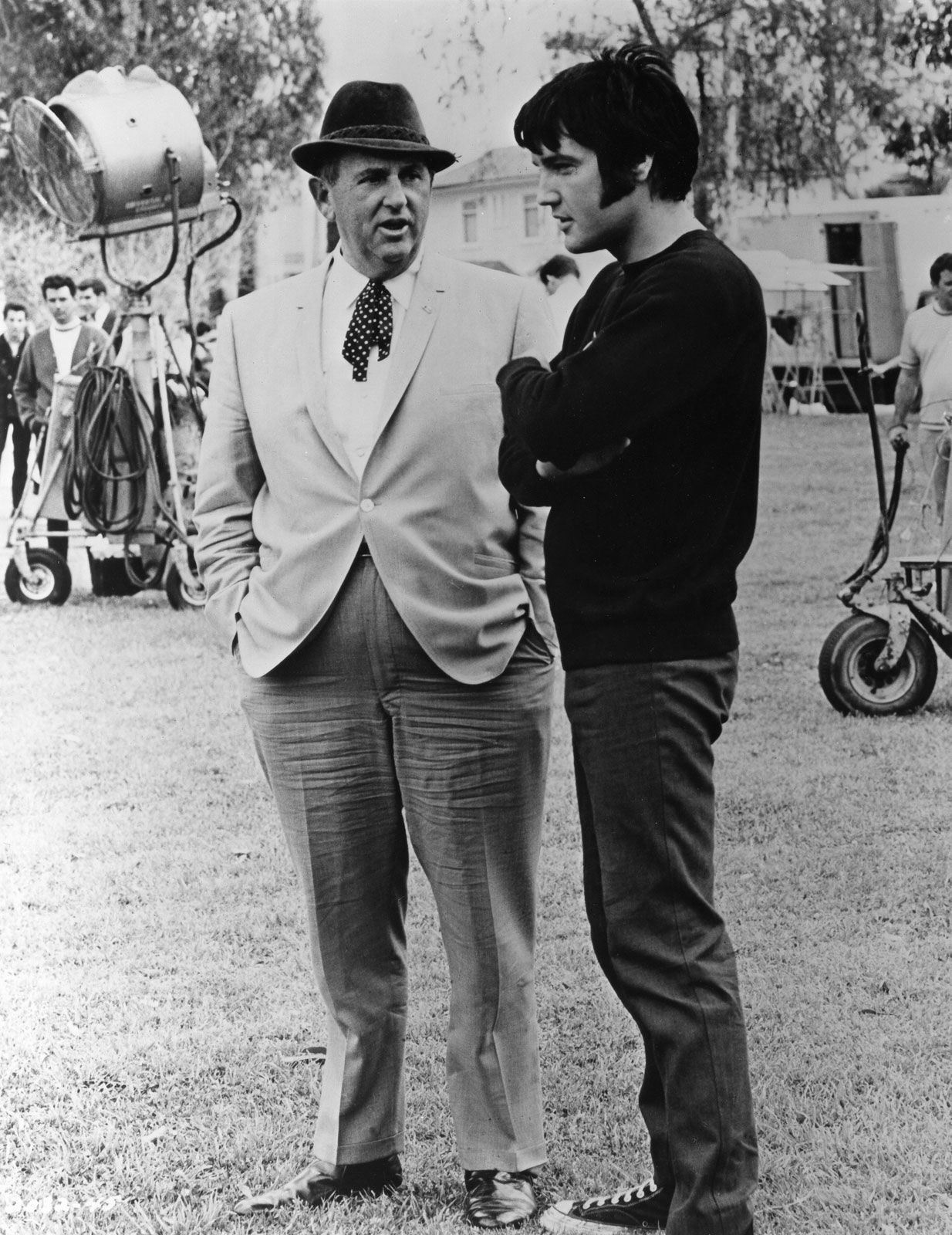
Elvis Presley’s electrifying performances and genre-bending music in the mid-1950s revolutionized American culture. Central to his meteoric rise and, arguably, his ultimate decline was his enigmatic manager, “Colonel” Tom Parker. Parker, a former carnival worker and an illegal immigrant, transformed himself into one of the most powerful figures in the music industry, shaping Presley’s career and legacy. This article delves into the complex, often contentious, relationship between Parker and Presley, exploring how Parker’s shrewdness propelled Elvis to global superstardom while potentially stifling his artistic growth and contributing to his tragic end.
The Rise of the Colonel and the King
Thomas Andrew Parker, born Andreas van Kuijk in the Netherlands, arrived in the United States as an undocumented stowaway in the 1920s. His early life was marked by a series of unconventional jobs, including carnival barker and promoter, experiences that honed his understanding of showmanship and human nature. After a stint in the U.S. Army, where he received a disability discharge for psychiatric issues, Parker drifted back to Florida, rebuilding his life and cultivating a persona as “Colonel” Tom Parker, an honorary title bestowed upon him.
Parker’s entry into the music business was gradual but strategic. He began by promoting country music concerts and eventually became the manager for Eddy Arnold. His relentless energy and knack for promotion impressed many, though some, like Ernest Tubb, remained wary of his methods. A pivotal moment arrived in the summer of 1955 when Parker witnessed the raw charisma and electrifying effect Elvis Presley had on his audience. Recognizing Presley’s immense potential, Parker, knowing Elvis was under 21 and devoted to his parents, made gaining their trust a top priority. He arranged for Elvis’s parents, Gladys and Vernon, to attend shows and even facilitated a meeting between Gladys and her favorite singer, Hank Snow.
Parker’s ambition soon led him to challenge Sun Records owner Sam Phillips for Elvis’s contract. Phillips, perhaps underestimating Presley’s appeal, named a price of $35,000, an astronomical sum at the time. Parker, however, with an almost evangelical fervor, convinced RCA Records to sign Presley, securing the contract on November 21, 1955. This move marked the beginning of an unprecedented era of success. Elvis’s appearances on national television shows like the Dorsey Brothers’ “Stage Show” and his first RCA LP, featuring the hit “Heartbreak Hotel,” propelled him to stardom. By March 1956, Elvis Presley had signed a contract with Parker, making him his sole and exclusive advisor, personal representative, and manager.
The Double-Edged Sword of Management
Parker’s management style was characterized by a singular focus on maximizing profits, often at the expense of Presley’s artistic development. While he negotiated a substantial 25% commission, later renegotiated to 50%, he also dictated nearly every aspect of Elvis’s career. This included his clothing, performance venues, and even song choices. Parker’s promotional genius was undeniable; he pioneered merchandising for recording artists, generating millions from branded items and even capitalizing on negative sentiment with “I Hate Elvis” buttons.
However, this tight control came at a cost. Parker’s refusal to allow Presley to perform outside the United States, stemming from his own undocumented status and fear of discovery, denied Elvis opportunities to connect with a global audience. He also rejected lucrative film offers, such as the chance to star opposite Barbara Streisand in “A Star Is Born,” opting instead for a string of financially successful but artistically unfulfilling movies. Director Steve Binder, who helmed Presley’s 1968 “Comeback Special,” described Parker as a “con artist” who “circled the wagons,” isolating Elvis from potential collaborators and creative growth.
Parker’s lack of interest in Presley’s musical aspirations is evident in his business approach. He viewed Elvis primarily as “my attraction,” a product to be marketed, rather than an artist with evolving creative desires. He insisted on controlling publishing rights for any song Elvis recorded and prevented songwriters from meeting directly with Presley, thus stifling potential artistic collaborations that could have elevated Elvis’s music.
The Tragic Decline and Lingering Questions
The complex bond between Elvis Presley and Colonel Tom Parker has been the subject of extensive debate, immortalized in films and documentaries. While Parker undoubtedly made Presley rich and famous, the question remains: did he ultimately ruin him as an artist? The immense pressure, combined with Parker’s controlling influence and Elvis’s personal struggles, contributed to a downward spiral. Presley’s reliance on prescription drugs escalated, a problem that Parker, solely focused on financial gains, largely ignored.
Elvis Presley died on August 16, 1977, at the age of 42, with his estate valued at only $7 million, partly due to Parker’s questionable financial decisions and a controversial 1973 agreement that gave RCA all rights to 700 Elvis songs for a substantial sum to Parker, but significantly less to Presley’s estate. Colonel Tom Parker continued his gambling habits until his death in 1997, having amassed an estimated $100 million from Presley’s career, much of which he reportedly gambled away.
The legacy of “Colonel” Tom Parker remains controversial. He was a master manipulator and a shrewd businessman who understood the power of spectacle and celebrity. Yet, his methods also raise profound questions about artistic integrity, the ethics of management, and the true cost of superstardom when driven solely by profit. The story of Elvis Presley and Colonel Tom Parker serves as a cautionary tale about the symbiotic yet potentially destructive relationship between an artist and their manager.
References
- Kealing, B. (2022). Tampa’s “Colonel” Tom Parker made Elvis Presley the greatest pop star of all time. But did he ruin him as an artist? Florida Humanities.
- Binder, S. (Director). (1968). Singer Presents… Elvis [Television special]. NBC.
- Miles, A. (Author). (Date of publication unknown). Biography of Colonel Tom Parker. (Unpublished manuscript).