
The 1960s represent the golden age of American muscle cars, a period when raw power met bold design to create some of the most desirable vehicles in automotive history. At the forefront of this movement was Chevrolet, a brand that consistently pushed the boundaries of performance and engineering. From drag strips to city streets, Chevrolet’s muscle cars defined an era and continue to captivate collectors and enthusiasts worldwide. This article explores ten of the most legendary Chevrolet muscle cars of the 1960s, delving into the specific attributes that made each model an icon.
The Early Pacesetter: 1963 Chevrolet Impala SS 409
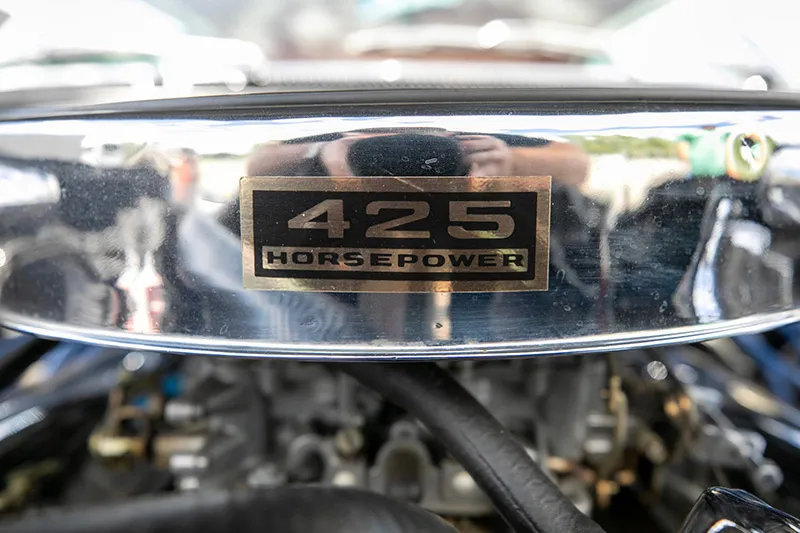
The 1963 Chevrolet Impala SS 409 is a foundational piece of muscle car history. Its performance was anchored by a 409 cubic inch (6.7 L) V8 engine, which, in its most potent form with dual four-barrel carburetors, produced an impressive 425 horsepower. This powerplant made the full-size Impala a formidable contender on the drag strip. Beyond its brute force, the Impala SS 409 featured a clean, stylish design with the distinctive “SS” badging that signified its performance intentions. Its cultural impact was cemented by the Beach Boys’ hit song “409,” forever linking the car to the early 1960s hot-rod scene.
The Mid-Size Game Changer: 1965 Chevrolet Chevelle Malibu SS 396
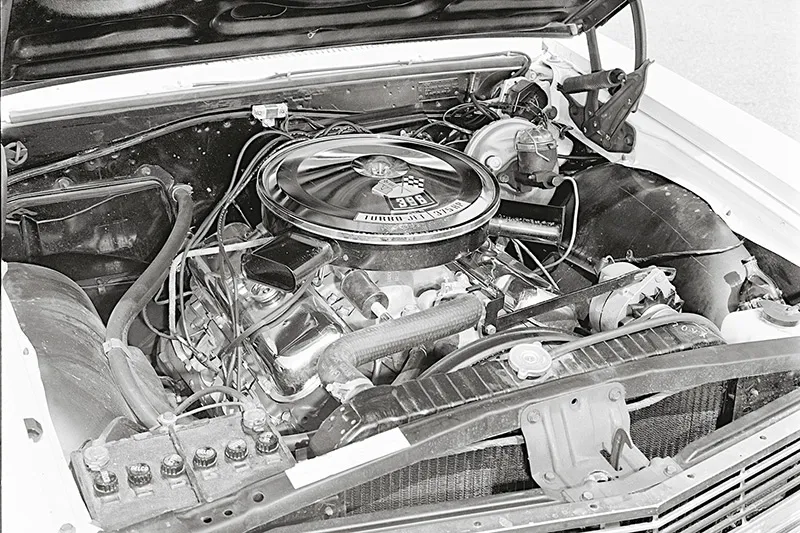
Chevrolet entered the mid-size performance market with authority by introducing the Chevelle Malibu SS 396 midway through the 1965 model year. This model was a direct response to the Pontiac GTO and quickly gained a loyal following. The key to its success was the introduction of the first big-block engine in a Chevelle: the 396 cubic inch (6.5 L) V8. This engine delivered a potent combination of power and torque, giving the Chevelle a competitive edge in performance and acceleration. The SS 396’s aggressive styling and newfound big-block power cemented the Chevelle’s legendary status in the muscle car pantheon.
The Compact Contender: 1966 Chevrolet Nova SS
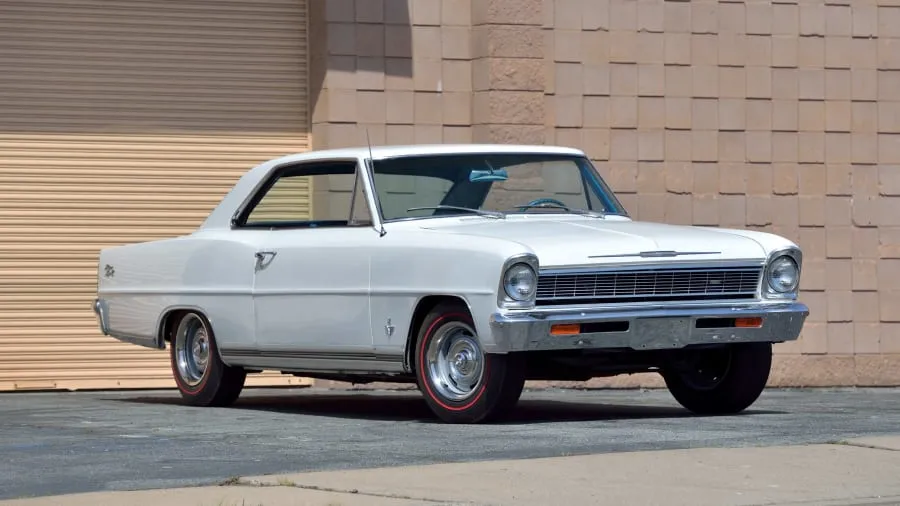
While smaller in stature, the 1966 Chevrolet Nova SS proved that big performance could come in a compact package. Its success was particularly notable in drag racing, where its light weight—around 3000 lbs—became a significant advantage. The Nova SS achieved its formidable performance by offering the potent L79 engine, a high-compression 327 cubic inch small-block V8 that produced 350 horsepower. This engine, shared with the Corvette and Chevelle, transformed the compact Nova into a giant-killer, dominating its class in NHRA Stock and Super Stock competitions.
The Pony Car Legend: 1967 Chevrolet Camaro Z28
Launched in 1967 to compete with Ford’s Mustang, the Camaro quickly established its performance credentials with the Z/28 variant. This model was purpose-built for SCCA Trans-Am racing, featuring a high-revving, short-stroke 302 cubic inch (5.0 L) V8 engine. The engineering focus on handling and high-rpm power paid off handsomely. In 1968, the Camaro Z/28 dominated the Trans-Am series, winning ten out of twelve races and securing the manufacturers’ championship for Chevrolet. The model continued its success in 1969, with Mark Donohue driving for Penske Racing to another championship, solidifying the Z/28’s racing pedigree.
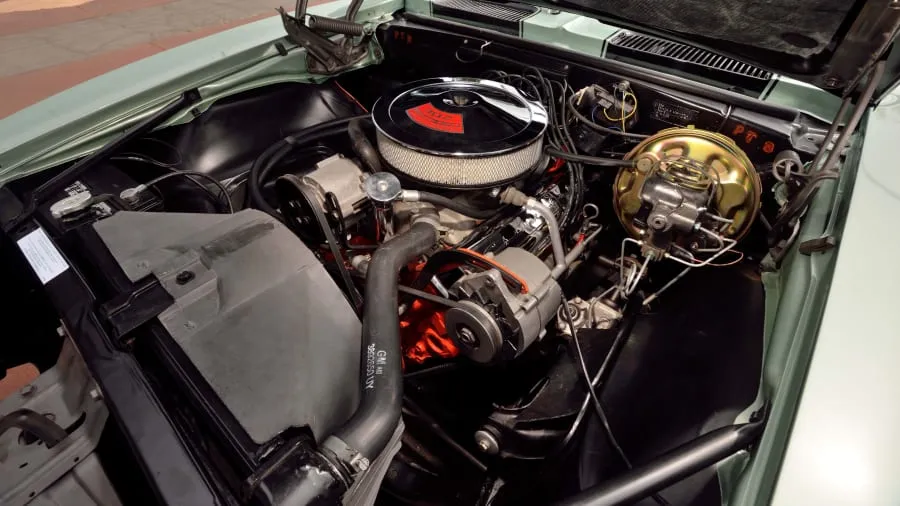 The 1967 Chevrolet Camaro Z28 in a race-ready configuration
The Track-Bred Beast: 1967 Chevrolet Corvette Sting Ray L88
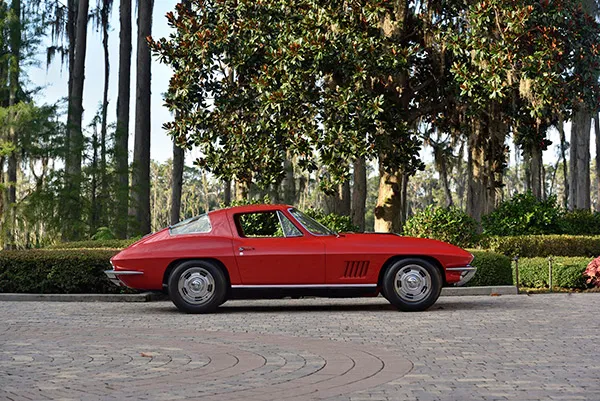
The 1967 Corvette Sting Ray L88 is one of the rarest and most revered Chevrolet muscle cars ever made. With only 20 units produced, the L88 was designed by Chevrolet engineers for serious racing. At its heart was a monstrous 427 cubic inch (7.0 L) V8 engine, purpose-built for track domination. Its racing credentials are undeniable: the L88 claimed a first-place finish in the over-5.0 L GT class and tenth overall at the 1967 12 Hours of Sebring. Over its racing career, the L88 Corvette amassed nearly 400 podium finishes and over 150 wins, including an incredible streak of 52 consecutive victories.
The Full-Size Heavy Hitter: 1968 Chevrolet Impala SS 427
In 1968, Chevrolet brought muscle car performance to its full-size lineup with the Impala SS 427. This model was powered by a 427 cubic inch (7.0 L) V8, offered in two versions. The base engine produced 385 horsepower, while the high-performance L72 version, equipped with solid lifters, delivered a formidable 425 horsepower. The SS 427 distinguished itself with unique styling cues, including special badging, a domed hood, a distinctive grille and taillights, and an interior featuring bucket seats, a center console, and an SS-specific steering wheel, creating a full-size muscle car with undeniable presence.
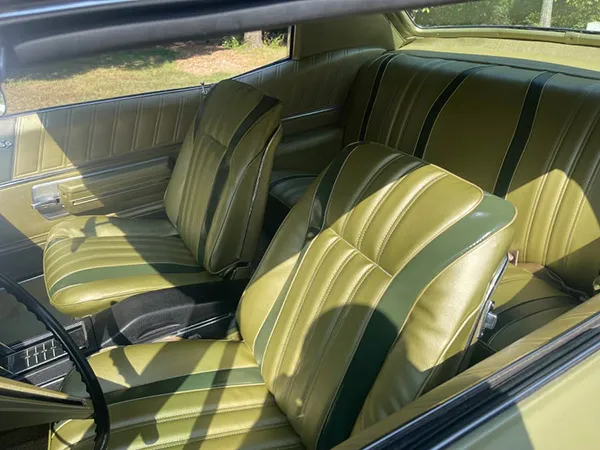 Front view of the 1968 Chevrolet Impala SS 427 showcasing its distinctive grille and hood
The Iconic Pony Car: 1969 Chevrolet Camaro SS 396
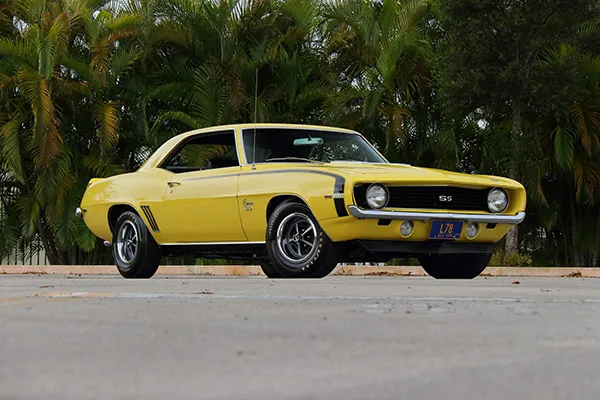
The 1969 Camaro SS 396 remains one of the most recognizable muscle cars in history, thanks to its aggressive redesign. The SS 396 was powered by a big-block 396 cubic inch (6.5 L) V8. The top-tier L78 version, with its high-rise aluminum intake manifold, Holley four-barrel carburetor, and solid-lifter camshaft, produced 375 horsepower. This potent combination allowed the Camaro SS 396 to achieve 0-60 mph in approximately six seconds and complete the quarter-mile in about 14 seconds, making it a highly competitive performer on both the street and the drag strip.
The Performance Standard: 1969 Chevrolet Chevelle SS 396
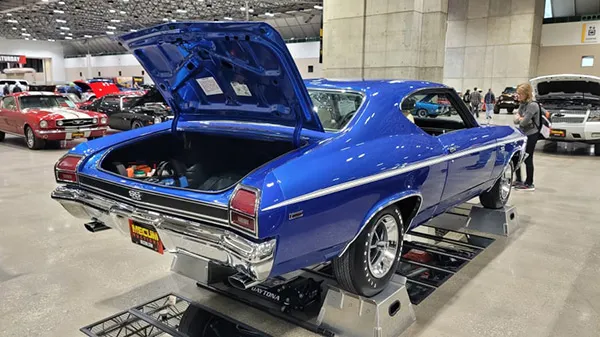
The 1969 Chevrolet Chevelle SS 396 is celebrated for its comprehensive performance package. The 396 cubic inch (6.5 L) V8 was available in three configurations: the base 325-horsepower L35, the mid-range 350-horsepower L34, and the high-performance 375-horsepower L78. To handle this power, Chevrolet equipped the SS 396 with heavy-duty suspension components, including stiffer springs, reinforced control arms, and a beefier front sway bar, ensuring improved handling and stability. This combination of raw engine power and chassis refinement solidified the Chevelle’s reputation as a well-rounded muscle car.
 Interior view of the 1969 Chevrolet Chevelle SS 396
The Ultimate Rarity: 1969 Chevrolet Corvette ZL1
The 1969 Chevrolet Corvette ZL1 stands as one of the rarest and most extreme American muscle cars ever built, with only two officially produced. Designed for competitive racing, the ZL1’s centerpiece was its revolutionary all-aluminum 427 cubic inch (7.0 L) V8, rated at 430 horsepower. The lightweight construction of the engine gave the Corvette a significant power-to-weight advantage. Complementing this powerhouse was a heavy-duty Muncie M22 “Rock Crusher” four-speed manual transmission and advanced independent front and rear suspension, making it a dominant force on both drag strips and road courses.
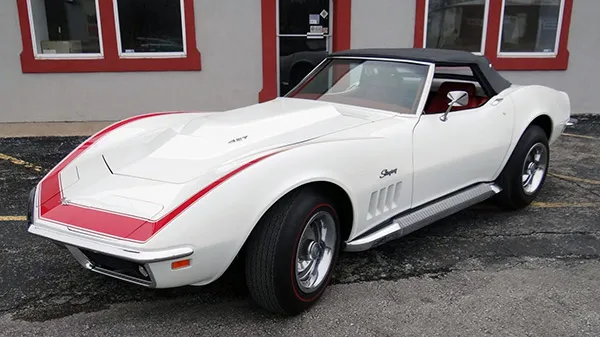
The Pinnacle of Power: 1970 Chevrolet Chevelle SS 454
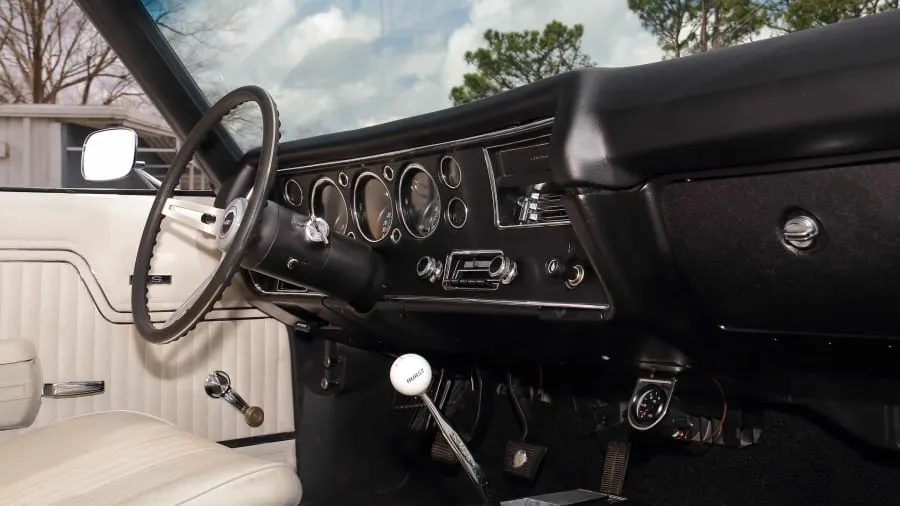
The 1970 Chevrolet Chevelle SS 454 represents the zenith of the original muscle car era. Its legendary status is built around the 454 cubic inch (7.4 L) V8, available in two configurations. The LS5 produced a robust 360 horsepower, but the legendary LS6 delivered an astounding 450 horsepower and 500 lb-ft of torque, making it the era’s most powerful production car engine. The LS6 featured a high-performance camshaft, solid lifters, an aluminum intake manifold, and an 800 CFM Holley four-barrel carburetor. The 1970 Chevelle SS 454 embodies the unrestrained spirit of the muscle car era, and its influence continues to resonate in contemporary car culture.
 The powerful rear end of the 1970 Chevrolet Chevelle SS 454
Conclusion
The Chevrolet muscle cars of the 1960s played an undeniably significant role in shaping the automotive landscape. From the early days of the Impala SS 409 to the raw, unbridled power of the Chevelle SS 454, Chevrolet consistently pushed the boundaries of performance and design. These vehicles are far more than just transportation; they are enduring symbols of a bygone era, cherished by enthusiasts and collectors alike. Their lasting appeal speaks to their profound impact on both American culture and the broader history of the automobile. What is your favorite Chevrolet muscle car from this iconic decade? Share your thoughts and passion for these legendary machines with the community.