
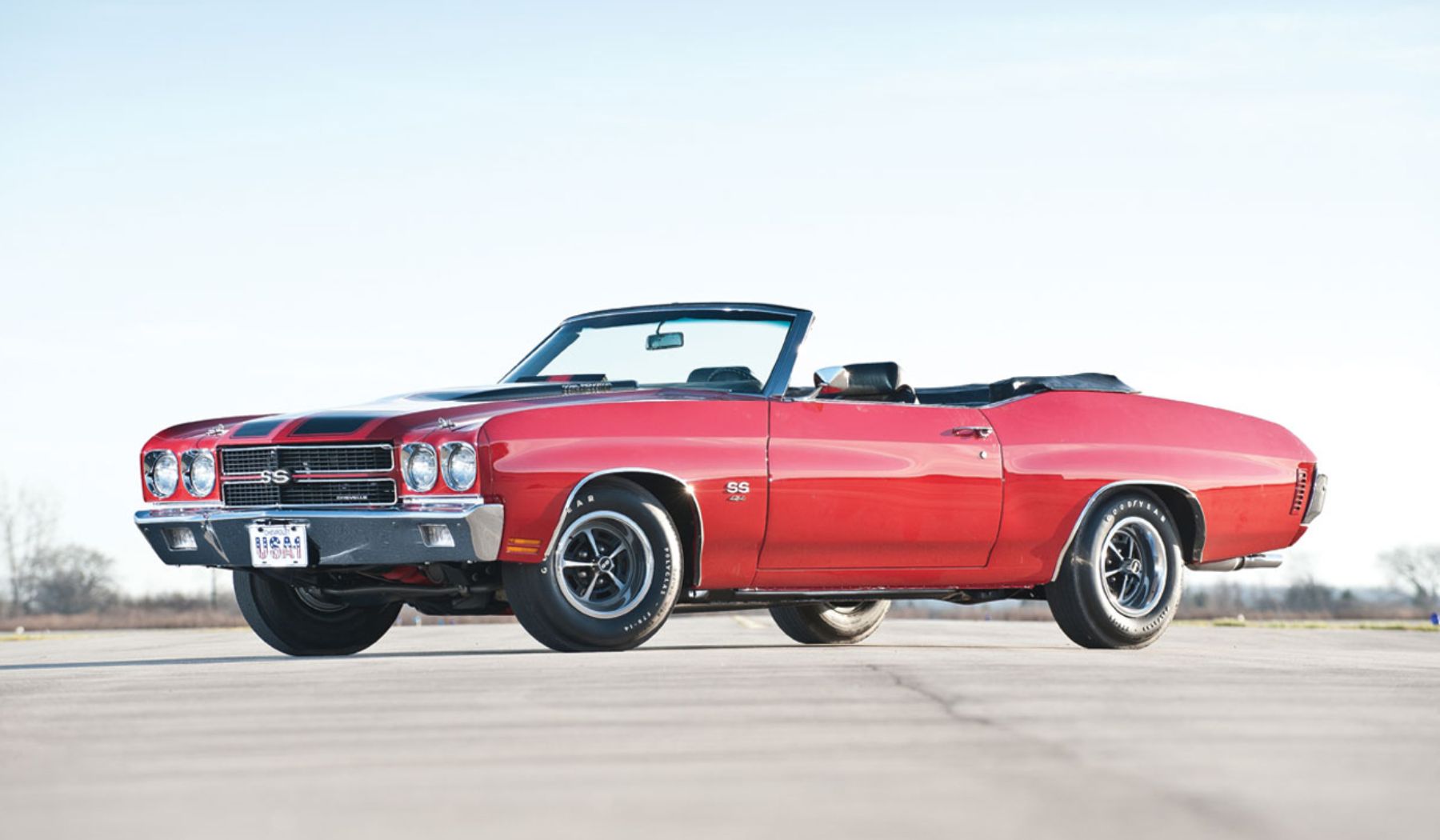
“The past is gone. The future may never see a car like this. It is one of the brutes, and all it needs is a way of staying in contact with terra firma.” This powerful statement from Hot Rod Magazine in May 1970 perfectly encapsulates the raw, untamed spirit of the 1970 Chevrolet Chevelle SS LS6. In the fiercely competitive hierarchy of street machines around 1970, mere cubic inches were no longer enough; the undisputed king of the road was crowned by horsepower and displacement. The adage “there’s no replacement for displacement” had never been more relevant, and at the apex of this muscle car era sat Chevrolet’s SS Chevelle, particularly the formidable RPO Z15 option. This package unleashed a 450-horsepower, 454 cubic-inch solid-lifter behemoth, delivering a staggering 500 lb.-ft. of torque that undeniably cemented its title as the King of the Streets.
The Rise of the Big Block Chevelle
Chevrolet initially found itself playing catch-up when the muscle car craze ignited in 1964. While Pontiac had already set a benchmark by integrating a 389 cubic inch Bonneville engine into its intermediate LeMans, Chevrolet’s new Malibu was limited to a maximum of 327 cubic inches. The introduction of the big-block Chevelle came in 1965 with the limited-production “Z16,” featuring a 396 cubic inch, 375-horsepower engine. By 1966, the SS396 option became available to directly challenge the Pontiac GTO, although it sold fewer units. Through 1969, the SS396 remained the sole engine option, offered in three horsepower variants: 325, 350, or 375 horsepower.
GM Lifts the Displacement Ceiling for 1970
The 1970 model year marked a significant shift as GM removed the 400 cubic inch cap on intermediate-sized cars. This opened the floodgates for divisions to equip their models with their largest engines. Buick, Oldsmobile, and Pontiac opted for their respective 455 cubic inch engines. Chevrolet, however, bored out its renowned 427 to 454 cubic inches, introducing two potent variants: the hydraulic lifter LS5, rated at 360 horsepower, and the high-performance solid-lifter LS6. The LS6 engine, in particular, stood as the most powerful offering of 1970, representing the pinnacle of muscle car engineering.
Unpacking the Mighty LS6 Engine
The LS6 shared its block with the LS5 but was distinguished by a colossal 800-cfm Holley four-barrel carburetor mounted on an aluminum intake manifold, replacing the Rochester Quadra Jet found on the LS5. Its robust internal components included a beefy bottom end with four-bolt main bearings, a forged steel crankshaft, forged steel connecting rods, and forged aluminum pistons with an 11.25:1 compression ratio. The LS6’s high redline of 6500 RPM necessitated the use of deep-groove accessory drive pulleys. Despite its immense power, the LS6 was equipped with the Air Injection Reactor (A.I.R.) system to meet new Federal emission standards. This system, which injected air into the exhaust manifolds, was one of the first modifications owners made upon taking delivery of their vehicles, often seeking to liberate the engine’s full potential.
Transmission and Drivetrain Options
Customers could pair the LS6 with either the Muncie M22 “Rock Crusher” close-ratio four-speed manual transmission or the three-speed M40 Turbo Hydra-Matic automatic. Rear gear ratios were available up to 4.33:1, often coupled with a limited-slip differential, further enhancing the car’s already formidable performance capabilities.
The Price of Power: Mandatory Options and Cost
Owning a 1970 LS6 Chevelle came with a significant investment, as Chevrolet mandated several options with the RPO Z15 SS 454 package. This $503.45 package included distinctive bright engine accents, a dual exhaust system with bright tips, a black-painted grille, wheel opening moldings, power front disc brakes, a special rear suspension, and F70 x 14 tires on 7-inch rims. The rear bumper featured a black insert, while the front sported a characteristic “power bulge” hood. This package also included the base 360-horsepower LS5 engine and a heavy-duty battery. Opting for the RPO LS6 454 engine added another $263.30, with the M22 manual transmission costing an additional $221.80 and the M40 automatic $290.40. The total cost for the engine and transmission alone pushed the bottom line significantly. When factoring in other desirable options, the total price for an SS 454 Chevelle could easily exceed $2,800, a substantial sum at the time.
Interior and Exterior Styling Cues
The SS Chevelle’s interior borrowed the handsome instrument panel from the Monte Carlo, featuring a large, flat-faced design that housed a gauge package with three prominent circular gauges for the tachometer, speedometer, and clock, flanked by smaller auxiliary gauges. To the right were the HVAC controls, radio, and lighter. Bucket seats, a center console, and a sport steering wheel were optional upgrades over the standard bench seat.
The exterior was equally aggressive, characterized by sculptured lines above the wheel openings that gave the car a grounded, powerful stance. The blacked-out grille was split horizontally and prominently displayed a large SS emblem. Chevrolet offered optional wide “Stereo Stripes” that extended the length of the hood and deck lid. The iconic Cowl Induction hood, featuring a vacuum-operated door at its rear, directed high-pressure air from the base of the windshield directly to the Holley carburetor. Dual Guide T-3 headlamps, surrounded by chrome bezels, and chrome extensions tipping the rumbling dual exhausts completed the aggressive aesthetic.
Rarity and Ownership Legacy
While Chevrolet produced a total of 4,475 LS6 Chevelles, documentation does not break down this figure by body style (coupe, convertible, or El Camino). One such example is a Cranberry Red coupe owned by Rob Timken of Clearwater, Florida. This particular LS6, built in Arlington, Texas, spent most of its life in Florida. Rob acquired the car in November 1992, captivated by its originality, options, and low mileage, recognizing it as the perfect “fun car.”
Despite being in virtually pristine condition with 66,000 miles, Rob, a perfectionist, undertook a thorough rebuilding and detailing process. He meticulously painted and detailed the car and rebuilt the engine, utilizing a 0.030 cleanup bore while retaining the stock compression and all original parts. Following the rebuild, the engine was dyno-tested, producing an impressive 485 horsepower and 513 lb.-ft. of torque. The interior received new upholstery and carpeting, along with an NOS center console plate and sport steering wheel. His option sheet includes a tilt column, power steering and brakes, door edge guards, Rally gauge cluster, cowl induction hood and stripes, bucket seats, console, and an AM radio. In the 13 years of Rob’s ownership, he has added just over 1,800 miles, savoring the immense torque and instant acceleration that only the King of the Streets can deliver.
Conclusion
The 1970 Chevrolet Chevelle SS LS6 stands as a monument to the golden age of American muscle cars. Its legendary 454 cubic inch engine, aggressive styling, and sheer performance capabilities have solidified its place in automotive history. For enthusiasts and collectors, the LS6 Chevelle represents not just a car, but a powerful symbol of an era defined by raw power and unapologetic performance.
What are your thoughts on the 1970 Chevelle SS LS6? Share your opinions in the comments below!