
Change of Habit is one of the most distinctive entries in Oldies music and classic American film culture because it marked Elvis Presley’s final Hollywood movie. Released in 1969, the film attempted to blend romance, social drama, faith, and contemporary issues at a time when America was experiencing profound cultural and political change. While it did not fully achieve its ambitious goals, it remains an important work that helped redefine Elvis as more than a musical icon, reconnecting him with audiences through mature storytelling and socially conscious themes.
A Farewell to Elvis Presley’s Hollywood Career
By the time Change of Habit became Elvis Presley’s thirty-first feature film, his career had reached an important turning point. Following his acclaimed 1968 television comeback and the success of socially aware songs such as “If I Can Dream” and “In the Ghetto,” Elvis was once again becoming relevant to a new generation of audiences.
Unlike many of his earlier movies, Change of Habit did not rely entirely on Elvis to carry the production. Instead, the film featured a strong supporting cast led by Mary Tyler Moore, Barbara McNair, and Jane Elliot, allowing the story to focus equally on multiple characters and their personal struggles.
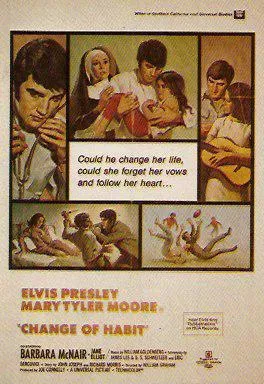
Contemporary reviewers also noticed this shift. Variety observed that Presley significantly reduced his musical performances, choosing instead to concentrate on dramatic acting. He portrayed Dr. John Carpenter, a physician running a medical clinic in a disadvantaged Puerto Rican and African American neighborhood, where three young nuns secretly serve as medical assistants.
A Story Built Around Faith, Service, and Social Change
Once the central premise is established, the film develops tension through several interconnected storylines.
The strongest emotional conflict grows between Dr. John Carpenter and Sister Michelle, played by Mary Tyler Moore. As they work together, genuine affection slowly develops, yet Sister Michelle struggles with her religious commitment and the possibility of romantic love.
Meanwhile, another source of conflict comes from Julio, a troubled teenage patient whose growing attachment to Sister Michelle creates increasingly dangerous situations. Although Dr. Carpenter recognizes Julio’s emotional instability, he cannot understand why his own relationship with his nurse never progresses naturally.
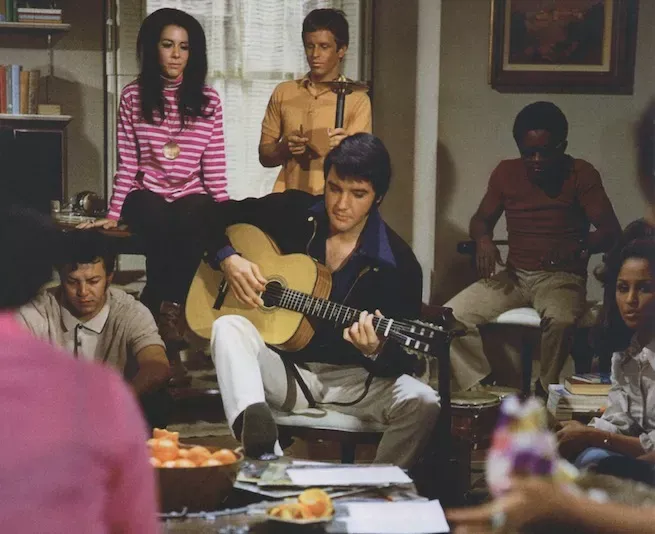
The other two nuns pursue equally demanding missions. One works closely with African American activists while confronting tensions within her own community, while another becomes deeply involved with people living on the margins of society. Their work reflects many of the social movements shaping America during the late 1960s, including civil rights, poverty, urban inequality, and changing religious roles.
Balancing Drama with Humor
Some critics argued that Change of Habit tried to solve too many social problems within a single film, making parts of the story less believable. The numerous issues—including poverty, racial conflict, disability, crime, and personal faith—sometimes stretch the narrative beyond realism.
However, reviewers from Variety pointed out that carefully placed moments of humor helped soften the film’s dramatic tone. These lighter scenes made the complex subject matter more accessible to family audiences while preventing the story from becoming overwhelmingly bleak.
Although the doctor’s ignorance of the women’s true identities may seem slightly implausible, the narrative gradually compensates through emotional development rather than dramatic surprises.
Elvis Presley’s Restrained and Credible Performance
One of the film’s greatest strengths is the understated performance delivered by Elvis Presley.
Rather than exaggerating his character, Elvis portrays Dr. Carpenter as calm, compassionate, confident, and professional. His personality remains relatively constant throughout the story, allowing the emotional transformation to occur primarily within Sister Michelle’s character.
Mary Tyler Moore carries much of the dramatic weight. Sister Michelle faces difficult emotional choices involving her faith, her responsibilities as a nun, her patients, and her growing love for Dr. Carpenter. Moore’s nuanced performance gives the film much of its emotional depth.
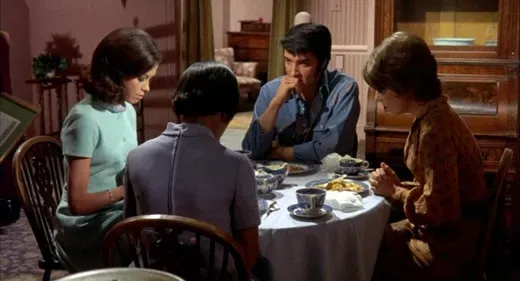
Director William Graham carefully develops the relationship between Carpenter and Sister Michelle. Their affection grows naturally through mutual respect rather than physical attraction, making the romance unusually gentle for its era. Even after learning that Michelle is a nun, Dr. Carpenter sincerely speaks of marriage, creating one of the film’s most touching moments.
An Ambiguous Ending That Invites Reflection
The conclusion deliberately leaves Sister Michelle’s ultimate decision unresolved.
Rather than revealing whether she chooses marriage or religious life, the final scene simply shows her quietly contemplating both possibilities inside the church. Her gaze shifts between Dr. Carpenter and the religious symbols surrounding her, inviting viewers to reach their own conclusions.
While some audiences found this ambiguity frustrating, others appreciated that the film respected the complexity of her decision instead of providing an artificial resolution.
Elvis’ Career Was Already Moving Forward
During production, Elvis Presley’s attention was increasingly focused on live performance rather than filmmaking.
In April 1969, while still filming Change of Habit, he signed his landmark contract to perform at the International Hotel in Las Vegas only a few months later. Much of his free time was devoted to selecting songs and preparing for what would become one of the most significant concert comebacks in American entertainment history.
This changing focus helps explain why Change of Habit became his final Hollywood production. At just 34 years old, Elvis was entering a completely new chapter centered on live concerts rather than motion pictures.
Legacy of Change of Habit
Although Change of Habit performed modestly at the box office and reached only No. 17 on Variety‘s weekly list of top-grossing films, its reputation has improved over time.
Today, many fans and historians view it as one of Elvis Presley’s strongest dramatic performances and one of his most thoughtful films. Its message—that compassionate, committed individuals can improve their communities even during periods of social unrest—remains meaningful decades after its release.
For enthusiasts exploring Oldies music, the golden era of American music, classic Hollywood cinema, or Elvis Presley’s artistic evolution, Change of Habit offers far more than a farewell performance. It captures an entertainer transitioning from formulaic musicals to more mature storytelling while reflecting the hopes, conflicts, and changing values of late-1960s America.
Conclusion
Change of Habit stands as both the closing chapter of Elvis Presley’s Hollywood career and an enduring reflection of a transformative era in American culture. Its thoughtful exploration of faith, compassion, social responsibility, and personal sacrifice continues to resonate with modern audiences. While not his biggest commercial success, the film deserves recognition as one of Elvis’ most sincere dramatic works. If you are interested in discovering timeless Oldies music and the cultural history surrounding one of America’s greatest entertainers, Change of Habit is well worth experiencing.
References
- Hanson, A. (2008). Change of Habit Review. Elvis History Blog.
- Variety. Film review of Change of Habit (October 29, 1969).
- The New York Times. Review by A. H. Weile (January 22, 1970).