
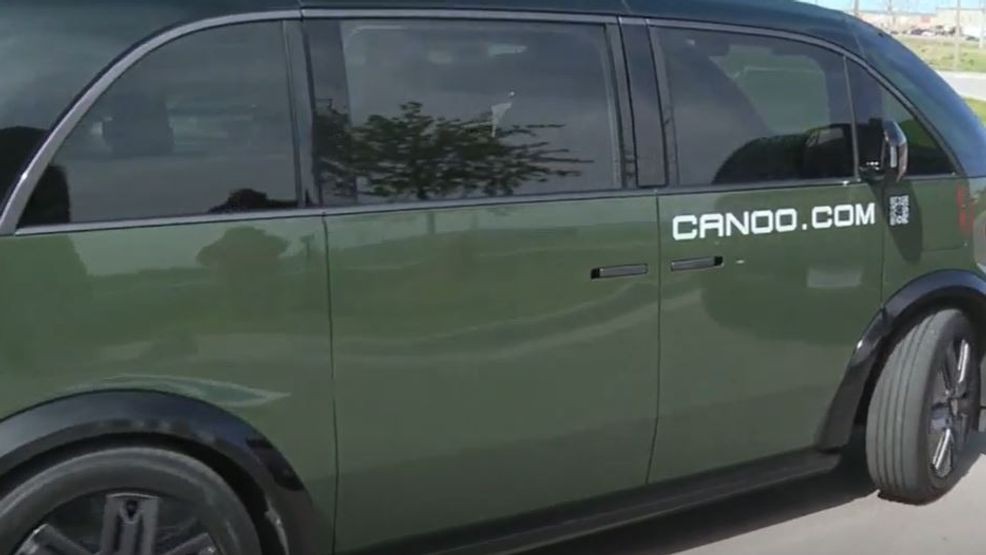
Canoo, the ambitious electric vehicle startup founded in 2017, has officially declared bankruptcy, marking a definitive end to its operations. The company has filed for Chapter 7 bankruptcy, initiating a process that will lead to the liquidation of its assets. This unfortunate conclusion follows Canoo’s failure to secure crucial funding from both the U.S. Department of Energy’s Loan Program Office and potential “foreign sources.” Over its years of operation, Canoo did manage to produce a limited number of electric vans, some of which were intended for clients including Walmart and the USPS.
The Rise and Fall of Canoo
Canoo’s journey, which began with a vision for unique, snub-nosed electric trucks and vans, has come to an abrupt halt. After relocating its headquarters to Texas in early 2024, the company announced its Chapter 7 filing with the U.S. Bankruptcy Court for Delaware. This legal action appoints a trustee responsible for overseeing the company’s asset liquidation and distributing proceeds to creditors.
The primary catalyst for Canoo’s demise appears to be its inability to secure adequate financial backing. Despite efforts to obtain capital from the Department of Energy’s Loan Program Office and engaging in discussions with international investors, these attempts ultimately proved unsuccessful. Consequently, Canoo has ceased all operations effective immediately.
Founded in 2017, Canoo first captured public attention in 2019 with the unveiling of its Lifestyle Vehicle. This seven-seat passenger van, characterized by its distinctive, rounded design, was initially slated for a subscription service model in 2021. However, the company’s strategic direction soon shifted towards commercial vehicles. In 2020, Canoo introduced the MPDV (Multi-Purpose Delivery Vehicle), a more utilitarian, boxy van with a projected 2022 release. Adding to its portfolio, Canoo revealed a cab-forward pickup truck in 2021, boasting an innovative expandable bed and significant horsepower. Production for these models was anticipated to commence in 2023.
While the Lifestyle Vehicle, MPDV, and pickup truck never reached mass production, Canoo distinguished itself from many other nascent EV companies by progressing further. The company eventually honed its focus on the LDV (Lifestyle Delivery Vehicle), a commercial van variant of the original Lifestyle Vehicle. This strategic pivot attracted interest from notable entities. In 2020, a partnership was announced with Hyundai Motor Group to potentially utilize Canoo’s “skateboard” platform for future electric vehicles, though this collaboration did not materialize.
Significant developments in 2022 included NASA’s selection of Canoo’s Lifestyle Vehicle to serve as crew transportation for its Artemis program. Additionally, Walmart entered into an agreement to purchase 4,500 LDVs. Although Canoo did not fulfill the entire order, Walmart-branded LDVs were observed undergoing testing on public roads. The company also secured a contract with the U.S. Army to outfit one of its pickup trucks as a Light Tactical Vehicle for military evaluation.
Further fleet-rental contracts were established with Zeeba in Los Angeles and Kingbee in Utah. In 2024, Canoo announced that the United States Postal Service (USPS) had ordered six right-hand-drive LDVs. At the time of the announcement, Canoo stated these vans were in service in Atlanta, though the exact number deployed remains unclear. The limited number of Canoo vehicles produced over the years are understood to be closer to pre-production prototypes than finished, mass-produced units. Tragically, these test vehicles represent the entirety of Canoo’s presence on American roads.
Conclusion
Canoo’s bankruptcy filing signifies the end of an era for the EV startup, highlighting the immense challenges in bringing new automotive ventures to market, particularly in the competitive electric vehicle landscape. Despite developing innovative designs and securing interest from major organizations, the inability to secure consistent funding ultimately proved insurmountable. The limited fleet of vehicles produced will likely remain as testaments to a bold vision that could not be fully realized.
What are your thoughts on Canoo’s journey and its ultimate bankruptcy? Share your opinions in the comments below.