
Bringing a litter of puppies into the world is one of the most rewarding — and demanding — experiences a dog owner can face. Whether your dog is pregnant for the first time or you’re a seasoned breeder, being fully prepared for whelping can mean the difference between a smooth, successful birth and a life-threatening emergency. Understanding what’s normal, what’s not, and when to call your vet is essential knowledge for every responsible owner.
Preparing for Whelping
Before your dog goes into labor, thorough preparation is key. The first step is knowing your dog’s due date — canine pregnancies typically last around 63 days, though they can range from 57 to 71 days. Tracking this window carefully allows you to monitor your dog more closely as her due date approaches.
Register your dog with a vet as soon as you suspect she’s pregnant. Your veterinarian will guide you through the pregnancy, provide dietary recommendations, and be your first point of contact in case of complications. Keep both daytime and emergency out-of-hours phone numbers saved and readily accessible.
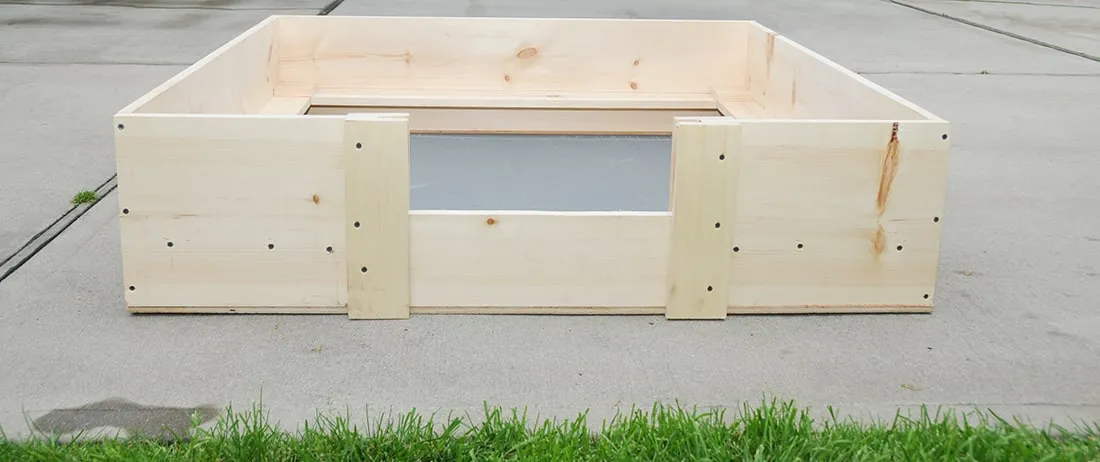
One of your most important preparations is setting up a whelping box. You can purchase a purpose-built one or construct your own from a large, sturdy cardboard box. The box should be:
- Warm and comfortable, kept in a quiet room at around 22°C
- Lined with clean, washable, absorbent bedding such as towels
- Large enough for your dog to stretch out and turn around
- Tall enough to keep newborn puppies inside, but low enough for the mother to step over
- Fitted with interior railings or barriers to prevent puppies from being accidentally crushed
Your dog’s nutrition and parasite control also need attention during pregnancy. She will require a change in diet and more frequent flea and worm treatments. Consult your vet for a tailored plan.
Stages of Normal Whelping
Stage 1: Preparing for Birth
The first stage of labor involves the birth canal relaxing and widening, and the puppies repositioning themselves for delivery. This stage typically lasts 6 to 12 hours but can extend up to 36 hours, particularly for first-time mothers or anxious dogs. During this phase, you may observe your dog:
- Becoming restless or hiding away
- Panting and eating less
- “Nesting” — digging, pacing, or circling her whelping box
- Passing a small amount of reddish-brown mucus from her vulva
- Experiencing mild, barely noticeable contractions
Contact your vet if she vomits repeatedly or you have any concerns.
Stage 2: Giving Birth
Once active labor begins, your dog will experience strong contractions and a visible urge to push. The first puppy often takes the longest — expect two to four hours with weaker contractions, or 20 to 30 minutes once contractions become strong.
Call your vet immediately if your dog has been straining with strong contractions for 20 to 30 minutes without producing a puppy.
Between puppies, gaps of five minutes to one and a half hours are normal, provided your dog remains calm and is not actively straining. Most puppies are born headfirst, though a tail-first delivery is also possible. Each puppy arrives inside a thin amniotic sac, which the mother typically tears open and removes.
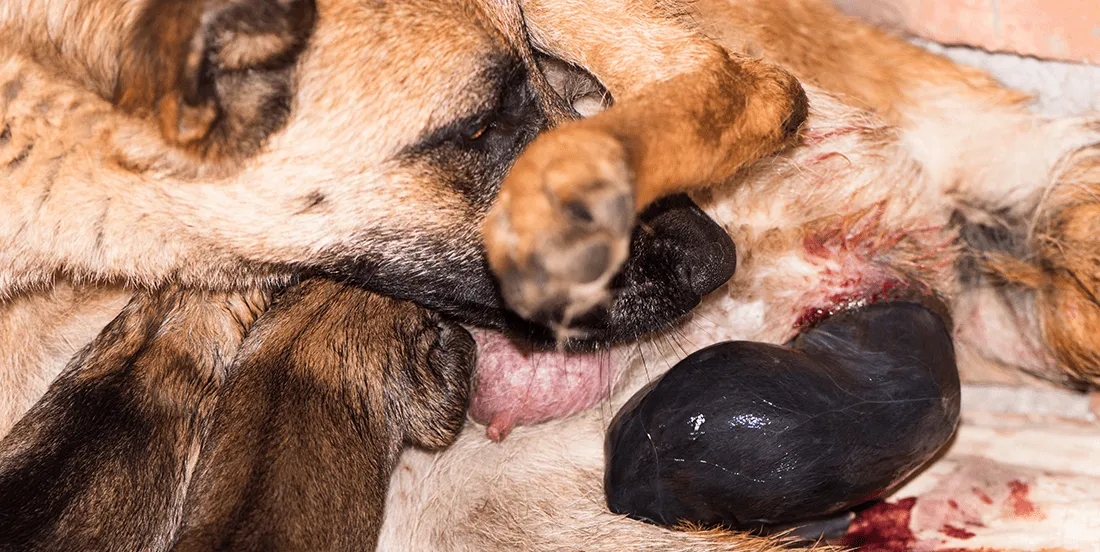
After each puppy, your dog should pass a placenta — the organ that provided oxygen and nutrients to the pup in the womb. A placenta usually follows within 15 minutes of each birth, though they don’t always arrive in sequence. If retained placentas are left inside the uterus, a serious infection called metritis can develop. For large litters, prevent the mother from eating too many placentas, as this can lead to vomiting and diarrhea.
A small amount of clear or bloody discharge is normal throughout whelping. However, significant bleeding is not. A small amount of green-tinged discharge after a puppy’s birth can be normal, but a thick green discharge without a puppy being delivered is a warning sign that requires immediate veterinary attention.
Stage 3: After Labor
The full litter is usually delivered within 3 to 12 hours from the start of active labor, with most dogs completing the process within 6 hours. The birth process should never exceed 24 hours — beyond that, the risk to both mother and puppies increases significantly.
After whelping, your dog will be exhausted and hungry. Provide her with food, water, and a quiet, comfortable space to bond with and nurse her puppies. A stressed or uncomfortable mother may reject her puppies, so ensuring she feels safe and settled is a top priority.
Problems During Whelping (Dystocia)
While most dogs whelp without assistance, complications — collectively called “dystocia” — can arise. These are especially common in flat-faced breeds such as Pugs, Bulldogs, and French Bulldogs. Contact your vet immediately if you notice any of the following:
- General illness — your dog seems unwell, shows symptoms of illness, or is behaving unusually
- Straining with no puppy — active pushing for 20 to 30 minutes without a puppy being delivered
- Green discharge without a puppy — may indicate a pup is in distress due to a failing oxygen supply
- Excessive bleeding — more than a few drops of blood is abnormal
- Exhaustion — if labor is prolonged or your dog runs out of energy to continue pushing
- Stuck puppy — large, malformed, or backwards-positioned puppies can become lodged in the pelvis; do not attempt to remove a stuck puppy without direct veterinary guidance
- Sac problems — if the mother cannot remove the birth sac, tear a small hole with your fingers to free the puppy’s head; avoid using scissors
- Umbilical cord issues — most mothers chew through the cord naturally; if it’s still attached hours later, call your vet for guidance on how to safely tie and cut it
- Overdue birth — if your dog was confirmed pregnant and shows no signs of labor by 70 to 72 days after mating, contact your vet
- Stillborn or unwell puppies — always seek a veterinary check if any pups are born dead or show signs of illness
Treatment for Whelping Complications
If your dog is experiencing difficulty giving birth, contact your vet straight away and provide as much detail as possible about the pregnancy. Depending on the situation, your vet may recommend:
- Monitoring — hospitalizing your dog to observe progress and intervene if needed
- X-rays or ultrasound — to check the condition and positioning of unborn puppies
- Oxytocin medication — a drug that intensifies uterine contractions; only appropriate in certain situations and must not be used without a veterinary examination first
- Assisted delivery — gentle manual assistance if a puppy is partially delivered but stuck
- Caesarean section — surgery under general anaesthesia to remove puppies when natural delivery is not possible
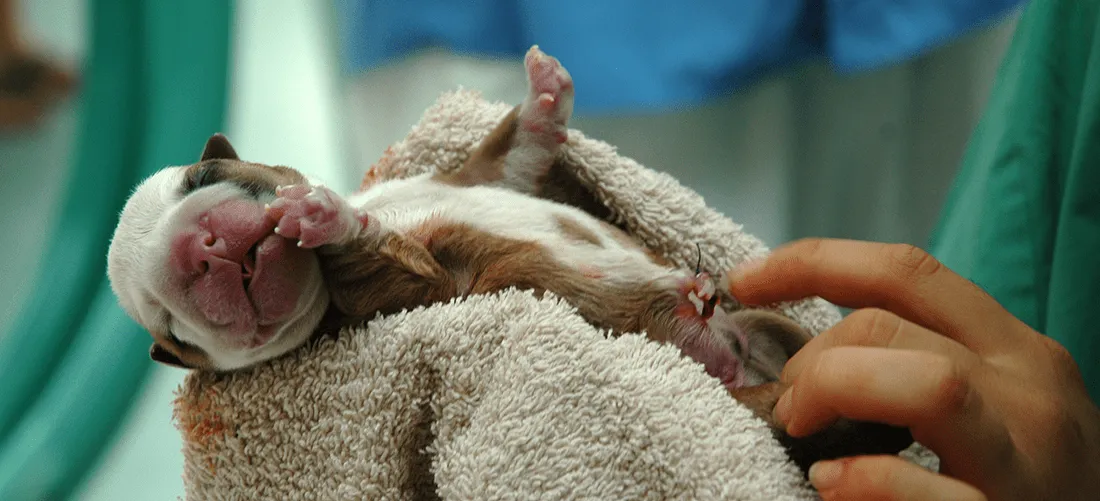 A newborn puppy wrapped in a towel being cared for after a difficult birth
Problems After Birth
Your responsibilities don’t end when the last puppy arrives. Watch for the following post-whelping complications:
Mammary problems — check your dog’s mammary glands daily to confirm she is producing sufficient milk and showing no signs of mastitis, a painful bacterial infection. Warning signs include lack of milk, pain, redness, swelling, itching, or discolored milk.
Metritis (uterine infection) — this serious but uncommon infection tends to occur when placentas or fetal tissue are retained in the uterus. Symptoms include low energy, reduced appetite, high temperature, foul-smelling vaginal discharge, and decreased milk production. Seek veterinary care immediately if these signs appear. Note that some vaginal discharge is normal for up to six weeks after whelping, as long as it is odorless and your dog has no other symptoms.
Eclampsia (hypocalcaemia) — a life-threatening condition caused by dangerously low blood calcium levels. It most commonly affects small-breed dogs with large litters, dogs with inadequate pregnancy nutrition, and heavy milk producers. Notably, dogs that received calcium supplements throughout pregnancy are also at elevated risk, because the body becomes reliant on the external supply and loses the ability to regulate calcium on its own. Symptoms include drooling, muscle stiffness, weakness, abnormal behavior, twitching, spasms, and seizures. This is a veterinary emergency — do not wait if you notice these signs.
Behavioral and mothering difficulties — while most dogs take to motherhood naturally, some struggle after caesarean births, stressful labors, or excessive intervention during delivery. Minimize disruption during whelping and set up the whelping box in a calm, warm, secluded area well before the due date. Only intervene in the birthing process when absolutely necessary.
Frequently Asked Questions
Does my dog need to have a litter? No — dogs live full, healthy lives without having puppies. Pregnancy carries real medical risks and places a significant physical burden on your dog. PDSA recommends neutering before the first season to prevent unwanted pregnancies and avoid the potential complications and costs associated with breeding.
What if my dog isn’t going into labor? Call your vet if your dog hasn’t begun whelping as expected or if you’re concerned about her progress. Have details of the mating date on hand.
How long is a dog pregnant? On average, 63 days — roughly nine weeks — though this can vary between 57 and 71 days.
How much bleeding is normal during whelping? A small amount of bloody discharge during labor is expected. More than a few drops of blood is abnormal and requires an immediate veterinary check. A slight vaginal discharge lasting up to six weeks after birth is normal, as long as it is odorless and your dog is otherwise well.
Whelping is a natural process that most dogs navigate successfully — but preparedness, attentive monitoring, and swift action when something seems wrong are what make all the difference. When in doubt, always err on the side of calling your vet. No question is too small when a mother and her puppies’ lives are at stake.
References
- PDSA (People’s Dispensary for Sick Animals). Whelping in Dogs — Pregnancy, Giving Birth and Newborn Care. pdsa.org.uk
- PDSA. Pregnancy in Dogs. pdsa.org.uk
- PDSA. Dog Neutering: A Guide to Castration and Spaying. pdsa.org.uk
- Royal College of Veterinary Surgeons (RCVS). Canine Reproduction and Whelping Guidelines. rcvs.org.uk
- American Kennel Club (AKC). Dog Pregnancy: A Week-by-Week Guide. akc.org