
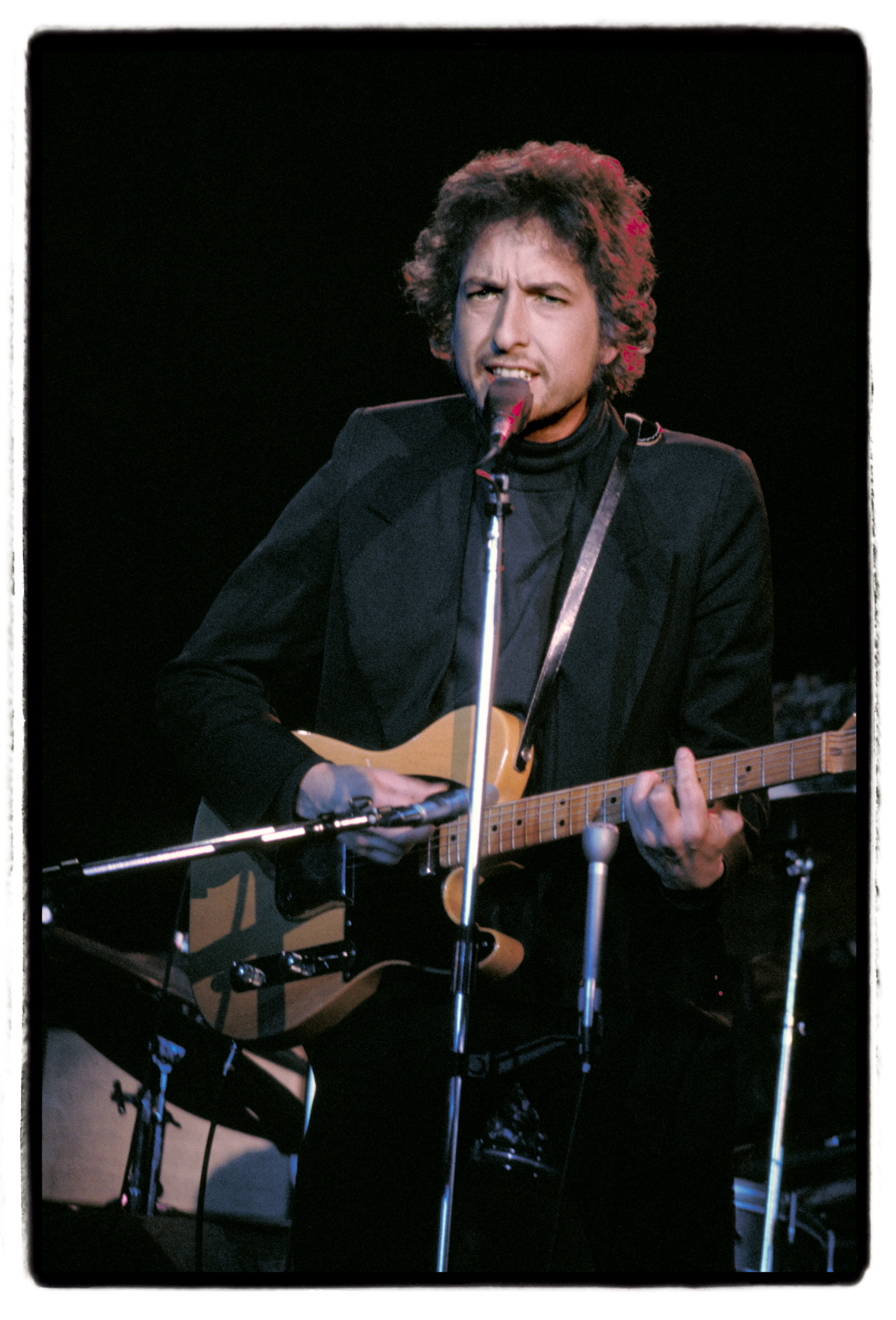
Bob Dylan, born Robert Allen Zimmerman on May 24, 1941, in Duluth, Minnesota, rose to prominence not merely as a musician, but as a cultural phenomenon. The majority of his formative years were spent in Hibbing, where his parents, Abram and Beatie, instilled in him and his younger brother, David, a strong connection to their Jewish heritage, including attending synagogue and celebrating his Bar Mitzvah at age 13. This foundation would later provide a complex backdrop to his evolving spiritual journey.
In 1960, Zimmerman, now known as Bob Dylan, made his way to New York City. Within a few years, he became a resonant voice for the burgeoning counterculture, his music a soundtrack to the 1960s’ protests against social injustice and the Vietnam War. His 1964 song, “The Times They Are A-Changin’,” captured the spirit of a generation, becoming an anthem for college students nationwide.
By the early 1980s, Dylan’s musical path had taken a turn that led some to believe he had converted to Christianity in 1978. This period saw the release of three gospel albums: “Slow Train Coming” (1979), “Saved” (1980), and “Shot of Love” (1981). During live performances from late 1979 to mid-1980, Dylan exclusively performed songs reflecting his newfound faith, often introducing them with spoken passages that echoed “Good News” sermons. The question of whether this was a permanent spiritual commitment or a temporary phase, akin to his artistic shifts, became a subject of considerable debate among fans and critics.
Scott Marshall’s “Bob Dylan: A Spiritual Life” (2017) delves into this complex aspect of Dylan’s identity. Initially, the reviewer expresses skepticism, feeling that Marshall’s focus on Dylan’s adherence to Jesus as the Messiah involved taking ambiguous statements out of context. However, as the book progresses, Marshall presents compelling evidence that challenges this initial doubt. A notable example is Dylan’s continued inclusion of “In the Garden,” a song from his gospel album “Saved,” in his live sets. The lyrics of this song are unequivocally centered on Jesus, with each stanza posing a question about the events in the Garden of Gethsemane and the resurrection.
Marshall also highlights perspectives from those who maintain Dylan’s deep connection to his Jewish roots. The book recounts a conversation with Howard Rutman, a lifelong friend, who observed Dylan wearing a prominent gold cross. Rutman’s assertion that Dylan “is a Jew, you know, a Jewish guy. And his soul, too. He’s really Jewish” underscores the enduring debate. Marshall himself ponders whether Dylan’s ethnic and cultural identity could be irrevocably altered by personal beliefs, questioning if the essence of Zimmerman could be fully separated from Bob Dylan.
Further evidence of Dylan’s ongoing ties to the Jewish community includes his attendance at his sons’ Bar Mitzvah ceremonies, including one at Jerusalem’s Western Wall, his study with Chabad rabbis, and his presence at synagogues for Yom Kippur services. This persistent engagement suggests a multifaceted spiritual life that defies simple categorization.
The core tension, as explored in Marshall’s work and reflected in Dylan’s own artistic persona, lies in the balance between his role as an artist and his search for ultimate revelation. As Bert Cartwright noted in “The Bible in the Lyrics of Bob Dylan” (1992), Dylan navigates a space where the Bible is viewed both as artistic inspiration and a source of profound truth. Dylan, an artist who famously eschews labels and even declined to attend the Nobel Prize ceremony in Stockholm, remains an enigmatic figure.
Ultimately, the intricate interplay between the Hebrew Bible and the New Testament within Dylan’s compositions, and the enduring presence of the Zimmerman within the persona of Bob Dylan, are depths that perhaps even the artist himself cannot fully articulate. His journey through faith and identity continues to resonate, offering a rich tapestry for exploration.
JAMES B. ROSENBERG is rabbi emeritus at Temple Habonim in Barrington. Contact him at rabbiemeritus@templehabonim.org.