
The Chevrolet Camaro has long been an icon of American muscle, and its third and fourth generations—spanning from 1982 to 2002—marked a transformative era for this legendary nameplate. These generations introduced groundbreaking advancements in design, performance, and handling, solidifying the Camaro’s reputation as a dominant force in the pony car segment. From aerodynamic styling to powerful V8 engines and refined suspension systems, these models set new benchmarks for driving dynamics and enthusiast appeal.
Third Generation Chevrolet Camaro (1982–1992)
The third-generation Chevrolet Camaro debuted in 1982, representing a bold departure from its predecessors. Built on the new GM F-body platform, which it shared with the Pontiac Firebird, this iteration featured a sleeker, more aerodynamic body style that improved both performance and fuel efficiency. The lighter and more rigid platform enhanced handling, making it a favorite among driving enthusiasts.
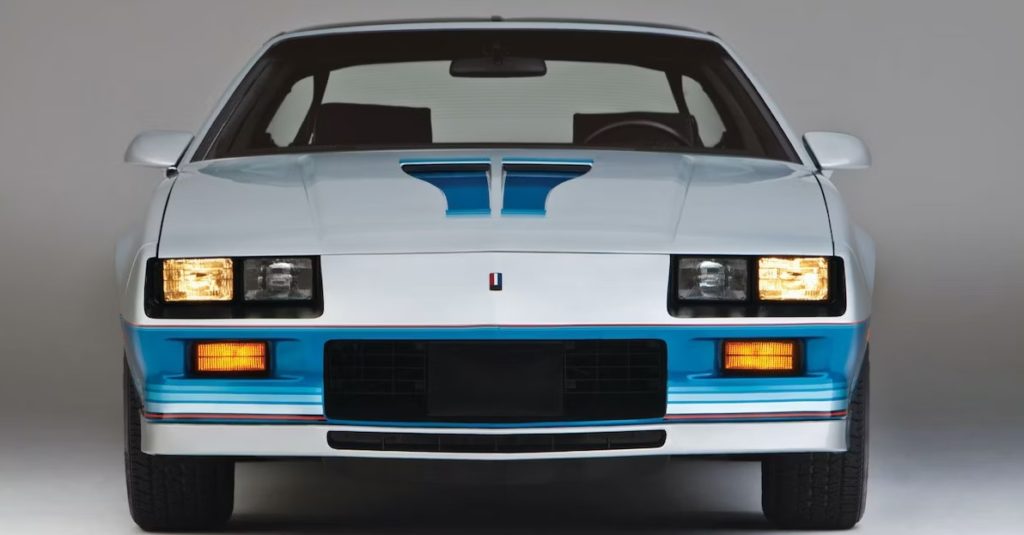
The interior was also redesigned with a driver-focused approach, offering a new dashboard layout and improved ergonomics. Chevrolet prioritized comfort and functionality, ensuring that the Camaro was as enjoyable to drive as it was to look at.
Engine Options
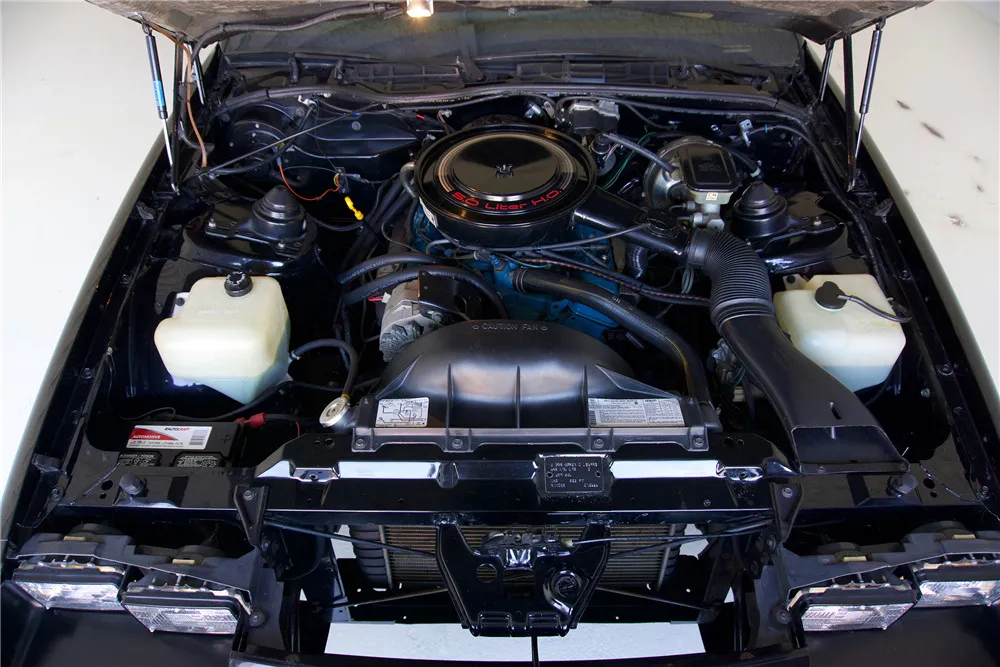
The third-generation Camaro was offered with a range of powerful V8 engines, each delivering impressive performance for its time.
5.0L Small Block V8 (1982–1992):
The initial Cross-Fire Injection version produced 165 horsepower and 240 lb-ft of torque. In 1985, the Tuned-Port Injection (TPI) version was introduced, boosting output to 190 horsepower and 240 lb-ft of torque. The High Output V8, introduced in 1991, delivered 230 horsepower and 300 lb-ft of torque.5.7L (350 CID) V8:
The first 5.7L TPI V8, introduced in 1987, produced 245 horsepower and 345 lb-ft of torque. The L98 TPI V8, borrowed from the Corvette, followed in 1988 with 230 horsepower and 330 lb-ft of torque. The most powerful engine of this generation, the 5.7L LT1 V8, debuted in 1992, delivering 275 horsepower and 325 lb-ft of torque.
Suspension Innovations
The third-generation Camaro featured a refined suspension system designed to enhance handling and ride quality. The front suspension utilized independent MacPherson struts with coil springs and lower control arms. In 1985, Chevrolet updated the front suspension with revised steering geometry and a larger front sway bar to reduce understeer and improve cornering.
The rear suspension replaced the leaf springs of the second generation with a new design featuring coil springs, trailing arms, and a torque arm. This setup improved handling and reduced wheel hop during hard acceleration. Additionally, the Camaro offered various suspension packages, including the Z28 Performance Package and the IROC-Z suspension package, which included stiffer springs, larger sway bars, and gas-charged shock absorbers.
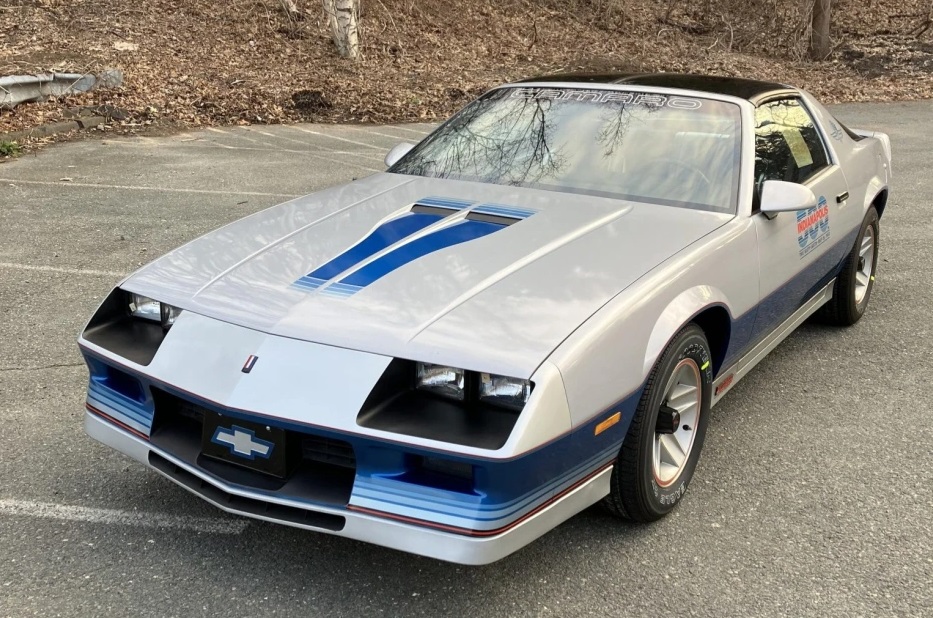
Fourth Generation Chevrolet Camaro (1993–2002)
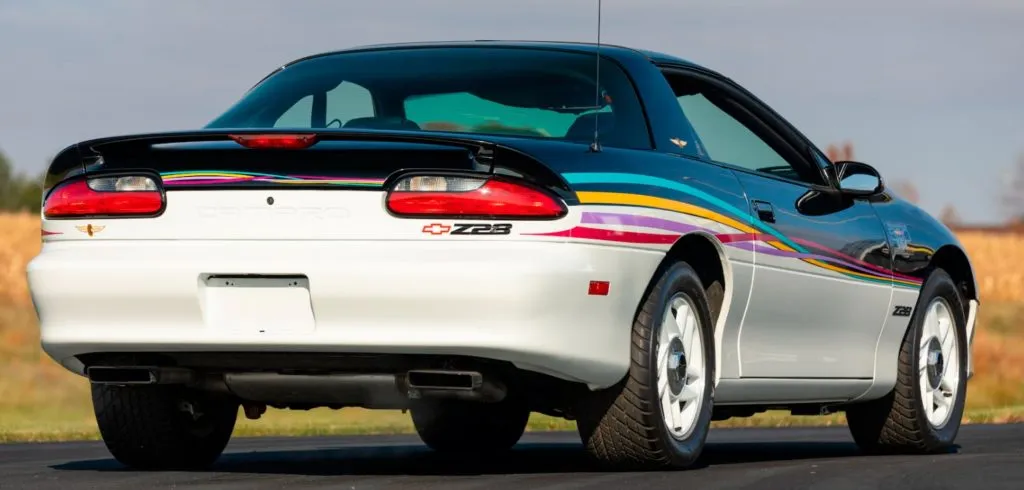
The fourth-generation Camaro, introduced in 1993, continued the legacy of its predecessor while incorporating modern advancements. This generation was available as a coupe or convertible and retained the front-engine, rear-wheel-drive layout. The body structure was even more rigid and lighter, thanks to the use of advanced, low-weight, high-strength materials.
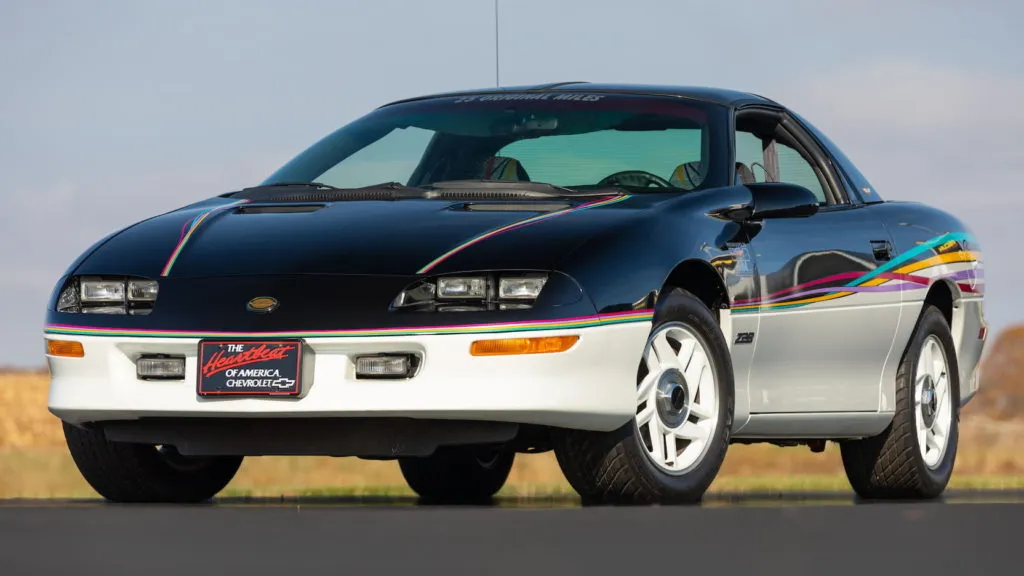 Front view of the 1993 Chevrolet Camaro
The fourth-gen Camaro also introduced a speed-sensitive power-assisted rack-and-pinion steering system for improved precision and responsiveness. Four-wheel disc brakes became standard equipment, with anti-lock brakes available as an option. The design was more aerodynamic, featuring a long hood, short rear deck, and curved rear window.
Engine Options
The fourth-generation Camaro offered a variety of V8 engine options, each delivering impressive power and torque.
5.7L LT1 V8 (1993–1997):
This engine produced 275 horsepower and 325 lb-ft of torque. It featured a reverse-flow cooling system that cooled the cylinder heads first, allowing for higher compression ratios and improved performance.5.7L LS1 V8 (1998–2002):
Introduced in 1998, the LS1 was a clean-sheet design that shared only rod bearings and valve lifters with previous small-block engines. It produced 305 horsepower and 335 lb-ft of torque.5.7L LS6 V8 (2001–2002):
Exclusive to the Camaro SS, the LS6 featured a higher-flowing intake, stiffer valvetrain, and a more aggressive camshaft. It delivered 320 horsepower and 345 lb-ft of torque.
Suspension Upgrades
The fourth-generation Camaro featured an updated suspension system that improved handling and ride comfort. The front suspension utilized a double A-arm setup with aluminum control arms, coil-over shocks, and higher-rate coil springs. The rear suspension featured a live axle with a torque arm, trailing arms, and robust springs.
In 1998, the Camaro received a refresh that included revised suspension geometry, updated front and rear springs, and a larger front stabilizer bar. The Z28’s sport suspension included aggressive shocks, springs, and a limited-slip differential, while the SS model offered an optional Bilstein suspension package with Bilstein shocks, heavier-rate springs, and larger stabilizer bars.
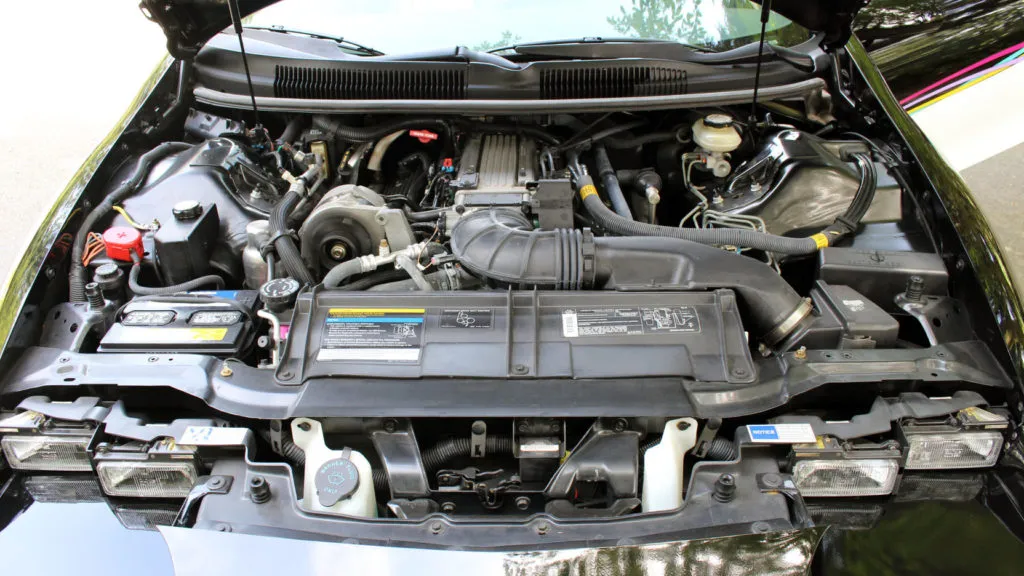 5.7L LS1 V8 engine in the fourth-gen Camaro
Camaro Suspension Upgrades
The third- and fourth-generation Camaro models remain highly popular among car enthusiasts due to their iconic styling and powerful V8 engines. For those looking to modernize their Camaro, Aldan American offers 100% bolt-on coilover conversion kits that require no drilling, cutting, or welding for installation. These kits are manufactured in the U.S. using high-quality materials and are fully rebuildable and serviceable, backed by a lifetime Forever Guarantee.
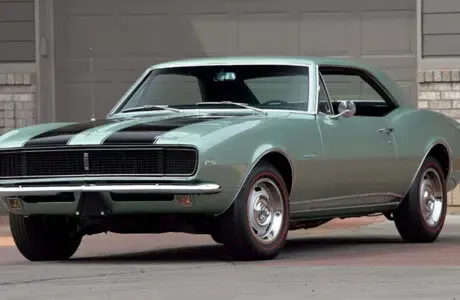
Aldan American’s coilover kits allow for adjustable ride height and tuning options, enabling enthusiasts to lower their Camaro by up to 2.0 inches. Whether you’re setting up your Camaro for the strip, autocross, or cruising, Aldan American provides the best suspension solutions for optimal performance.
Ready to Upgrade Your Camaro?
If you own a third- or fourth-generation Camaro and want to enhance its handling and performance, Aldan American’s suspension upgrades are the perfect choice. Explore their range of products and take your Camaro to the next level. Shop now and experience the difference!