
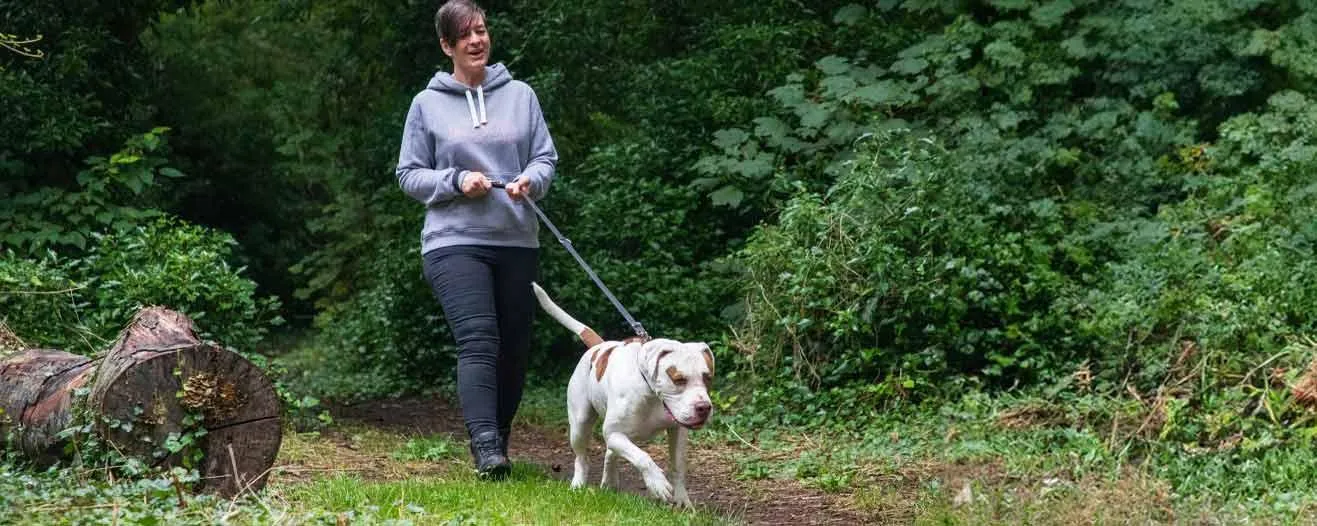
Teaching your dog to walk nicely on the lead is one of the most useful skills for both you and your dog. The primary goal is clear: your dog should learn that a loose lead — not pulling — is the quickest way to reach the places they want. This guide focuses on practical, reward-based steps you can use at home to turn chaotic walks into calm, enjoyable outings.
Who this is for
- Dog owners who want better control during walks
- New puppy parents learning leash basics
- Owners working with nervous or reactive dogs who pull
What you’ll need
- A comfortable, well-fitted collar or harness
- A standard 4–6 foot lead (not a retractable lead)
- Small, high-value treats or a toy your dog loves
- Patience for short, frequent training sessions
Quick overview of approach
- Use positive reinforcement: praise and reward the moment your dog pays attention or walks with a loose lead.
- Be consistent: always stop when the lead goes tight and only move again when the lead is loose.
- Train in short bursts: several 5–10 minute sessions each day work better than long, sporadic attempts.
Step-by-step training plan
Set up for success
- Choose a quiet area with minimal distractions for early sessions. Let your dog wear the lead but allow the full length so they can move freely.
- Have treats ready and within easy reach.
Capture attention while stationary
- Stand still and wait. When your dog looks at you or returns closer, mark the moment with praise and give a treat. This teaches that attention and proximity earn rewards.
Take a few steps
- After your dog pays attention and is rewarded, start walking. Use an inviting tone and offer treats to encourage your dog to stay close. Reward frequently while they walk with a loose lead.
Stop when the lead tightens
- If your dog pulls and the lead becomes tight, stop immediately and stand still and quiet. Wait until they relax or come back toward you, then reward and resume walking. Repeating this makes pulling an ineffective strategy.
Use “reset” by changing direction
- If stopping doesn’t refocus your dog, turn and walk in the opposite direction. Call them to you, reward when they follow, and continue. Changing direction teaches them to monitor your movement.
Add controlled distractions gradually
- Practice near low-level distractions (park benches, other people at a distance). If your dog lunges toward an item, stop and call them back; reward for returning on a loose lead. Slowly increase difficulty as your dog improves.
Reinforce with a fun goal
- Place a toy or treat a short distance away. If your dog pulls to reach it, stop and call them back; their reward for walking nicely should be access to the toy. This reinforces that loose-lead walking leads to rewards faster than pulling.
Keep sessions short and frequent
- Aim for multiple short training walks each day rather than one long session. Consistency across walks and family members matters.
Common problems and fixes
- Dog ignores treats: try higher-value rewards (small pieces of cooked chicken, cheese, or favorite toy).
- Dog pulls toward other dogs: increase distance, reward attention and calm behavior, use direction changes to regain focus.
- Training stalls: reduce distractions, return to earlier steps, and repeat until reliable.
Example progression (first two weeks)
- Days 1–3: Stationary attention training and short walks in a quiet area.
- Days 4–7: Add stopping when the lead tightens and practice direction changes.
- Week 2: Introduce low-level distractions and begin rewarding loose-lead walking near mild stimuli.
Safety and welfare notes
- Never use aversive methods (choke chains, prong collars, or harsh corrections); these can harm your dog physically and emotionally.
- If your dog shows aggression or severe fear, consult a qualified force-free trainer or veterinary behaviorist.
- Use equipment that fits well to avoid injury and allow natural movement.
[internal_links]
- Train your dog to leave ‘alone’ — teaching reliable leave commands helps manage pulling toward forbidden items.
- Find a dog trainer — seek qualified, reward-based trainers if you need hands-on help.
- Toilet training your dog — consistent routines and positive reinforcement support overall training success.
Conclusion and next steps
Consistent, reward-based practice makes loose-lead walking the most efficient strategy for your dog. Start simple, keep sessions short, and progress gradually. If you hit a wall, consider a certified, force-free trainer for personalized guidance. Happy walking — your calmer, more enjoyable walks are within reach.
References
- RSPCA. “Training your dog.” https://www.rspca.org.uk/adviceandwelfare/pets/dogs/training
- RSPCA. “Find a dog trainer.” https://www.rspca.org.uk/adviceandwelfare/pets/dogs/training/trainer