
If your dog has been struggling with recurring diarrhoea, straining to poop, or passing mucus-covered stools, your vet may have mentioned the word “colitis.” One of the very first things you’ll be told to sort out is their diet. Finding the best food for dogs with colitis isn’t just a nice-to-have — it’s often the single biggest factor in whether your pup’s symptoms improve or keep flaring up. This guide walks you through exactly what to feed, what to avoid, and how to transition your dog onto a gut-friendly diet safely.
Does Diet Really Help Manage Colitis in Dogs?
Yes — diet plays a central role in managing canine colitis. Continuing to feed foods that irritate your dog’s colon means the inflammation, discomfort, and diarrhoea will keep coming back, no matter what other treatments are in place. Ignoring the dietary side of things can allow the condition to worsen over time, so as soon as your dog receives a colitis diagnosis, it’s worth reviewing and adjusting their food straight away, ideally alongside your vet’s guidance.
What Should the Best Food for Dogs with Colitis Contain?
Not every dog food is created equal when it comes to sensitive digestive systems. A diet suited to colitis generally ticks these boxes:
- High in fibre – Both soluble and insoluble fibre help regulate digestion, encourage regular bowel movements, and firm up stool consistency. That said, some dogs react poorly to too much fibre, so it’s worth checking the balance with your vet rather than guessing.
- Easily digestible proteins – Lean, gently processed proteins mean the body doesn’t have to work overtime to break them down and absorb them.
- Low in fat – Fatty meals can aggravate an already inflamed gut, colon, and digestive tract. Because colitis inflames the intestines, fat absorption becomes harder, so lower-fat recipes are gentler on the system.
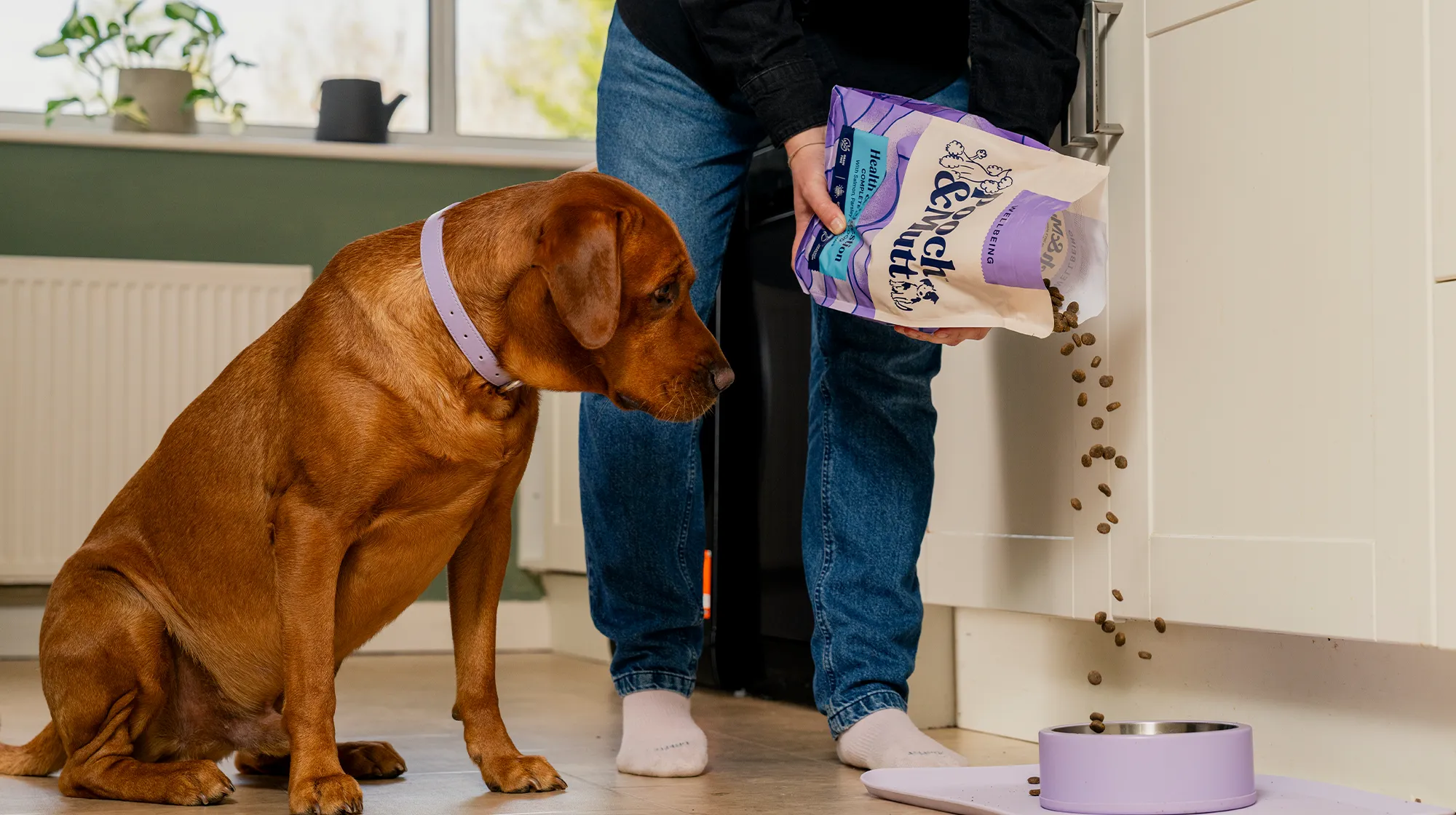
Choosing the Right Type of Food
Once you know what to look for nutritionally, the next question is which type of food actually fits the bill.
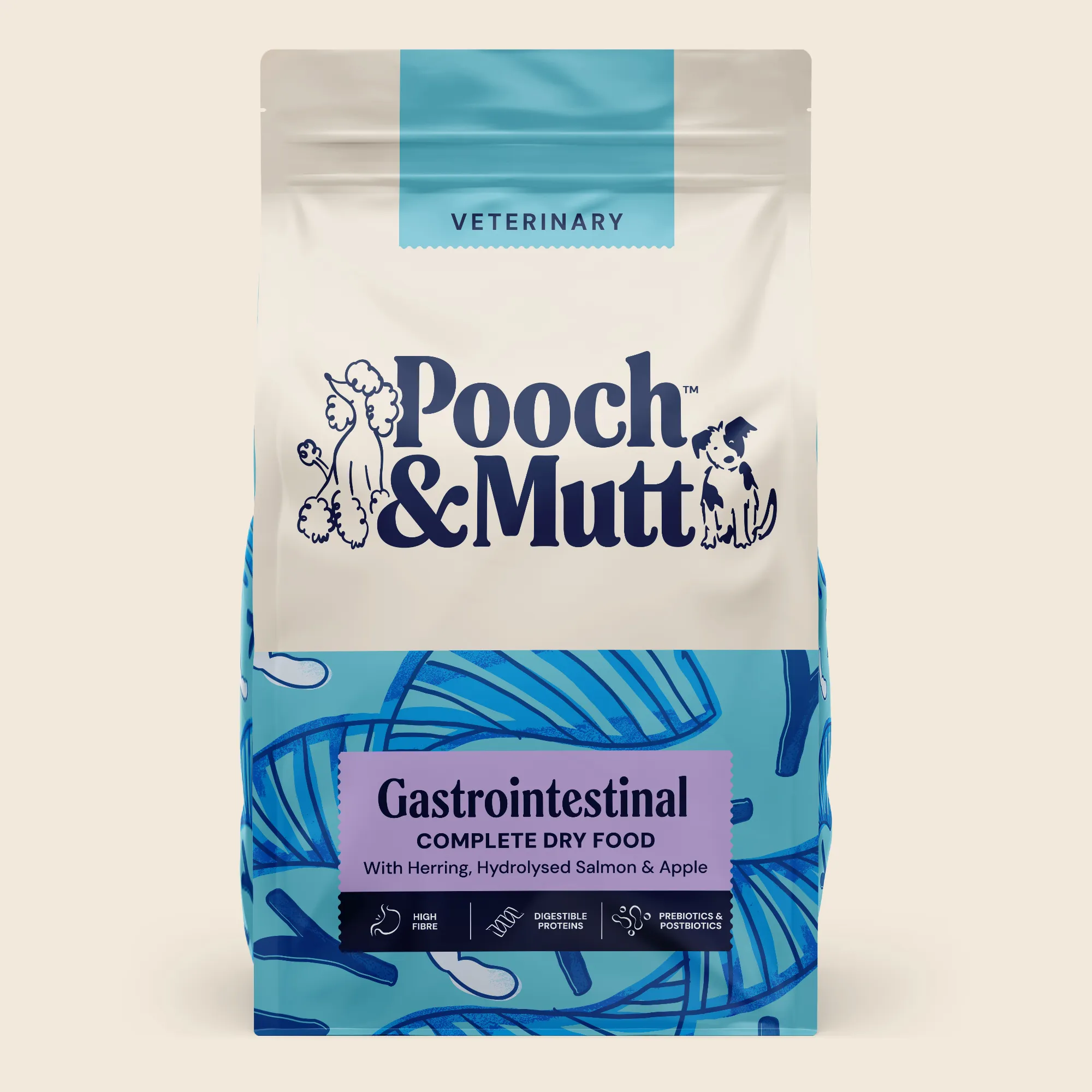
Specialist gastrointestinal dry food is a popular option for dogs with colitis, since it’s formulated specifically around digestive sensitivity, with controlled fat levels and gut-supporting ingredients built in.
Some owners prefer a homemade diet so they know exactly what’s going into the bowl. This can work well, but getting the nutritional balance right without professional input is genuinely tricky — home-cooked meals for a dog with colitis should always be planned with a vet or pet nutritionist rather than trial and error.
Hydration matters just as much as ingredients. Dogs with colitis are at higher risk of dehydration, so boosting water intake is essential. Wet food naturally helps here, but dry gastrointestinal formulas can also be softened with warm water or paired with an oral hydration solution if your dog prefers kibble.
Grain-Free Options for Colitis-Prone Dogs
Grain is one of the more common dietary triggers for colitis flare-ups, which is why many pet parents move to a grain-free diet. Look for recipes built around a single easily digestible protein — such as salmon or herring — combined with probiotics and prebiotics to calm an unsettled gut, plus a natural fibre source like apple pulp.
Beyond fully grain-free ranges, many “sensitive stomach” or “health and digestion” recipes use gently digestible proteins such as lean turkey or white fish alongside nutrient-dense vegetables, again paired with probiotics and prebiotics to support bowel function.
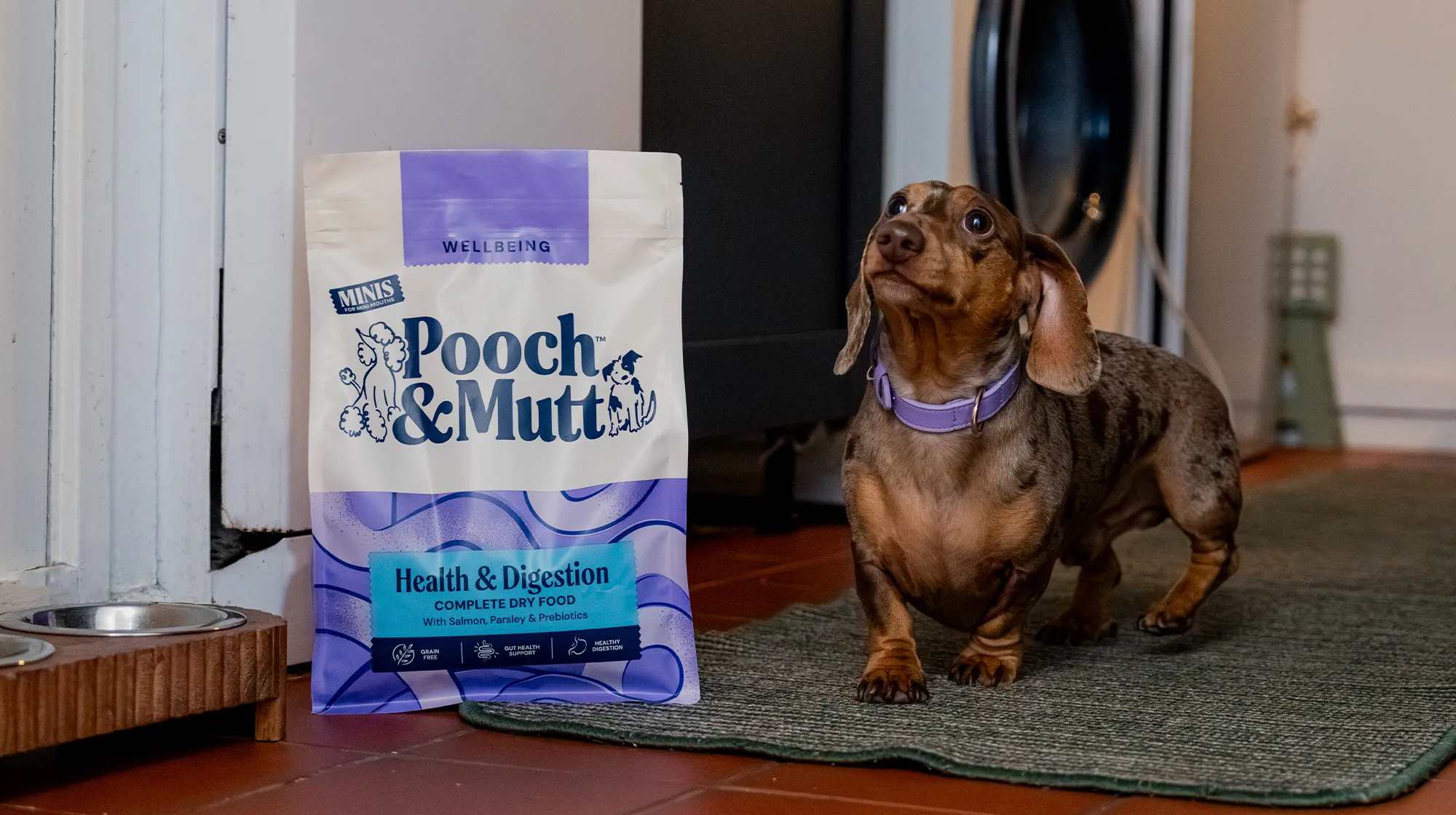
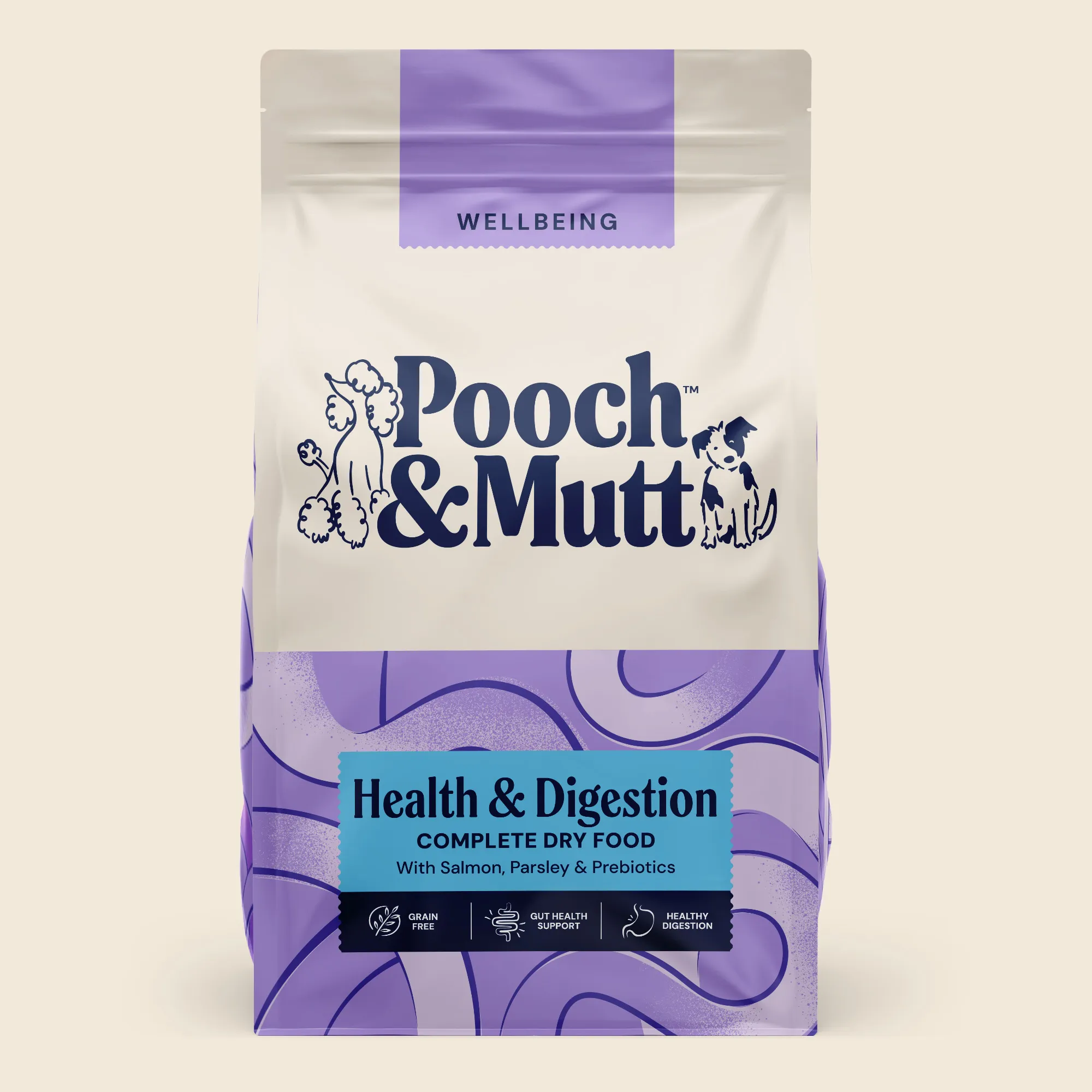 Health & Digestion Dry Food
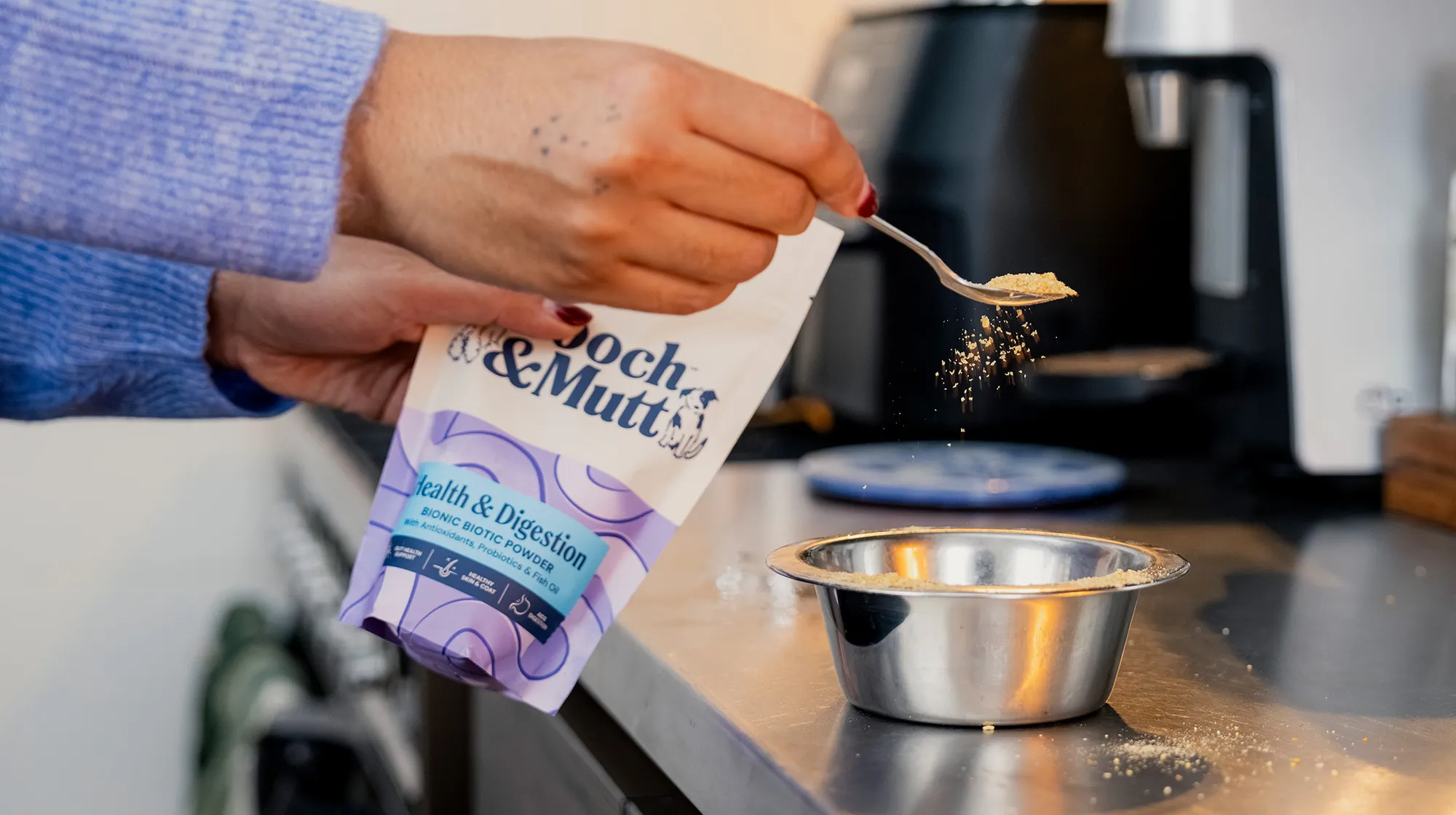
A natural probiotic supplement sprinkled onto meals can also be a useful addition to whichever food you settle on. Whatever combination you’re considering, run it past your vet before making the switch.
Ingredients to Avoid When Feeding a Dog with Colitis
Just as important as knowing what to feed is knowing what to keep well away from your dog’s bowl:
- High-fat foods and simple carbohydrates – Fatty treats and most human table scraps put unnecessary strain on an already inflamed digestive system, can worsen colitis, and add little nutritional benefit.
- Common allergens – Grains, red meat, and dairy frequently irritate the stomach and digestive tract, making colitis symptoms worse. Simple, gently digestible ingredients — or a grain-free formula — tend to be the safer route.
- Cheap, non-specialist dog food – Budget kibble not formulated for digestive sensitivity is more likely to contain high-fat fillers, preservatives, and added sugars, all of which can make your dog’s symptoms significantly worse.
Transitioning Your Dog to a Colitis-Friendly Diet
Switching foods too abruptly can shock an already sensitive gut, so a gradual approach works best:
- Introduce the new food slowly, mixing it with your dog’s current food and phasing out the old diet completely over roughly 7–10 days.
- Monitor your dog’s behaviour during the switch, keeping an eye on stool consistency, energy levels, and any signs of lethargy or bloating.
- Stay in touch with your vet throughout treatment. They can adjust the plan, recommend further dietary tweaks, or prescribe medication if needed. Regular check-ups are a key part of long-term colitis management.
- Tailor the diet to your dog’s preferences. Some dogs are fussy eaters, so if they’re turning their nose up at the new food, talk to your vet about palatable alternatives that still meet their nutritional needs.
Key Takeaways
Managing colitis in dogs comes down to a few consistent principles. Diet is directly tied to digestive health, so a suitable feeding plan is essential once colitis has been diagnosed. Aim for meals that are high in fibre, low in fat, and built from simple, easily digestible ingredients — or opt for a specialist gastrointestinal or sensitive-stomach formula that does this balancing for you. Probiotics and prebiotics should be considered non-negotiable allies, either already included in the food or added via a targeted supplement. Don’t overlook hydration, whether through wet food, oral hydration solutions, or simply encouraging your dog to drink more water throughout the day. And finally, keep up with regular vet check-ins, since they can fine-tune the plan as your dog’s condition evolves.
With the right combination of veterinary guidance and a carefully chosen diet, most dogs with colitis can avoid repeated flare-ups and go on to enjoy a much more comfortable, higher quality of life.
Frequently Asked Questions
Can stress affect my dog’s colitis symptoms?
Yes. Stress alone can sometimes trigger colitis. If other causes have been ruled out and your dog has recently been through a stressful event — a house move, surgery, or a new pet joining the household — stress could well be behind a flare-up or worsening symptoms.
Is salmon good for dogs with colitis?
Salmon is a nutritious protein rich in omega-3 and omega-6 fatty acids, but its higher fat content can make it riskier for dogs with serious digestive conditions like pancreatitis. A specialist digestive food containing salmon is usually fine, but if feeding fresh salmon, make sure it’s cooked, unsalted, and completely bone-free.
What’s the difference between IBD and colitis in dogs?
IBD (Irritable Bowel Disease) refers to inflammation across the entire digestive tract, including the stomach and small intestine, while colitis specifically affects the colon. Colitis can be a short-term, acute reaction to another illness, whereas IBD tends to be a longer-term condition requiring ongoing dietary management.
How long does it take to see improvement after switching foods?
This varies depending on severity and underlying cause, but most dogs show noticeable improvement within 2–4 weeks of transitioning to a colitis-friendly diet. Keep tracking stool quality and behaviour, and update your vet as you go.
Are there supplements that help dogs with colitis?
Probiotic supplements are a strong option, helping balance gut bacteria and support digestion, immunity, and bowel regularity. While some probiotics occur naturally in food, a dedicated supplement sprinkled over meals offers a more concentrated, targeted dose.
Should I avoid giving treats to a dog with colitis?
Not necessarily — dogs with sensitive tummies can still enjoy treats, as long as fatty, sugary, or human-food options are avoided. Look for treats made from natural, gut-friendly ingredients, ideally ones formulated with digestive support in mind.