
If your dog has been diagnosed with Cushing’s disease, you’re likely navigating a complex condition that requires careful management. This hormonal disorder occurs when a dog’s body produces excessive cortisol, leading to symptoms like recurrent infections, skin problems, a pot-bellied appearance, and increased appetite, thirst, and urination. While canine Cushing’s disease can be challenging to diagnose and treat, it is controllable. Alongside traditional medical or surgical therapy, proper nutrition plays a vital role in supporting your dog’s health and managing specific symptoms.
Understanding the Two Types of Cushing’s Disease and Their Treatments
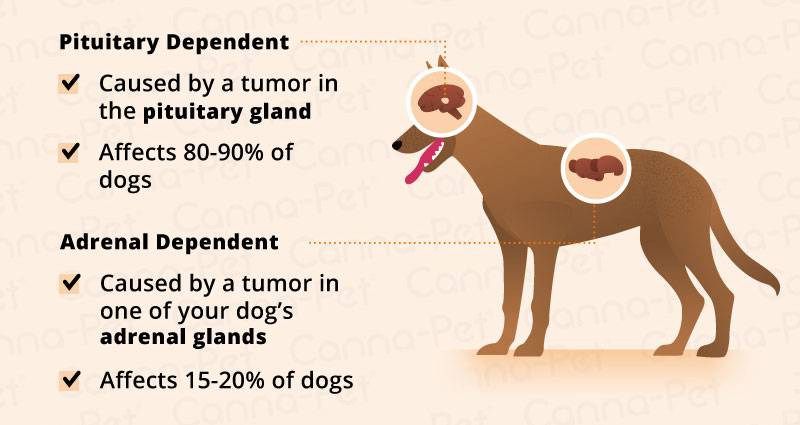
The treatment approach depends entirely on which type of Cushing’s disease your dog has: pituitary-dependent or adrenal-dependent.
Adrenal-Dependent Cushing’s Disease
Adrenal tumors can often be treated with abdominal surgery. If the mass is successfully removed and has not spread to other organs, this form of Cushing’s disease may be cured. In cases where surgery is not an option or before the procedure, veterinarians frequently prescribe medications to help manage the condition.
Pituitary-Dependent Cushing’s Disease
This is the more common form, accounting for 80–85% of all canine Cushing’s cases. Pituitary tumors are typically not surgically removable, meaning most dogs require lifelong medication such as mitotane or trilostane to keep their symptoms under control.
Regardless of which type your dog has or how it is treated, diet remains a cornerstone of supportive care. Nutritional therapy, when implemented correctly, can improve overall health and target specific symptoms.
Key Characteristics of a Cushing’s Disease Diet
No single diet works for every dog with Cushing’s disease, but certain general principles apply. Always consult your veterinarian to determine the ideal food for your individual dog.
Formulated for Adult Maintenance
Choose a food that meets AAFCO recommendations for adult maintenance. Ideally, avoid foods labeled for “all life stages,” as these are often more calorically dense. Adult formulas help dogs with Cushing’s disease maintain a healthy weight and avoid excess calorie intake.
Low in Fat with Moderate Fiber
Many dogs with Cushing’s disease carry excess body fat. A diet containing less than 12% fat (on a dry matter basis) and moderate crude fiber (8–17% DM) is reasonable. However, this type of food is not appropriate if your dog is underweight.
How to calculate dry matter (DM) values:
- Step 1: 100% – % moisture listed on package = % dry matter
- Step 2: (Fat % listed ÷ DM%) × 100 = DM fat percentage
- Step 3: (Fiber % listed ÷ DM%) × 100 = DM fiber percentage
| Label Values | Calculation | Dry Matter Value |
|---|---|---|
| Moisture: 10% | 100% – 10% | 90% |
| Fat: 9% | (9% ÷ 90%) × 100 | 10% |
| Fiber: 10% | (10% ÷ 90%) × 100 | 11% |
Highly Digestible Protein Sources
Protein in your dog’s food should be highly digestible to support muscle maintenance without overloading the system. Excellent examples include:
- Egg whites
- Muscle meats (chicken, beef, lamb)
- Organ meats
Low Sodium Content
If your dog has hypertension (high blood pressure), your veterinarian will likely recommend avoiding high-sodium foods. A diet with low sodium levels helps maintain normal blood pressure and reduces strain on the cardiovascular system.
Recommended Foods for Dogs with Cushing’s Disease
For many dogs with Cushing’s disease who are slightly overweight, a high-quality adult dog food designed to prevent weight gain is appropriate. Look for reputable brands that meet the nutritional criteria outlined above. Your veterinarian can provide specific product recommendations based on your dog’s health profile.
Do You Need to Add Supplements?
If you are feeding a nutritionally complete and balanced dog food, supplements are usually unnecessary. However, if your dog has additional health problems, your veterinarian may recommend specific supplements. For example, a dog with both Cushing’s disease and arthritis might benefit from a joint supplement containing glucosamine and chondroitin sulfate. Always consult your vet before adding any supplement to your dog’s regimen.
Additional Care Tips for Dogs with Cushing’s Disease
Caring for a dog with Cushing’s disease requires extra attention to detail. Follow these guidelines to support your pet’s well-being:
- Follow veterinary recommendations strictly regarding medication administration, diet, and follow-up care.
- Never restrict water access. Dogs with Cushing’s disease experience increased thirst and always need clean, fresh water. When the disease is well-controlled, excessive drinking typically decreases.
- Commit to weight management. If your veterinarian recommends weight loss, take it seriously. Ask for a safe, effective weight loss plan if you are unsure how to proceed.
Final Thoughts
Treatment for Cushing’s disease can be complicated, but with the right medical care and nutritional support, your dog can live a healthy, comfortable life. Your veterinarian is your best resource for navigating this journey—from diagnosis through long-term management. Always communicate openly about any changes in your dog’s symptoms, appetite, or behavior, and never adjust medications or diet without professional guidance.
References
- PetMD. Cushing’s Disease in Dogs. Retrieved from https://www.petmd.com/dog/conditions/endocrine/c_dg_hyperadrenocorticism
- PetMD. Mitotane (Lysodren) for Dogs. Retrieved from https://www.petmd.com/pet-medication/mitotane-lysodren
- PetMD. Vetoryl (Trilostane) for Dogs. Retrieved from https://www.petmd.com/pet-medication/vetoryl
- Association of American Feed Control Officials (AAFCO). Pet Food Standards. Retrieved from https://petfood.aafco.org/
- Coates, J., DVM. Written by Jennifer Coates, DVM. PetMD.