
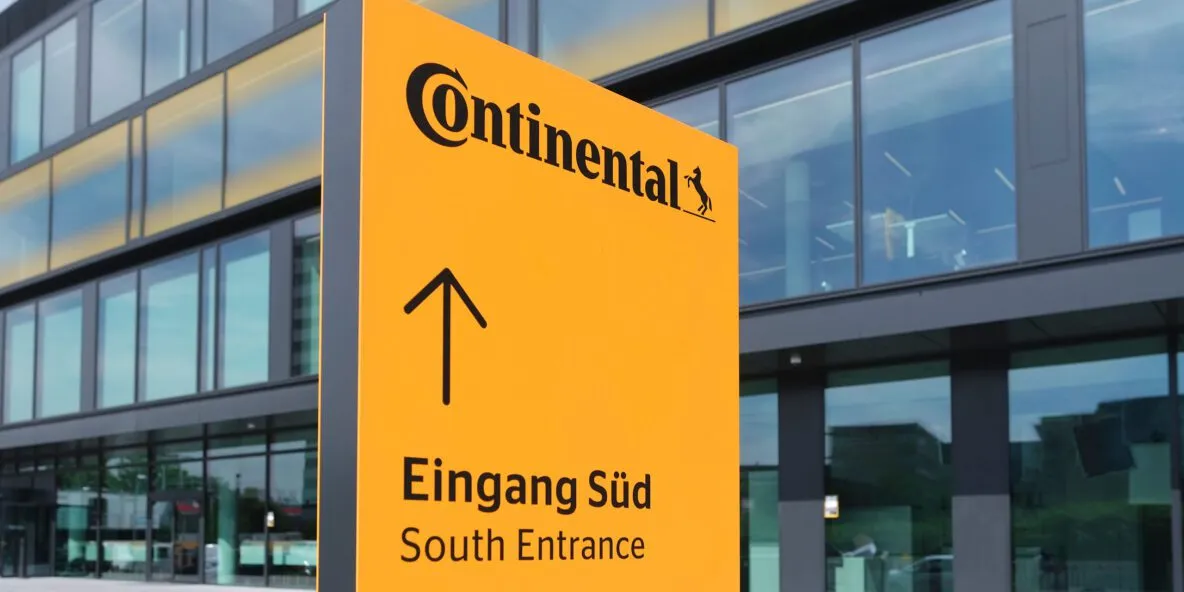
The Continental ContiTech sale has officially closed one of the most significant corporate restructurings in the European auto supply industry. On 4 July 2026, German industrial giant Continental AG confirmed it had sold its ContiTech materials and industrial solutions division to Lone Star Funds, a Texas-based private equity firm. The move completes a multi-year transformation that strips Continental down to a single focus: tyre manufacturing. For an industry watching legacy suppliers reinvent themselves amid slowing vehicle demand, this deal offers a clear case study in strategic simplification.
From Diversified Conglomerate to Pure-Play Tyre Company
Continental’s realignment did not happen overnight. The strategic pivot began in September 2025, when the company spun off its highly profitable automotive parts division into an independent, separately listed entity now known as Aumovio, which trades on the Frankfurt Stock Exchange. Earlier in 2026, Continental further trimmed its industrial footprint by selling ContiTech’s former Original Equipment Solutions business. The ContiTech sale to Lone Star Funds represents the final piece of that puzzle, leaving Continental as a pure-play tyre manufacturer for the first time in its corporate history.
The deal values ContiTech, which produces industrial rubber and plastic components such as conveyor belts and air springs, at an enterprise valuation of €4 billion (roughly $4.6 billion). The agreement also includes a performance-based earnout of up to €250 million payable in future years, contingent on the division’s post-sale results. Continental expects to close the transaction by the end of 2026, pending regulatory approval.
What the Deal Means for Continental’s Balance Sheet
Financially, the transaction is designed to strengthen Continental’s position as it narrows its focus. After accounting for transferred liabilities, including pension and lease obligations, the company expects net cash proceeds of approximately €3.1 billion. Of that, around €2.5 billion is earmarked for shareholder returns through a special dividend, share buybacks, or a combination of both, while the remainder is intended to reinforce the company’s capital structure.
Continental’s supervisory board chair Sabrina Soussan described the sale as the final step in the company’s realignment, while Lone Star Funds chief executive Donald Quintin pointed to the firm’s confidence in ContiTech’s long-term growth potential, noting plans to invest further in the unit’s technology and market position.
A Narrower, More Focused Tyre Business
Once the sale closes, Continental’s remaining operations will center entirely on its global tyre business, which employs roughly 55,000 people across 19 manufacturing plants worldwide. Passenger car tyres made up 77% of the company’s tyre sales in 2025, with the EMEA region generating the largest regional share at 53%. Replacement tyres accounted for 76% of total passenger car radial (PCR) sales, and Continental has signaled it will keep prioritizing premium ultra-high-performance tyres of 18 inches and larger, a segment that already represented 55% of PCR sales last year.

Headwinds Facing the New Pure-Play Continental
While the ContiTech divestment simplifies Continental’s structure, it does not eliminate the challenges facing the broader German industrial and automotive supply sector. Global car sales have been contracting in several key markets, and German industry more broadly has faced sustained pressure from higher energy costs, softer export demand, and intensifying competition from Asian manufacturers. ContiTech itself had already been under strain prior to the sale, having cut around 3,000 jobs earlier in 2026, including 1,600 positions in Germany, as part of a plan to save €150 million annually from 2028.
For Continental, a leaner corporate structure focused solely on tyres could, in theory, be easier to manage and value than a sprawling conglomerate spanning automotive components, industrial materials, and tyres. But it also means the company’s fortunes are now more directly tied to a single, cyclical market segment rather than diversified across multiple automotive supply chains.
Looking Ahead
The Continental ContiTech sale to Lone Star Funds is a landmark moment for one of Europe’s oldest automotive suppliers, formally closing the chapter on its era as a diversified industrial and automotive technology group. With Aumovio already trading independently and ContiTech now transitioning to private equity ownership, Continental enters a new phase as a dedicated, pure-play tyre manufacturer navigating a global auto market defined by contracting sales volumes and shifting competitive dynamics. Regulatory approval and the deal’s final closing, expected by year-end 2026, remain the next milestones to watch.
What do you think this restructuring means for the future of legacy European auto suppliers? Share your thoughts, and explore more analysis on the shifting automotive supply chain landscape.
References
- Continental AG. (2026, July 4). Continental Sells ContiTech to Lone Star Funds and Will Become a Pure-play Tire Manufacturer. Continental Press Release.
- Bloomberg. (2026, July 4). Continental Sells ContiTech to Lone Star at €4 Billion Valuation.
- European Rubber Journal. (2026, July 6). Conti in €4bn deal to sell ContiTech to investment firm Lone Star Funds.
- Markets Group. (2026, July 5). Lone Star Funds to acquire ContiTech in €4 billion deal.
- Automotive World. (2026, July 6). Continental finalises tyre-only pivot with ContiTech sale.