
The global automotive industry is evolving faster than ever, driven by electrification, smart diagnostics, and advanced drivetrain systems. For students who want to turn a passion for engines and vehicle technology into a stable, well-paid career, an Automotive Engineering Technology degree offers exactly that pathway. This program equips learners with deep technical knowledge of engines, drivetrains, automotive electrical-electronic systems, and modern vehicle diagnostic and maintenance technologies, preparing them for one of the fastest-growing sectors in engineering.
With strong growth in both domestic and international automotive markets, demand for skilled technicians and engineers continues to rise, creating abundant job opportunities and competitive salaries for graduates who hold this credential.
Program Overview
The Automotive Engineering Technology program is structured as a 4-year course of study spanning 12 semesters. Upon completion, graduates are awarded the title of Automotive Engineering Technology Engineer, a credential recognized across manufacturing, repair, and research sectors of the automotive industry.
Admission typically requires a combination that includes Mathematics and Physics, paired with a third subject such as Chemistry, English, Literature, or Civic and Economic-Legal Education, depending on the specific admissions track offered.
Highlights of the Training Program
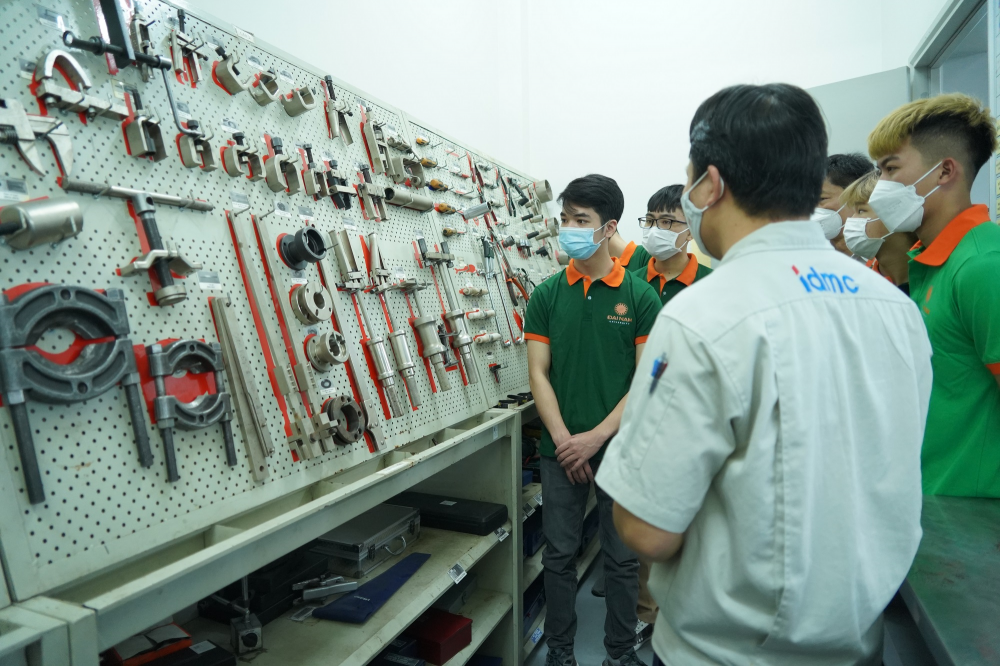
What sets a strong Automotive Engineering Technology curriculum apart is its practical, industry-aligned approach. Rather than spending years on abstract theory, students are trained on core knowledge of the field from day one, with hands-on exposure to real vehicles and workshop equipment built into the earliest semesters.
Accelerated, Efficient Training Duration
The program runs on a 3-semesters-per-year schedule, allowing students to complete their engineering degree in 4 years without sacrificing academic rigor. This compressed model helps students reduce living expenses, enter the workforce sooner, and free up time for further studies such as a Master’s or Ph.D. in automotive or mechanical engineering.
A Curriculum Built Around Core and Specialized Content
The full training program includes 57 courses worth 151 credits in total — 29 credits dedicated to foundational coursework and 56 credits focused on specialization. Beyond classroom and workshop practice, students complete two full internship semesters at partner enterprises plus one semester dedicated to a capstone graduation project, ensuring theoretical learning is consistently reinforced through real-world application.
Strong Industry Connections for Employment
A defining feature of top automotive technology programs is their direct link to employment. Many universities report that 100% of Automotive Engineering Technology students are connected with job opportunities through partnerships with automotive manufacturers, dealerships, and repair networks, giving graduates a clear route into the workforce immediately after finishing their degree.
Core Skills and Graduate Competencies
Graduates of an Automotive Engineering Technology program are expected to leave with a well-rounded mix of technical depth and professional soft skills, which employers across the automotive supply chain actively look for.
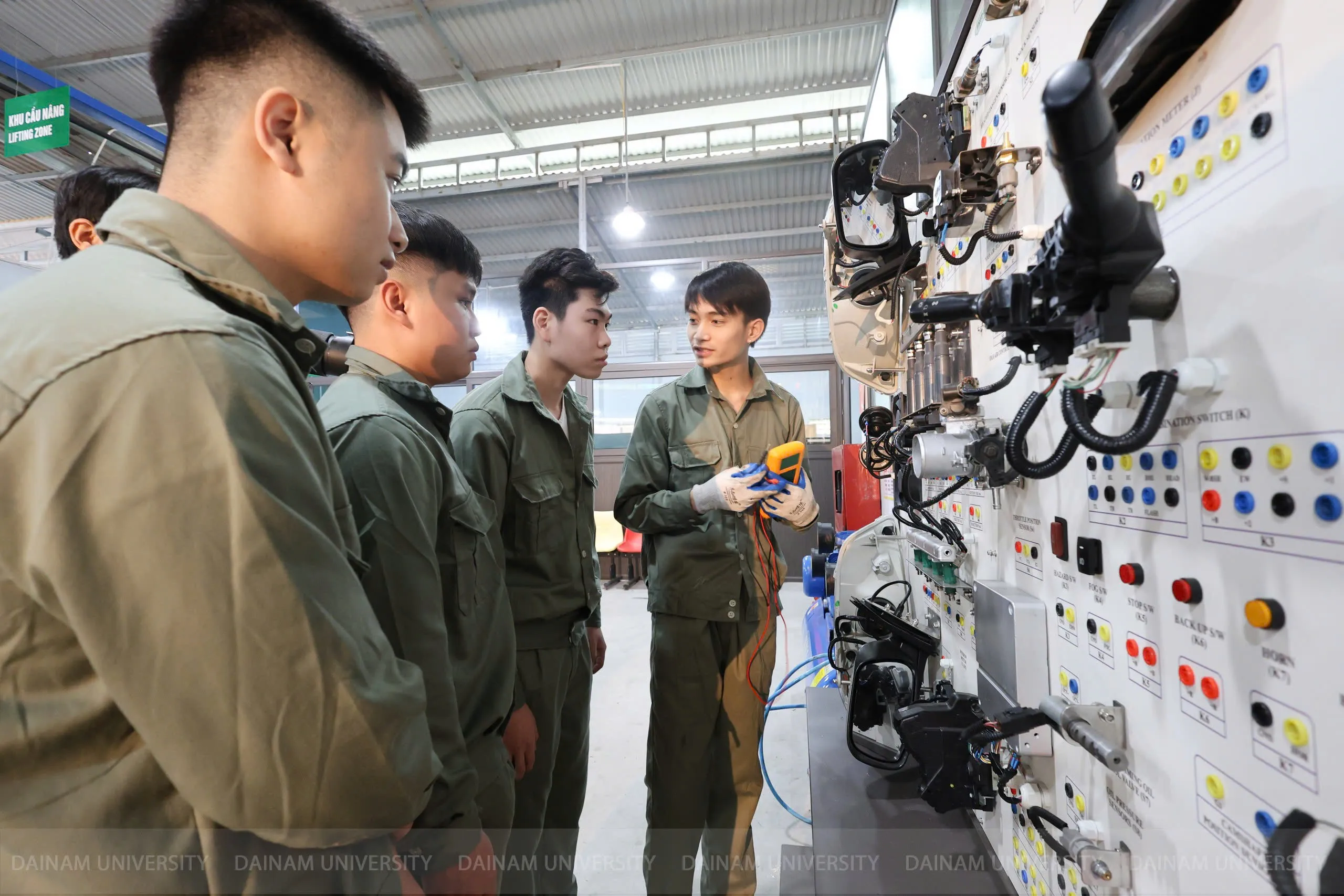
Key learning outcomes typically include:
- Technical Knowledge: A strong grasp of mechanics, engine systems, transmission technology, automotive electronics, and modern vehicle diagnostic and maintenance methods.
- Practical Skills: The ability to design, operate, maintain, and repair modern automotive systems with confidence.
- Problem-Solving Ability: Analyzing and resolving technical issues across the automotive value chain, from production lines to after-sales maintenance.
- Soft Skills: Effective communication, teamwork, and time management suited to fast-paced industrial environments.
- Adaptability: The capacity to keep pace with emerging automotive technologies — including electric vehicles and driver-assistance systems — and to work confidently in international, multicultural teams.
Graduates with these competencies are well-positioned for roles in automotive manufacturing, repair and maintenance, vehicle inspection, and research and development.
Curriculum Structure Year by Year
The 151-credit curriculum is deliberately staged so that students build from fundamentals toward advanced specialization. Early semesters emphasize mathematics, physics, and general engineering principles, while later years shift toward automotive-specific systems, electronics, and applied diagnostics.
By the third and fourth years, coursework moves heavily into specialized automotive engineering technology topics — engine performance systems, electrical-electronic integration, and vehicle maintenance technology — culminating in an internship placement and a graduation project that mirrors real industry challenges.

This staged structure is a hallmark of effective Helpful Content design in technical education: it gives prospective students a transparent, realistic picture of what they will study and when, rather than vague marketing claims.
Teaching Methods: Blending Theory and Practice
Modern Automotive Engineering Technology programs increasingly rely on an integrated teaching method that closely connects theory with hands-on practice, while also building soft skills and English proficiency alongside technical training.
Students typically gain maximum practical experience in university workshops and technical practice centers, supplemented by internships at partner enterprises. In well-designed programs, industry partners are directly involved in shaping the curriculum and are often ready to recruit graduates who meet their hiring standards. Assessment methods also tend to be diverse and flexible, easing exam pressure while staying aligned with real labor-market demands — a practice that reflects genuine experience-based (the “Experience” pillar of E-E-A-T) and industry-relevant instruction rather than purely academic testing.
Career Prospects and Salary Expectations
Demand for automotive engineering talent is rising quickly worldwide, fueled by the continued expansion of vehicle manufacturing, the shift toward electrification, and the growing complexity of onboard diagnostic and safety systems. Manufacturers, repair and maintenance companies, and vehicle inspection centers are all actively seeking skilled engineers and technicians trained in modern automotive technology.
Automotive Engineering Technology graduates can pursue a wide range of career paths, including:
- Automobile manufacturing companies — production lines, product research and development, vehicle maintenance, and quality inspection.
- Automotive maintenance and repair companies — service center roles focused on vehicle safety and operational reliability.
- Automotive business enterprises — dealership positions in sales, customer support, and technical consulting.
- Vehicle inspection organizations — assessing vehicle quality, safety compliance, and roadworthiness.
- Technology-focused automotive companies — automation, electric vehicle systems, and advanced control technologies.
- Educational and research institutions — teaching or research roles in automotive engineering.
In terms of compensation, entry-level to mid-career Automotive Engineering Technology engineers can expect monthly salaries in the range that reflects strong demand for specialized technical skills, with figures generally comparable to other applied engineering technology fields and rising with experience and specialization.
Admission Pathways
Universities offering this program commonly provide multiple admission routes to accommodate different student backgrounds:
- Exam-based admission using national high school graduation exam scores.
- Transcript-based admission using cumulative high school academic records.
- Direct admission for students who qualify under specific ministry or institutional regulations.
Accepted subject combinations often include pairings built around Mathematics and Physics, combined with Chemistry, English, Literature, Civic Education, or Economic and Legal Education — giving students with varied academic strengths a realistic path into the program.
Final Thoughts
An Automotive Engineering Technology degree offers a practical, industry-connected route into one of the world’s most dynamic engineering sectors. With a curriculum built around core technical knowledge, hands-on workshop training, strong employer partnerships, and a shortened but rigorous 4-year timeline, this program is designed to turn motivated students into job-ready automotive engineers.
If you’re evaluating engineering technology programs, take time to compare curriculum structure, internship opportunities, and graduate employment outcomes across institutions. Share your thoughts on what matters most to you in choosing an automotive engineering program, and explore additional program reviews to make a fully informed decision about your education and career path.