
Becoming a certified automotive professional is a hallmark of expertise and dedication in the ever-evolving automotive industry. The National Institute for Automotive Service Excellence (ASE) has been the gold standard for technician certification since 1972. Whether you are a student just starting out or a seasoned master technician, understanding the ASE certification tests is the first step toward professional recognition, higher earning potential, and industry-wide respect.
The ASE program is designed to identify and certify the repair and service professionals who possess the essential knowledge and skills to maintain modern vehicles. With over 50 different tests covering everything from passenger cars to transit buses and collision repair, there is a specialized path for every niche in the automotive world.
The Importance of ASE Certification for Professionals
For technicians, earning an ASE seal is more than just passing a test; it is a validation of their technical proficiency. In a field where technology changes rapidly, certification proves to the public and employers that a technician is current with industry standards. Many dealerships and independent repair shops prioritize hiring ASE-certified staff because it builds customer trust and ensures a high level of service quality.
Furthermore, the path to becoming an ASE Certified Master Technician—achieved by passing a specific series of tests—sets professionals apart as elite experts in their craft. This status often leads to advanced career opportunities and a significant increase in marketability within the competitive automotive landscape.
Overview of ASE Test Series
ASE offers a comprehensive range of test series tailored to different sectors of the automotive and trucking industries. Each series consists of multiple tests focusing on specific systems and components.
1. Automobile & Light Truck Series (A Series)
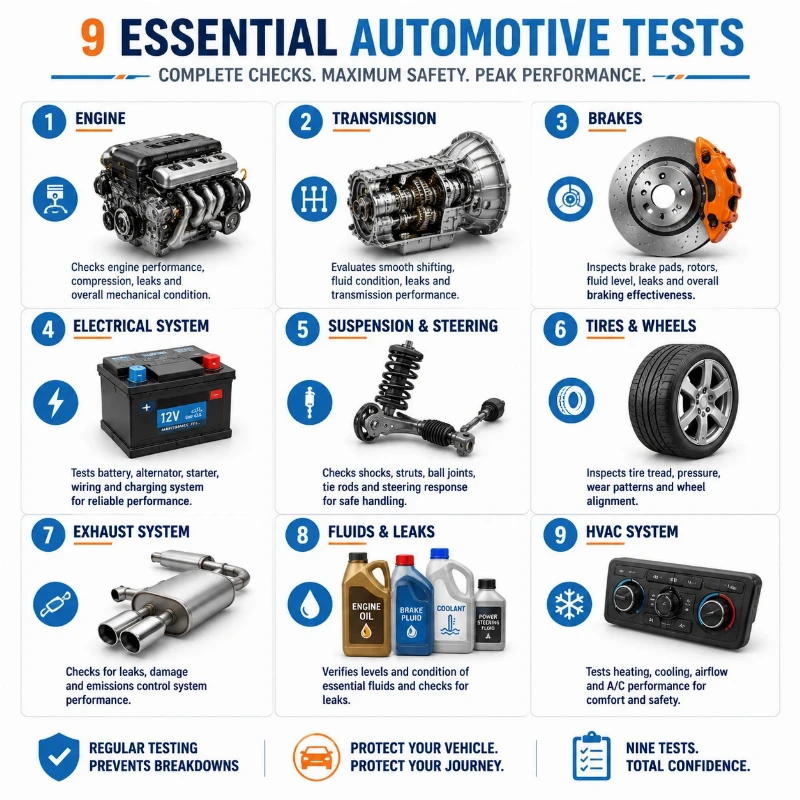
The A Series is the most popular, intended for technicians who service cars, SUVs, and light-duty trucks. It includes nine tests:
- A1: Engine Repair
- A2: Automatic Transmission/Transaxle
- A3: Manual Drive Train & Axles
- A4: Suspension & Steering
- A5: Brakes
- A6: Electrical/Electronic Systems
- A7: Heating & Air Conditioning
- A8: Engine Performance
- A9: Light Vehicle Diesel Engines
2. Collision Repair & Refinish Series (B Series)
Designed for those in the body shop industry, this series covers:
- B2: Painting & Refinishing
- B3: Non-Structural Analysis & Damage Repair
- B4: Structural Analysis & Damage Repair
- B5: Mechanical & Electrical Components
3. Medium-Heavy Truck Series (T Series)
Focuses on the maintenance and repair of heavy-duty vehicles, including:
- T2: Diesel Engines
- T4: Brakes
- T6: Electrical/Electronic Systems
- T8: Preventive Maintenance Inspection
The Path to Certification: Requirements and Process
Passing the ASE certification tests is only one half of the requirement. To be officially certified, candidates must also provide proof of relevant hands-on work experience.
Work Experience Requirements
For most certifications, ASE requires two years of full-time work experience. However, there are alternatives:
- Educational Credit: Completing a formal automotive training program can often count toward one year of the experience requirement.
- Specialty Roles: Parts Specialists (P Series) require two years of experience specifically related to parts counter work rather than hands-on repair.
Testing Format and Environment
All ASE tests are computer-based and administered at secure, proctored Prometric test centers. This format allows for year-round testing with immediate results. The questions are multiple-choice and focus on real-world diagnostic and repair scenarios rather than just theoretical knowledge.
Tips for Passing Your ASE Exams
Preparation is the key to success. ASE provides official study guides that outline the “Task Lists” for each test. These lists detail exactly what knowledge is expected.
- Review the Task Lists: Every question on the test corresponds to a specific task in the guide. If you can perform the task in the shop, you can likely answer the question.
- Take Practice Tests: Official ASE practice tests are available to help you get used to the question style and timing.
- Understand “Technician A and Technician B” Questions: A unique format used by ASE, these questions require you to evaluate two different diagnostic statements and determine which one (if either) is correct.
Conclusion
ASE certification is the cornerstone of a successful career in the automotive service industry. By committing to the ASE certification tests, you are not only investing in your own technical skills but also contributing to a safer and more professional automotive community. Whether you are aiming for your first certification or looking to maintain your Master Technician status through recertification, the journey represents a commitment to excellence that customers and employers truly value.
Take the next step in your professional development today: review the study guides, register for your exams, and join the ranks of the nation’s top automotive experts.
References
- National Institute for Automotive Service Excellence. (2024). Certification Testing. Retrieved from https://www.ase.com/certification-testing
- ASE. (2024). ASE Test Series. Retrieved from https://www.ase.com/test-series
- Automotive Service Excellence. (2024). ASE Study Guides. Retrieved from https://www.ase.com/ase-study-guides