
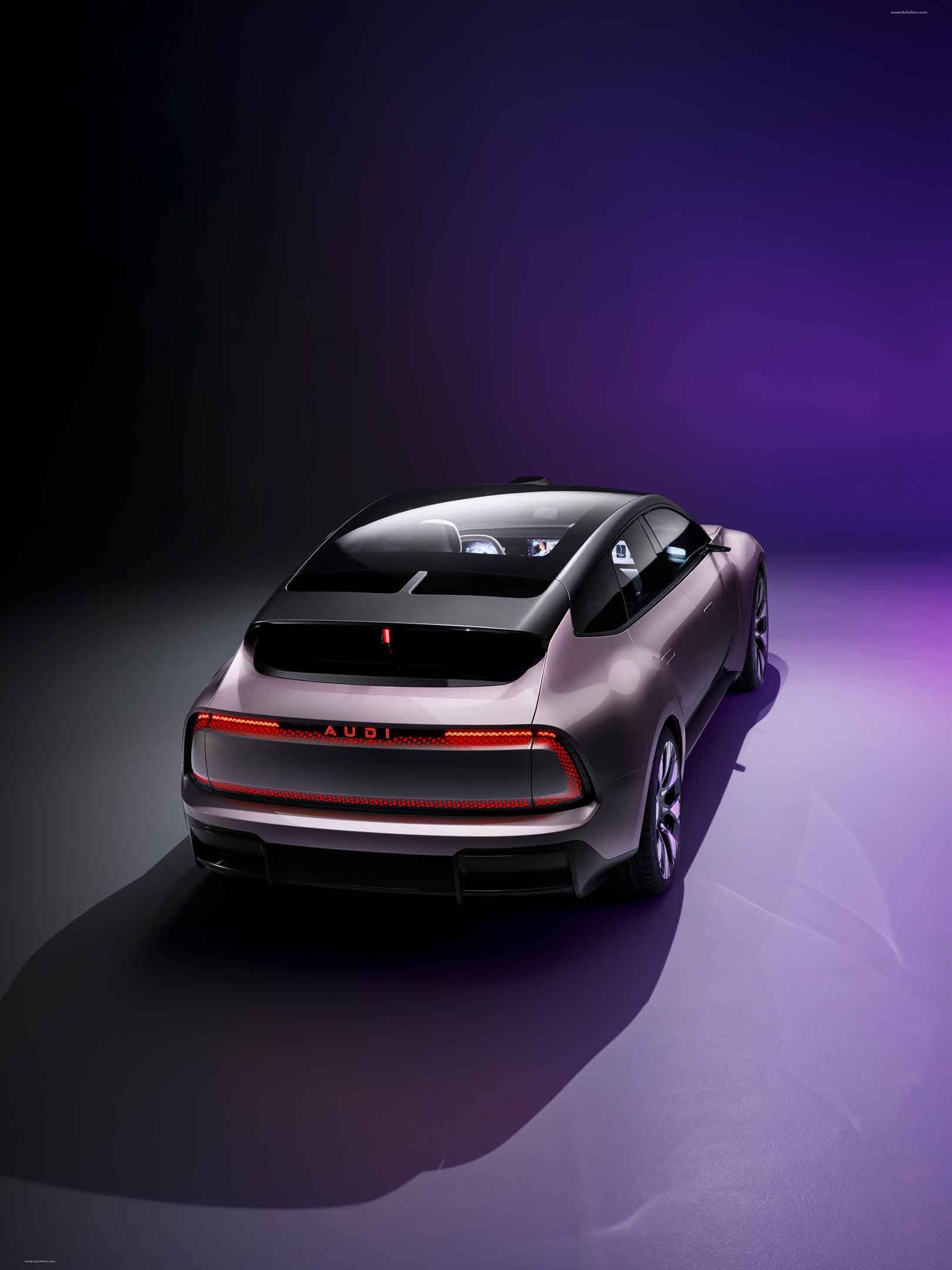
Audi unveiled a groundbreaking electric supercar concept at the Frankfurt Motor Show, showcasing impressive specifications and forward-thinking EV technology. This e-tron concept, built upon the R8 supercar platform, represents Audi’s vision for high-performance electric vehicles. It features four independent electric motors, delivering power to each wheel for true quattro all-wheel-drive capabilities. While producing a combined 313 horsepower, the e-tron boasts a remarkable 3,319 lb-ft of torque. Audi claims a 0-62 mph acceleration time of 4.8 seconds and a 37-75 mph sprint in just 4.1 seconds, underscoring its supercar performance.
The e-tron is powered by a 53 kWh lithium-ion battery pack, with 42.4 kWh of usable energy, contributing to a total weight of 3,527 pounds. Despite its performance figures, the concept car offers an estimated range of 154 miles on a single charge. This efficiency is attributed to its battery size, aerodynamic design, low rolling resistance, and advanced thermal management of the battery system. While currently a concept, the Audi e-tron signals a potential challenger to existing electric vehicle lineups, including those from Tesla, and hints at Audi’s evolving strategy in the electric and hybrid automotive landscape.
Performance and Powertrain
The Audi e-tron concept is propelled by four asynchronous electric motors, two on each axle, generating a combined output of 230 kW (313 hp) and an astonishing 4,500 Nm (3,319 lb-ft) of torque. This setup allows for precise torque vectoring, enabling the car to distribute power to individual wheels as needed, enhancing agility and cornering precision. The e-tron accelerates from 0 to 100 km/h (0-62 mph) in a brisk 4.8 seconds and can achieve 60-120 km/h (37-75 mph) in just 4.1 seconds. The top speed is electronically limited to 200 km/h (124 mph) to optimize energy consumption, as the power required by electric motors increases disproportionately with speed.
Battery and Range
The heart of the e-tron’s electric propulsion is a liquid-cooled lithium-ion battery pack with a total energy content of approximately 53 kWh, of which 42.4 kWh is usable to ensure longevity. [cite:1, cite:2] This advanced battery technology, coupled with a holistic vehicle design approach, enables a practical range of around 248 kilometers (154 miles) on the NEDC cycle. [cite:1, cite:2] The battery unit is strategically located behind the passenger cabin, optimizing the center of gravity and axle load distribution.
Innovative Technologies
Audi has implemented several revolutionary technologies in the e-tron concept. A heat pump is utilized for efficient interior heating, minimizing energy draw compared to conventional electric supplemental heaters. The vehicle’s thermal management system intricately controls the temperature of the battery, power electronics, and electric motors, ensuring optimal performance and range under various conditions. [cite:1, cite:2] Furthermore, the e-tron incorporates “car-to-x” communication technology, allowing the vehicle to exchange information with its surroundings, such as traffic lights and other vehicles, to optimize efficiency, safety, and convenience. [cite:1, cite:3] This technology can anticipate necessary braking or acceleration maneuvers, suggest optimal driving strategies for energy recuperation, and warn approaching vehicles of hazards.
Design and Chassis
Visually, the Audi e-tron concept embodies the aggressive stance of a supercar. Its wide, muscular body features a closed rear end and a prominent single-frame grille flanked by large air intakes. The car utilizes advanced LED lighting technology, including adaptive matrix beam headlamps with integrated light assistance systems that react to weather conditions and oncoming traffic. Unique design elements include flush air intakes on the grille and behind the rear wheel wells, which open to allow more cooling air when needed, contributing to aerodynamic efficiency.
The vehicle’s body structure is a hybrid construction based on Audi Space Frame (ASF) technology, combining aluminum with fiber-reinforced plastic for a rigid yet lightweight chassis. This systematic lightweight construction approach, along with the car’s compact dimensions (4.26 meters long, 1.90 meters wide, and 1.23 meters tall), results in a total weight of approximately 1,600 kilograms (3,527 lbs). The chassis features double wishbones at the front and trapezoidal wishbones at the rear, utilizing forged aluminum components for high agility and precise handling.
Interior and Controls
The interior of the e-tron concept reflects its advanced powertrain, blending familiar Audi design cues with new elements. The dashboard appears to float, and the absence of a traditional transmission tunnel creates a slim, lightweight center console. A large, fold-out central display with integrated MMI functions replaces the classic instrument cluster, flanked by two round dials. Control is managed via an MMI touch-sensitive scroll pad on the steering wheel. The display provides essential information, including range, infotainment, and navigation data, along with car-to-x communication alerts. Climate control is managed through a touch-sensitive slider, inspired by smartphone interfaces. The racing-inspired bucket seats offer excellent lateral support, and the interior is finished with contrasting colors and high-quality materials, exuding both elegance and sportiness.
Charging and Recuperation
Charging the e-tron’s battery can be done via a standard household current (230V, 16A) in 6 to 8 hours, or more rapidly with a high-voltage connection (400V, 63A) in approximately 2.5 hours. Audi is also exploring wireless inductive charging technology for enhanced convenience. The concept car features an advanced recuperation system that converts kinetic energy into electrical energy during braking, feeding it back into the battery. This is further enhanced by an electronic brake system that allows the electric motors to recover nearly all braking energy, with hydraulic brakes only engaging when stronger deceleration is required.
Conclusion
The Audi e-tron concept represents a significant stride in the evolution of electric supercars, demonstrating that high performance and long-range electric mobility can coexist. With its potent electric powertrain, innovative technologies, and driver-focused design, the e-tron offers a compelling vision for the future of sustainable high-performance driving. While its production status remains unconfirmed, this concept car undoubtedly sets a high benchmark for what electric vehicles can achieve.
References
- Audi Press Release. (2009). Audi presents the highlight of the IAA 2009: the e-tron, a high-performance sports car with a purely electric drive system.
- Audi AG. (n.d.). Audi e-tron – The Holistic Approach.
- Audi AG. (n.d.). Car-to-x Communication.