
The Aptera solar EV is designed to challenge conventional ideas about electric mobility by combining long-range capability, solar charging technology, and a highly efficient aerodynamic structure. Built for drivers seeking independence from traditional fuel costs and charging limitations, Aptera aims to deliver a more sustainable and flexible driving experience.
With a projected driving range of up to 400 miles per charge and the ability to gain up to 40 miles of solar-powered driving per day, the vehicle targets commuters, road-trip enthusiasts, and environmentally conscious drivers alike. Its lightweight engineering and futuristic design focus on maximizing efficiency without sacrificing practicality or comfort.
A New Vision of Energy Independence
Aptera’s core philosophy revolves around reducing reliance on gas stations and frequent charging stops. By integrating solar panels directly into the vehicle’s body, the company seeks to provide a partially self-sustaining transportation solution.
The vehicle is engineered to achieve:
- Up to 40 miles of solar-powered driving per day
- Approximately 400 miles of total driving range
- 0–60 mph acceleration in under 6 seconds
- High-torque electric drivetrain performance
These specifications position the Aptera solar EV as an innovative alternative within the growing electric vehicle market, especially for drivers looking to reduce charging frequency during everyday commuting.
Aerodynamic Engineering for Maximum Efficiency
One of the most distinctive aspects of the Aptera platform is its aerodynamic design. Unlike traditional electric cars or SUVs, the vehicle uses a streamlined body shape intended to minimize drag and improve energy consumption.
The lightweight carbon fiber structure further enhances efficiency by reducing overall vehicle weight while maintaining structural durability. This first-principles engineering approach allows the Aptera to maximize the effectiveness of both its battery system and integrated solar technology.
Rather than prioritizing oversized battery packs alone, Aptera focuses on achieving greater energy efficiency through intelligent vehicle architecture.
Interior Comfort Designed for Everyday Living
The cabin layout emphasizes both comfort and practicality. Designed to accommodate two passengers comfortably, the interior supports daily commuting as well as extended road trips.
After the initial focus on performance and range, the interior becomes one of the vehicle’s strongest selling points. Natural textures, earth-tone materials, and intuitive design elements create a welcoming atmosphere that feels modern yet functional.
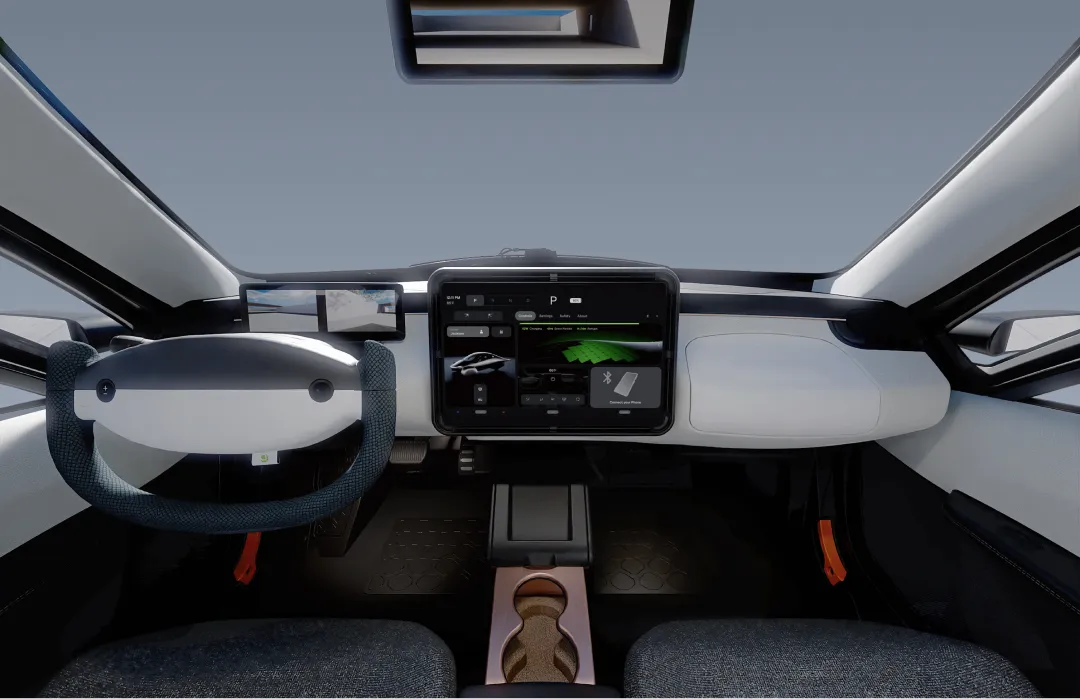
The Codex-inspired color scheme contributes to a clean and calming environment, while the cabin layout maximizes usable space despite the vehicle’s compact footprint.
Spacious Cargo Capacity and Camping Utility
Practical storage is another area where the Aptera solar EV stands out. The cargo area offers approximately 32.5 cubic feet of storage capacity, making it competitive with many larger crossover vehicles and SUVs.
Drivers can use the available storage space for:
- Multiple suitcases
- Camping equipment
- Sports gear such as surfboards
- Everyday shopping and commuting needs
The optional camping configuration also enables the cargo area to function as a sleeping space for two people during off-grid travel adventures. This versatility makes the vehicle appealing to outdoor enthusiasts and travelers interested in sustainable mobility solutions.
Solar Technology and Daily Driving Benefits
A major advantage of integrated solar charging is the potential reduction in dependency on charging infrastructure. For many drivers with shorter daily commutes, the solar energy generated by the vehicle may significantly offset electricity consumption over time.
This concept is particularly attractive in regions with strong year-round sunlight, where drivers could potentially complete short commutes using mostly solar-generated energy.
While real-world results will vary based on weather conditions, driving habits, and geographic location, the solar-assisted system represents a major step forward in automotive efficiency innovation.
Performance Meets Sustainability
Despite its strong emphasis on efficiency, the Aptera does not ignore performance. The electric drivetrain is engineered to deliver responsive acceleration and high torque, helping the vehicle maintain competitive driving dynamics.
The claimed sub-6-second 0–60 mph acceleration places it within the range of many modern electric sedans and compact performance EVs. This balance between sustainability and performance broadens the vehicle’s appeal beyond environmentally focused consumers alone.
Innovative Vehicle Platform
The innovation behind Aptera extends beyond solar panels. The entire vehicle platform is reimagined around energy optimization principles.
Key technological highlights include:
- Lightweight carbon fiber body construction
- Advanced aerodynamic efficiency
- Integrated solar charging system
- High-efficiency electric drivetrain
- Space-optimized cabin design
This holistic engineering approach allows Aptera to differentiate itself from many conventional electric vehicles that primarily rely on larger batteries to increase range.
The Future of Solar-Powered Transportation
The Aptera solar EV represents a growing trend toward ultra-efficient transportation solutions that combine renewable energy with advanced automotive engineering. As charging infrastructure and battery technology continue evolving, vehicles that reduce overall energy demand may become increasingly important within the EV industry.
For drivers seeking a combination of efficiency, innovation, long-range practicality, and sustainable technology, Aptera introduces a unique concept that challenges traditional automotive expectations.
Whether used for daily commuting, weekend adventures, or long-distance travel, the vehicle demonstrates how solar energy can play a larger role in the future of personal transportation.
Conclusion
Aptera’s approach to electric mobility focuses on freedom, efficiency, and innovation. By combining solar-assisted charging, long-range capability, aerodynamic engineering, and practical interior space, the company aims to deliver a highly efficient driving experience tailored to modern lifestyles.
The vehicle’s blend of sustainability, practicality, and performance positions it as one of the more distinctive concepts in the evolving electric vehicle market. As interest in renewable transportation solutions continues to grow, Aptera may help shape the future direction of solar-powered mobility.
If you are interested in next-generation electric vehicles and sustainable automotive technology, share your thoughts on the Aptera solar EV and explore more innovations shaping the future of transportation.
References
- Aptera Motors. (2026). Aptera vehicle platform and solar EV specifications. Retrieved from https://aptera.us/
- International Energy Agency (IEA). (2025). Global EV Outlook. Retrieved from https://www.iea.org/
- U.S. Department of Energy. (2025). Electric Vehicle Benefits and Considerations. Retrieved from https://www.energy.gov/