
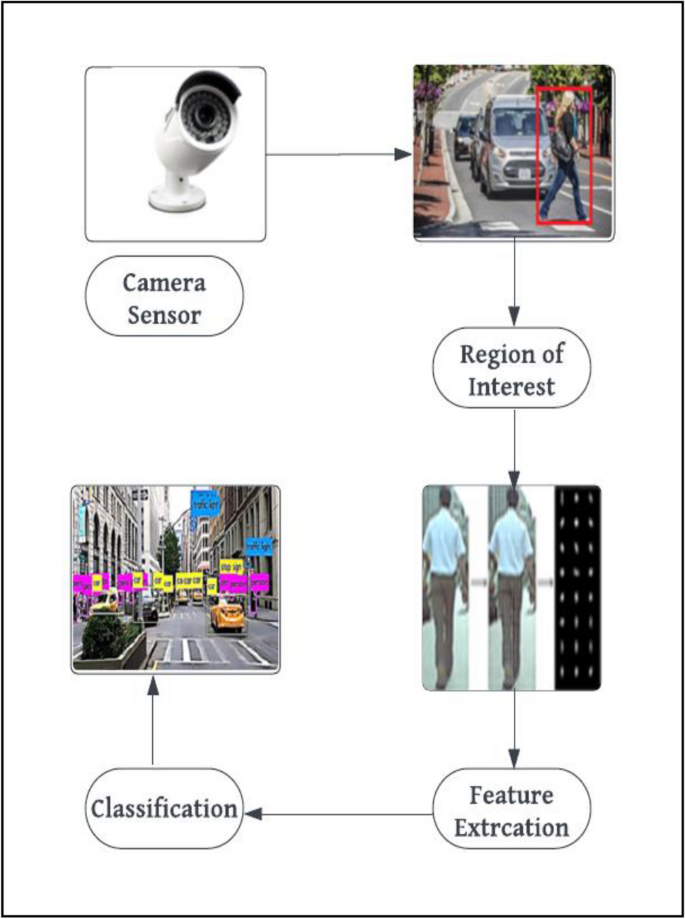
The advent of autonomous vehicles, from self-driving cars to pilotless planes, hinges on a profound trust in sophisticated AI systems. These intelligent systems are tasked with perceiving and navigating complex environments, ensuring these machines can avoid virtually any potential hazard. However, a critical question looms: how can we definitively guarantee the safety of these advanced AI systems before they are deployed in scenarios where human lives are at stake? This challenge is amplified by the inherent complexity of both the AI systems themselves and the real-world environments they are expected to operate in. While machine learning has paved the way for capabilities like robotic driving in bustling urban centers, validating the safety of such systems presents a monumental computational hurdle.
Traditional road tests, often considered the ultimate arbiter of safety, typically occur late in the design cycle and carry inherent risks to human life, a paradox for safety-focused engineers. The responsibility of a road test resulting in harm or damage is a significant concern for any developer. This practical reality has led designers of autonomous vehicles to increasingly rely on simulations for testing their systems’ ability to navigate safely. But are these simulations truly sufficient for the task? A groundbreaking paper published in the Journal of Artificial Intelligence Research by Anthony Corso and his colleagues at Stanford and NASA offers a comprehensive overview of “black-box safety validation” algorithms. Their findings suggest a hopeful trajectory for simulation-based confidence, though significant work remains to be done.
The “Black Box” Approach to Validation
In response to the immense challenges of real-world testing, the developers of autonomous vehicles are increasingly turning to “black-box” validation applications. This approach stands in contrast to “white-box” methods, which aim for “formal verification” of a system’s safety. White-box validation not only identifies potential failure points but ideally proves the absolute absence of any failure. However, this rigorous standard is computationally prohibitive and scales poorly for the vast complexities of autonomous vehicle systems. The sheer volume of interacting elements makes exhaustive calculation to achieve white-box level confidence an insurmountable task. Black-box approaches, by strategically making certain computational concessions, aim to overcome these limitations.
Corso likens the black-box methodology to playing a video game in reverse. In this simulated world, the testing algorithm acts as the player, and “victory” is defined as a simulated crash – a failure. The crucial advantage is that this occurs within a safe, virtual environment, eliminating any risk to life or property. By understanding precisely when and why a system fails in simulation, engineers can then implement robust safety mechanisms into the actual vehicle. The underlying philosophy is adversarial: the algorithms actively seek out weaknesses. Corso explains, “Our hope is that we don’t find failure. The longer that black-box techniques churn away, running through possible scenarios, trying to create weaknesses and not finding them, the greater our confidence grows in the system’s overall safety.”
Triangulating Failure for Enhanced Confidence
To maximize confidence in system safety, validation algorithms employ a strategy akin to triangulation in identifying potential failures. For highly risk-averse industries like aviation, the highest tier of validation involves “falsification.” This approach rigorously searches for any conceivable way a system might fail. Corso notes, “Falsification asks: Can you find me any example where the system fails?” This deliberately low bar is intended to provide the greatest possible assurance. However, for self-driving cars operating in dynamic urban environments, Corso acknowledges that finding some pathological situation to cause a crash is often unavoidable. Consequently, the threshold for automotive applications is raised.
The subsequent tier of validation focuses on identifying the most likely failures, guiding design teams in making their systems as robust as possible. The third tier involves estimating the probability of various failure modes, allowing for an assessment of how likely any particular outcome is. Corso states, “These techniques kind of build on top of each other to increase confidence in overall system safety.”
The Path Towards Safer Autonomous Systems
The survey presented by Corso and his colleagues does not inherently pass judgment on the reviewed black-box tools. Instead, it offers a comparative analysis of how each tool addresses the validation problem, the assumptions embedded by their creators, and their respective strengths and weaknesses. This allows designers of autonomous systems to select the approach best suited to their specific needs.
However, Corso points out that among the nine currently available systems evaluated, only two offer more than basic falsification validation. Furthermore, just one system provides most-likely failure testing, and another offers probability estimation. This indicates a clear need for further development and improvement in the field.
While Corso and his colleagues cannot yet give a universal stamp of approval to any single method, they foresee a promising direction for the future: “compositional validation.” This approach involves testing individual components of a system separately, such as the visual perception and proximity sensing systems, to understand how each specific part might fail. By gaining deeper insights into subcomponent failures, Corso believes this knowledge can be leveraged to significantly enhance confidence in the overall system’s safety. He concludes, “A few approaches we mentioned have started to touch on this concept. But I think it will require a lot more work. In their current state, these whole-system algorithms in and of themselves are insufficient to put a formal stamp of approval on them just yet.”