
Few cars in American automotive history carry the emotional weight of the 1970 Chevrolet Camaro SS. More than just a performance machine, this second-generation pony car represented a dramatic leap forward in engineering, design, and cultural significance — and for one collector, it holds a deeply personal story that transcends horsepower figures and quarter-mile times.
A Generation Reborn: Engineering Improvements
The second-generation Camaro arrived as a thoroughly reimagined automobile. Featuring a lower body, wider track, and an all-new suspension system, the 1970½ Camaro addressed many of the shortcomings of its predecessor. Engineers constructed the car on a unibody platform, pairing a coil spring front suspension with rear leaf springs — a setup that delivered noticeably sharper handling and a more planted feel on the road.
One notable change was the elimination of the convertible option, marking the first time in Camaro history that a ragtop was unavailable. Despite this, the model’s appeal was undeniable. Though production didn’t officially begin until February 1970, the car would remain in production for an remarkable 12 years — a testament to how well the design had been executed.

Engineers also made a concerted effort to reduce cabin noise, adding insulation at strategic points throughout the body structure. The result was a car that felt more refined than the first generation while losing none of its muscle car character.
Design: Clean, Dramatic, and Timeless
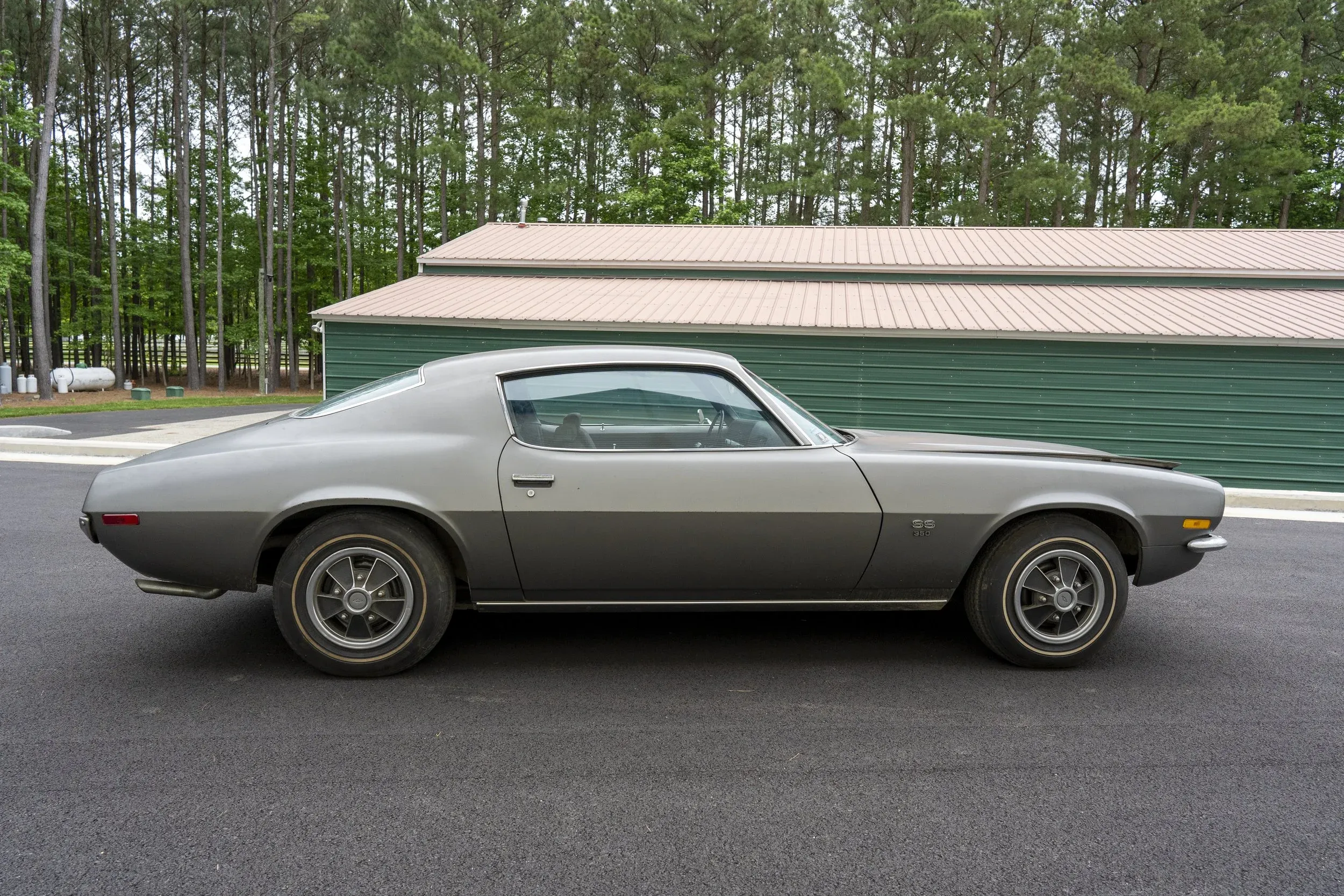
What truly set the 1970 Camaro apart was its styling. The design team delivered a shape that was simultaneously clean and dramatic — a rare combination in an era when excess often ruled American automotive aesthetics.
The fastback roofline gave the car a sleek, purposeful silhouette, while ventless full-door glass and the absence of rear side quarter windows created an uninterrupted visual sweep from nose to tail. The pronounced “tumblehome” — the inward curvature of the upper body — combined with strong “turnunder” at the lower body edges produced a profile that looked almost sculpted rather than stamped.
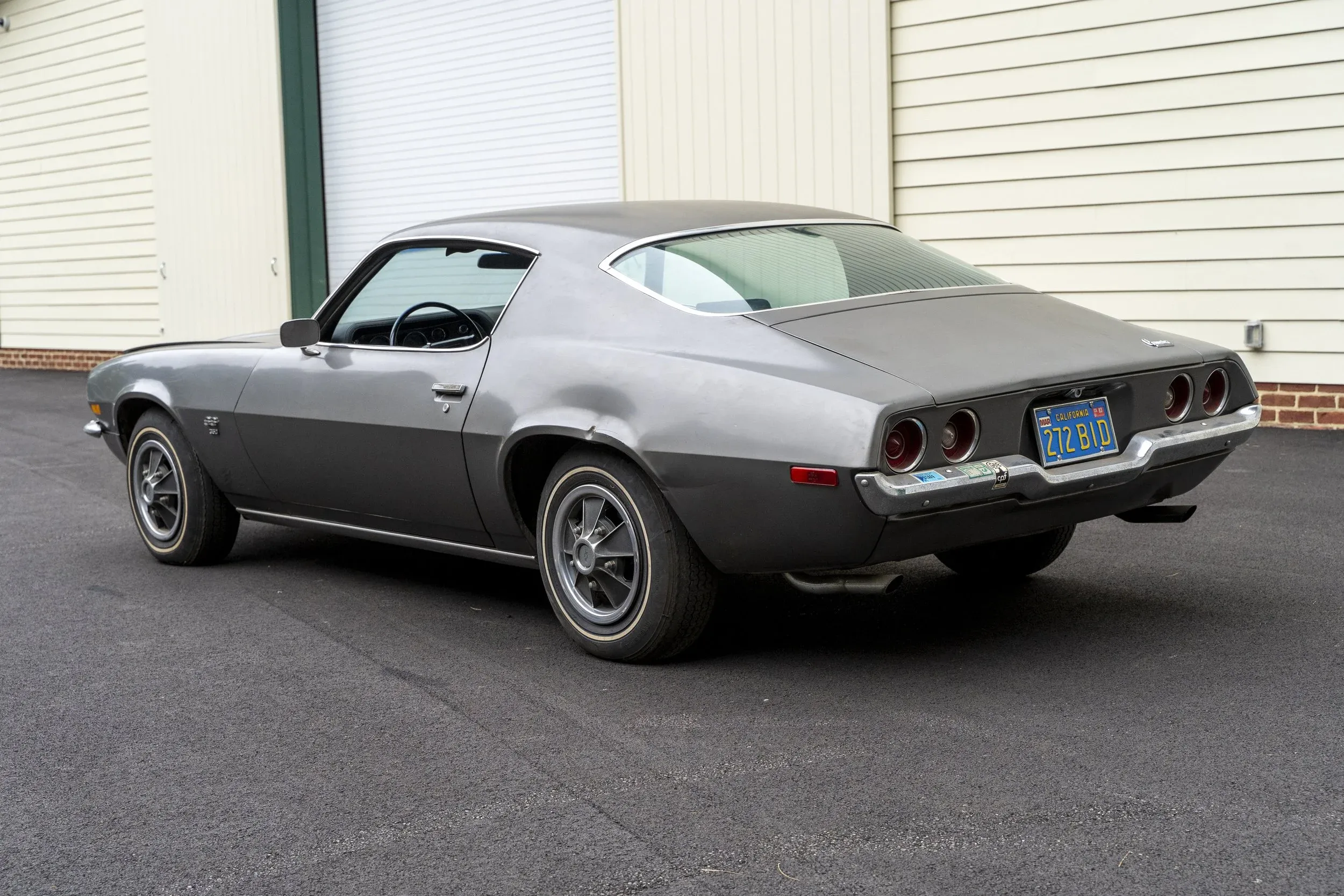
Two distinct exterior treatments were offered. The base model featured a separate bumper and grille design, with parking lights positioned beneath the bumper. The Rally Sport (RS) package took a more distinctive approach, surrounding the grille in flexible Endura material and repositioning the parking lights beside the headlights, with bumperettes framing both sides of the grille.
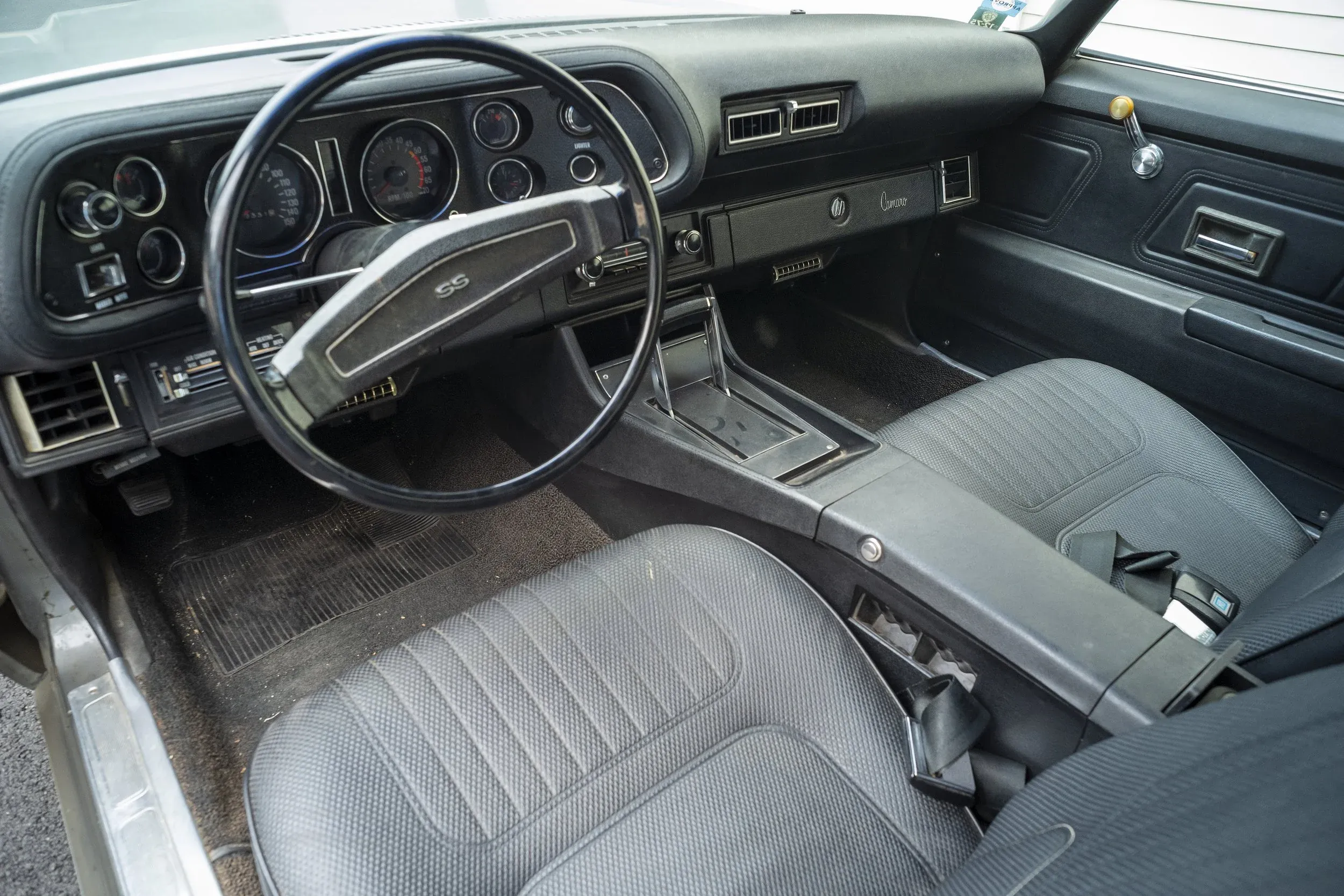
Inside, the standard interior came trimmed in all-vinyl upholstery with a matte black dashboard. Buyers opting for the custom interior package received upgraded cloth or vinyl upholstery alongside woodgrain trim on the dashboard and center console — a touch of refinement that acknowledged the car’s dual role as both performance machine and daily driver.
Performance Specifications
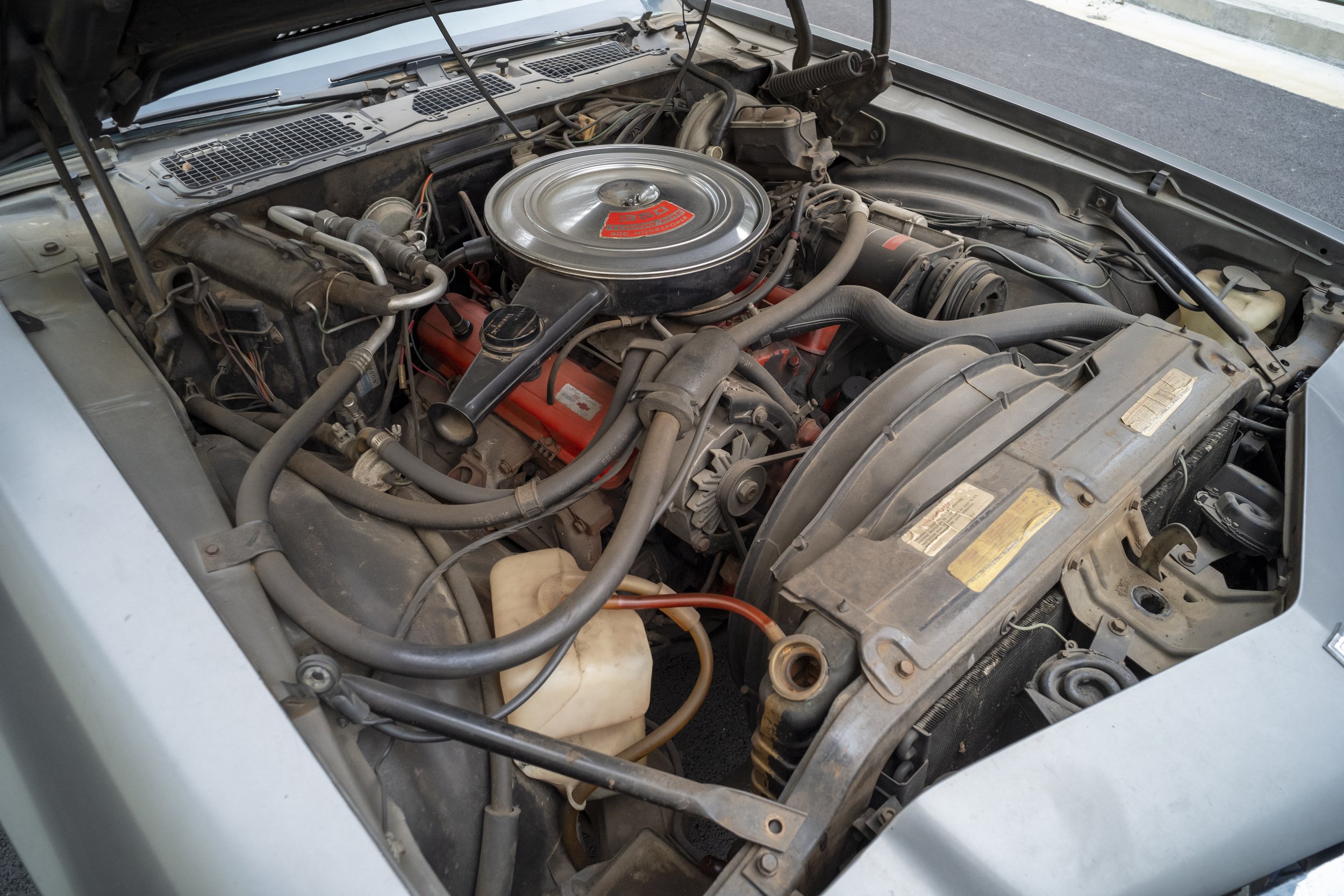
Under the hood of this particular Camaro SS sits a 5.7-liter V8 engine — the powerplant that made the Super Sport badge meaningful. The numbers tell the story of an accessible yet genuinely capable performance car:
- Engine: 5.7L V8
- Horsepower: 250 hp @ 4,500 RPM
- Torque: 345 lb-ft @ 2,800 RPM
- Top Speed: 127 MPH
- Curb Weight: 3,370 lbs
- Mileage: 88,000 miles
The torque figure is particularly noteworthy — 345 lb-ft arriving at just 2,800 RPM meant effortless pulling power across a wide range of driving situations, whether cruising on the highway or accelerating hard from a stoplight.
 Engine bay of the 1970 Camaro SS showing the 5.7L V8 powerplant
The Begovich Collection: A Story of Love and Memory
Beyond its mechanical and aesthetic achievements, this specific 1970 Camaro SS carries an extraordinary personal history. It was the last new car purchased by Joan Begovich, wife of collector Nick Begovich. Joan drove the car faithfully, accumulating 87,000 miles before she passed away.
Rather than selling the car, Nick kept it as part of his carefully curated personal collection — a decision driven entirely by sentiment and love. The Camaro has not been driven on public roads since Joan’s passing, yet Nick continued to care for it and work on it over the years, alongside the other 13 vehicles in his collection.
That story gives this particular car a dimension that no specification sheet can capture. It is simultaneously a landmark of American automotive engineering and an intimate memorial — an object that embodies what cars can mean to people beyond their function as transportation.
A Classic American Icon
The 1970 Chevrolet Camaro SS occupies a special place in the history of the American pony car. Its combination of bold styling, improved engineering, and genuine V8 performance made it the definitive expression of what the Camaro could be. The fact that it remained in production largely unchanged for over a decade speaks to how completely the design team got it right the first time.
For collectors and enthusiasts alike, the second-generation Camaro represents more than a collectible muscle car — it represents an era when American automakers were at the height of their creative powers, producing machines that were as beautiful to look at as they were thrilling to drive.
Have you had a personal experience with a classic Camaro, or does one of the other cars in the Begovich Collection catch your eye? Share your thoughts in the comments, or explore the full collection to discover more stories where engineering, design, and passion intersect.
References
Begovich Collection. (2021). 1970 Chevrolet Camaro SS — Engineering, Design & Passion. Retrieved from the Begovich Collection online archive.