
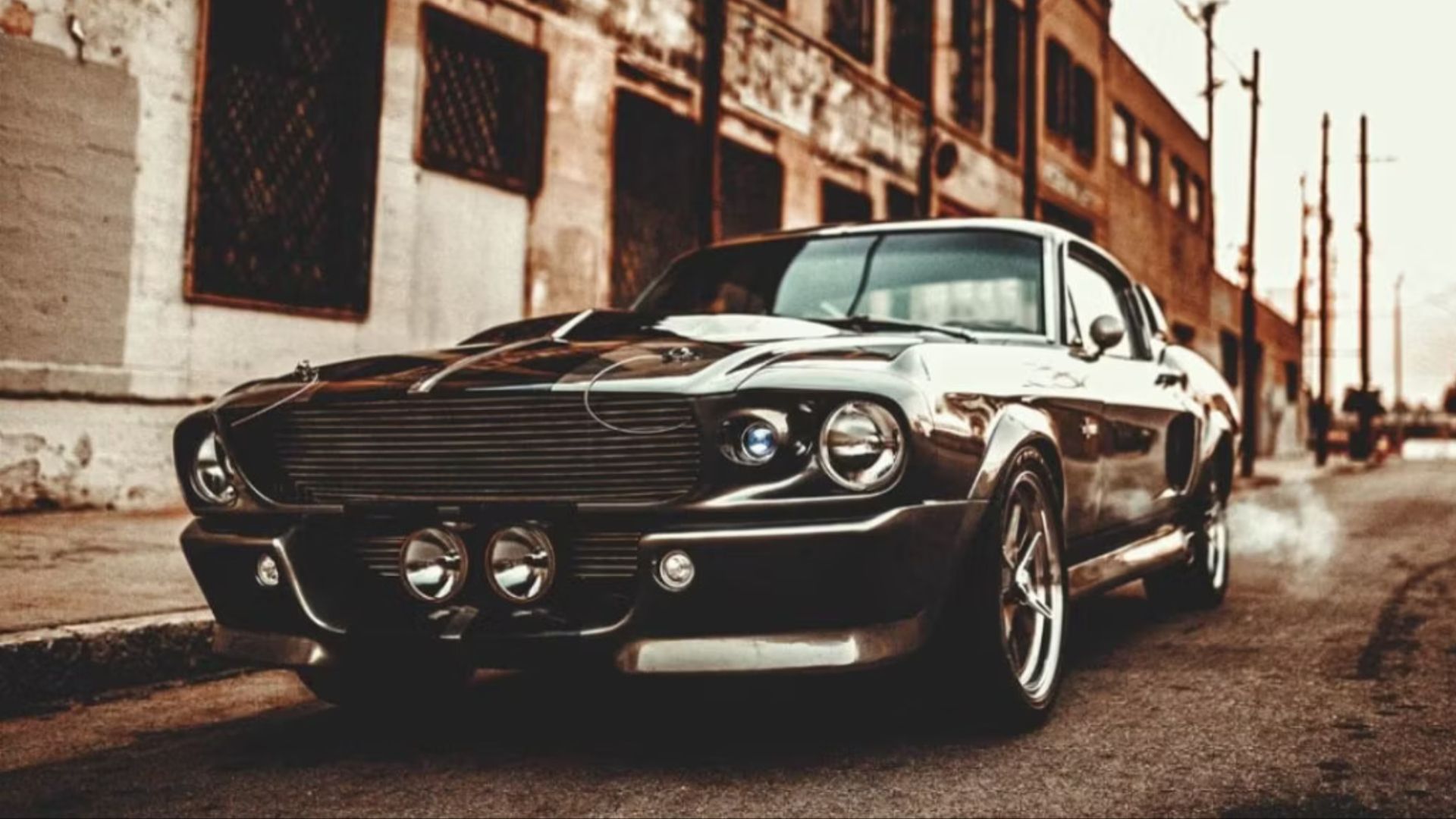
The Eleanor Ford Mustang, particularly the 1967 fastback model, is more than just a car; it’s a legend in the automotive world, especially among muscle car enthusiasts. Its iconic status in cinematic history drives demand and astronomical prices, with both genuine examples and licensed replicas commanding hundreds of thousands of dollars. This fascination begs the question: what truly makes Eleanor Mustangs such coveted “unicorn” pieces? To understand this, we must delve into her origins.
The Genesis of Eleanor: The 1974 Original
Eleanor’s first appearance, though less renowned than her successor, was in the 1974 film Gone in 60 Seconds. Directed by the late HB Halicki, a stuntman and car enthusiast, the film is celebrated for its groundbreaking, half-hour-long car chase sequence featuring a single car that endured numerous crashes and jumps.
This original Eleanor was a yellow and black 1971 Ford Mustang Mach 1, modified to appear as a 1973 Mustang for the film. Halicki himself engineered its robust 351ci Windsor V8 engine, ensuring its durability for the film’s demanding stunts. Amazingly, this very car, despite Halicki’s tragic death during the filming of a sequel in 1989, still exists and is owned by his widow, Denice. She also holds the crucial licensing rights to the “Eleanor” name, a detail that fuels much of the car’s later history and legal entanglements. The car’s significance was so profound that it even received a star title credit, effectively making Eleanor a licensed character.
The Iconic 2000 Eleanor: A Shelby GT500 Transformation
The 2000 remake of Gone in 60 Seconds catapulted Eleanor into global stardom with a Dupont Pepper Grey 1967 Ford Mustang fastback. Designed by legendary hot rod builders Steve Stanford and Chip Foose, this Eleanor featured a distinctive custom body kit, including a striking bubble hood and aggressive aerodynamic elements, cementing its status as the more visually iconic of the two. This Eleanor was presented as a 1967 Shelby GT500.
Cinema Vehicle Services reportedly built eleven or twelve Eleanor Mustangs for the film; it’s believed three were fully functional, and seven survived production. The scarcity of surviving genuine film cars contributes significantly to their value. One sold at auction in 2009 for $219,700, another for £95,000 in 2012. A different example failed to meet a reserve of $380,000 at a 2014 Mecum auction, while another commanded an astonishing $1,000,000 at a Mecum auction in 2013.
Licensed Eleanor Mustang Reproductions and the Fusion Motor Co.
Between 2007 and 2009, Classic Recreations held a license to produce Eleanor Mustang reproductions. After this, Fusion Motor Company secured permission from Denice Halicki to build new 1967 Eleanor Mustang replicas. These reproductions start with authentic 1967 and 1968 Ford Mustangs, with their VIN numbers verified by the California Highway Patrol.
These replicas come with a hefty price tag, starting around $250,000. For this investment, buyers receive a car equipped with a custom carbon fiber body kit, a choice of five Roush V8 engines offering between 430hp and 750hp, and a “Go Baby Go” gear shift button linked to a Nitrous Oxide canister. While deploying the nitrous system voids the Roush warranty, the temptation for such a powerful and exclusive vehicle is undeniable.
The “Juicy Bit”: Licensing Drama and Copyright Battles
Since the 2000 film, Denice Halicki and Eleanor Licensing LLC have been involved in numerous lawsuits against perceived copyright infringements. Because Eleanor has been represented by two distinct Mustang models (’71/’73 and ’67), the copyright now extends to any Mustang model referred to as “Eleanor.”
A notable case involved the YouTube channel “B for Build,” whose partially built 1967 Mustang restomod, named Eleanor, was seized by Eleanor Licensing LLC. The channel was ordered to remove all documentation of the build due to copyright infringement claims. This action sparked significant backlash from the classic car community and content creators, raising questions about the extent of Halicki’s control.
This aggressive stance has even led to legal action against legendary figures like Carroll Shelby in 2014. Shelby American was sued for copyright infringement related to the manufacturing and marketing of Eleanor Shelby Mustang copies, even though the 2000 film’s Eleanor was based on the Shelby GT500. This contrasts sharply with how other iconic movie cars, like the DeLorean from Back to the Future, have been managed, with Universal leveraging the multiple replicas to promote the franchise.
Is Owning an Eleanor Mustang Worth It?
For serious collectors with substantial financial resources, genuine Eleanor Mustangs represent a significant investment, potentially appreciating to over a million dollars. However, their extreme rarity means they rarely become available, especially outside the US.
For those unable to acquire a genuine article, investing in a replica Eleanor or customizing another Mustang model to resemble one offers a more accessible path to owning a piece of this automotive legend. This exclusivity is a core component of Eleanor’s mystical allure, solidifying its status as a mythical, unicorn-like vehicle.
If you’re interested in the foundational models, Muscle Car UK has iconic 1967 model year Mustangs available, the very generation on which the famed Eleanor Mustangs are based.
Author: Niamh Smith
Muscle Car UK and Pilgrim Motorsports are leading UK classic car specialists focusing on sports cars, including Mustangs, V8 engines, Carroll Shelby Cobras, and Corvettes. For updates, follow them on Instagram, Facebook, or Twitter. All cars featured on their feeds are available for purchase, and they offer custom sourcing services. Additionally, they provide service and restoration for classic and other vehicles. Contact them for a quote at sales@musclecar.uk.