
Introductory paragraph: Explain the topic, include primary keyword “Windows 32-bit vs 64-bit” in the first sentence.
Windows 32-bit vs 64-bit is a common question when buying a PC, installing software, or choosing an operating system. Understanding the difference helps you pick the right Windows build so your system runs reliably and uses memory and drivers correctly.
Quick overview: what “32-bit” and “64-bit” mean
- CPU register width: “32-bit” or “64-bit” refers to the width of the CPU registers, which determines how much data the processor can handle at once and how much memory it can directly address.
- Practical impact: a 64-bit processor and 64-bit Windows can address far more RAM and handle larger memory allocations per process than their 32-bit equivalents.
Why the distinction matters
- Memory limits: 32-bit Windows is typically limited to about 4 GB of RAM (often around 3.2 GB usable), while 64-bit Windows supports much larger amounts (consumer limits depend on Windows edition and hardware; e.g., many modern editions support tens to hundreds of GB).
- Performance and scalability: 64-bit systems manage memory more effectively, enabling better performance for memory-hungry apps such as photo/video editors, virtual machines, and modern games.
- Compatibility and drivers: 64-bit Windows runs 32-bit applications (x86) via compatibility layers, but it requires 64-bit device drivers. Some very old hardware with only 32-bit drivers may not work on 64-bit Windows.
Short history and adoption
- 64-bit computing has existed for decades (early supercomputers used 64-bit designs), but consumer adoption lagged due to driver and software support.
- Major shifts: broader 64-bit adoption accelerated with Windows 7 and stronger hardware/driver support from manufacturers. Today, 64-bit is the mainstream standard for Windows 10 and Windows 11.
Technical differences (clear, practical points)
- Addressable memory:
- 32-bit: up to 4,294,967,296 addresses (~4 GB); usable memory often lower due to reserved space.
- 64-bit: vastly larger theoretical address space, practically constrained by OS edition and motherboard limits.
- Per-process memory: 32-bit Windows often limits each process to ~2 GB (configurable in some cases), while 64-bit Windows allows much larger per-process address space (multiple gigabytes to terabytes depending on OS).
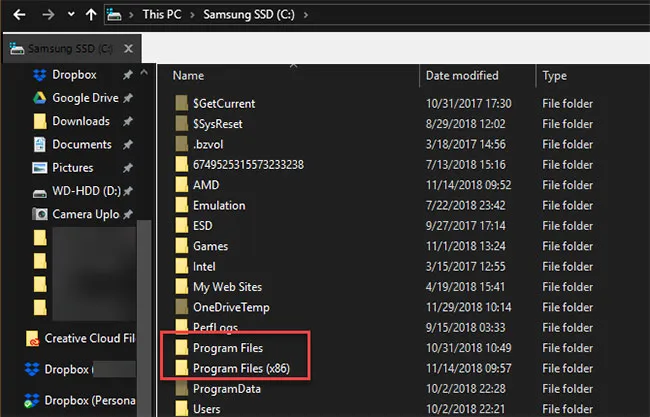
- Program Files separation: 64-bit Windows uses “Program Files” for 64-bit apps and “Program Files (x86)” for 32-bit apps to avoid conflicts between binaries and shared libraries (DLLs).
- Driver model: 64-bit Windows requires signed 64-bit drivers; 32-bit drivers won’t load on x64 systems.
Advantages of 64-bit Windows
- Use more RAM: essential if your system has >4 GB of RAM or you run memory-intensive tasks.
- Better performance for optimized software: apps compiled for x64 often run faster and more efficiently with larger registers and instruction sets.
- Improved security features: hardware-backed protections (e.g., DEP, kernel patch protection) and stricter driver signing requirements make exploitation harder on x64 systems.
- Modern software support: most contemporary apps and updates target 64-bit platforms first.
Downsides and compatibility considerations
- Legacy hardware drivers: very old peripherals (scanners, printers, specialized devices) may lack 64-bit drivers, making them incompatible with x64 Windows.
- Some legacy software: 16-bit applications cannot run directly on 64-bit Windows—emulation or a virtual machine is required.
- Edge cases with old motherboards: some older motherboards may be 64-bit capable at CPU level but still limited to low RAM capacities.
How to check whether your CPU and Windows are 32-bit or 64-bit (Windows steps)
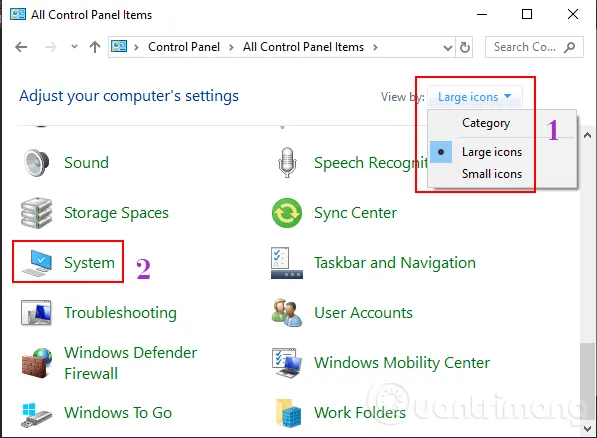
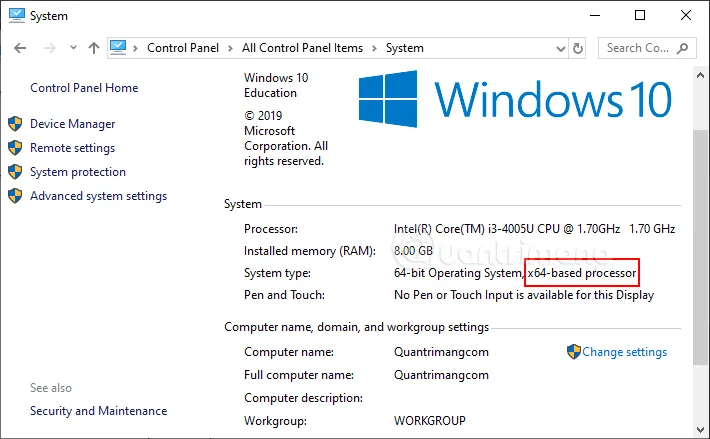
- Open Control Panel → System (view System type).
- “x64-based processor” indicates the CPU supports 64-bit.
- “x86-based processor” means CPU supports only 32-bit.
- “64-bit Operating System” / “32-bit Operating System” shows which Windows build is installed.
Can you upgrade from 32-bit Windows to 64-bit Windows?
- Yes, if your CPU is 64-bit you can move from a 32-bit Windows installation to 64-bit Windows, but this generally requires a clean install (back up data first).
- If your CPU is 32-bit, you cannot upgrade to 64-bit without replacing the CPU or the entire system.
How to choose the right Windows version for you
- Choose 64-bit if:
- Your system has more than ~3–4 GB RAM or you plan to upgrade RAM.
- You run modern applications, VMs, video/photo editors, or many browser tabs.
- You want stronger security features available on x64 platforms.
- Consider 32-bit only if:
- You must support legacy 16-bit software or very old hardware with no 64-bit drivers.
- You have severe constraints that make a 64-bit upgrade impractical (rare in modern hardware).
- Note: 64-bit Windows is the current standard; most new PCs and software target x64.
Practical examples
- Photo/video editors (Photoshop, Premiere) and virtual machines (VirtualBox, VMware) benefit significantly from 64-bit Windows because they can allocate far more memory per process.
- Modern browsers with many tabs and extensions perform better when the OS and apps can access more RAM.
- A legacy scanner from 2003 may lack 64-bit drivers—if you rely on it, check vendor support before upgrading.
SEO keywords and search intent (for content planning)
- Primary keyword: “Windows 32-bit vs 64-bit”
- Secondary / LSI keywords: “32-bit vs 64-bit Windows”, “how to check if Windows is 64-bit”, “x86 vs x64”, “upgrade 32-bit to 64-bit”, “program files x86”, “64-bit drivers”
- Search intent: mostly informational (users want to learn the difference, check compatibility, and decide which Windows to use). Some commercial/transactional intent may appear for users planning hardware upgrades.
Recommendations and final advice
- For most users in 2026, choose 64-bit Windows: mainstream software and hardware assume x64, and the ability to use more RAM makes the system more future-proof.
- Before switching, verify that any essential legacy hardware has 64-bit drivers or that required legacy software can be run via virtualization/emulation.
- If you need to upgrade from 32-bit Windows to 64-bit Windows and your CPU supports it, back up your data and perform a clean installation of the 64-bit edition.
References (selected, APA style):
- Microsoft. (n.d.). System information in Windows. Retrieved from https://support.microsoft.com
- Quantrimang. (n.d.). Nhận hết 4GB RAM trên Windows 7,8, Vista 32-bit. Retrieved from https://quantrimang.com/cong-nghe/nhan-het-4gb-ram-tren-windows-7-32-bit-95470
- Quantrimang. (n.d.). Hướng dẫn chuyển từ Windows 10 32-bit thành 64-bit. Retrieved from https://quantrimang.com/cong-nghe/huong-dan-chuyen-tu-windows-10-32-bit-thanh-64-bit-122507
Would you like a short step-by-step guide for upgrading a Windows 10 32-bit installation to 64-bit (including backup checklist and clean install steps)?