
The 1976 Plymouth Volare Road Runner barn find represents one of the most unusual and overlooked chapters in American muscle car history. Once a symbol of raw performance in the late 1960s, the Road Runner name had evolved by the mid-1970s into a trim and appearance package built on Chrysler’s compact Volare platform. This particular example, discovered after sitting for roughly 15 years, captures the final years of the badge’s production life and the dramatic shift in the muscle car landscape.
Unlike the stripped-down, high-horsepower originals, the 1976 model reflects an era of tightening emissions regulations and rising insurance costs. Yet, despite its reduced performance, it still carries traces of its heritage through V8 power, sport suspension, and—most importantly in this case—a rare 4-speed manual transmission.
The Evolution of the Road Runner Nameplate
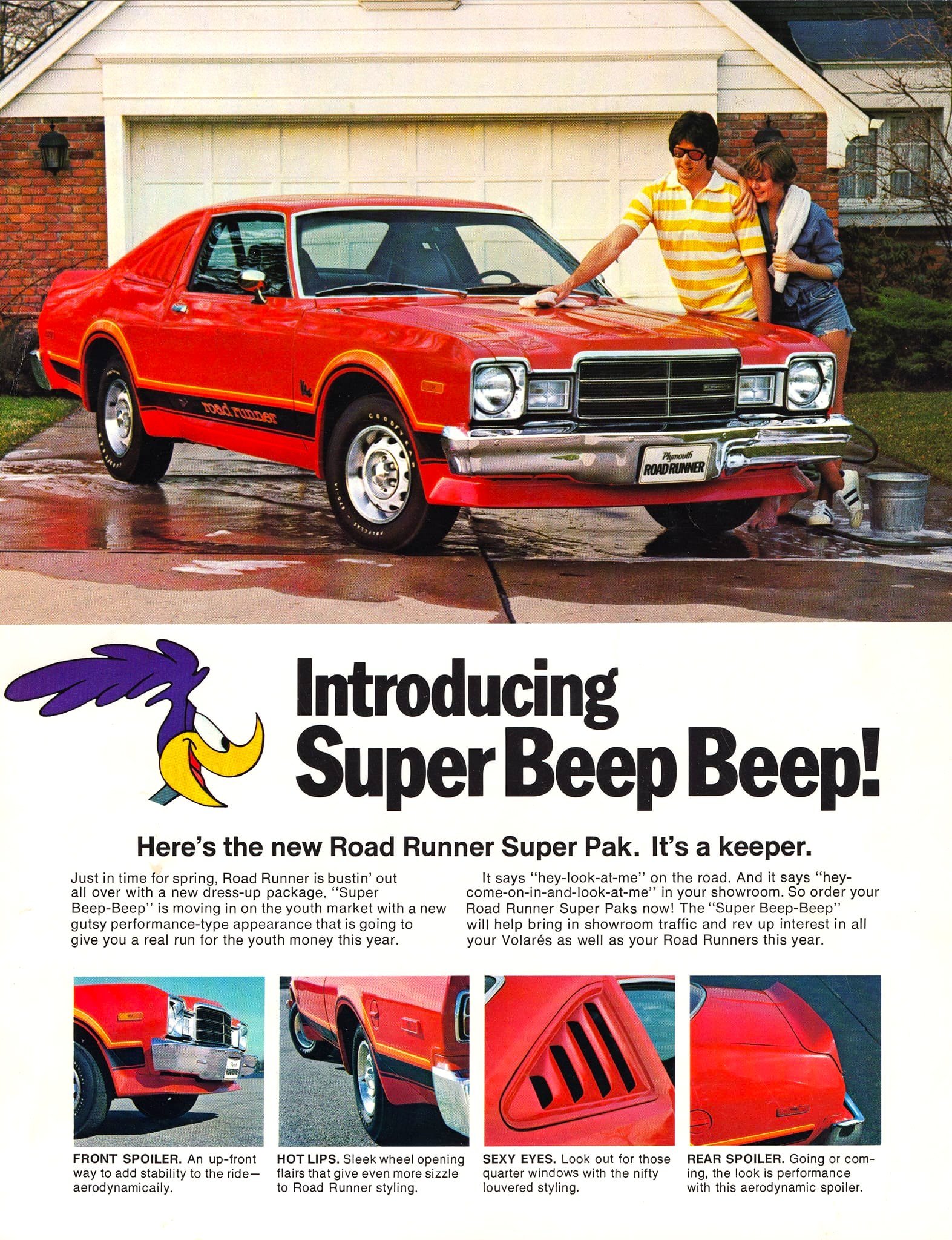
The original Plymouth Road Runner debuted in 1968 as a budget-friendly muscle car built for straight-line speed. Equipped with a 383 cubic-inch V8 and minimal luxury features, it quickly became a performance icon. By 1969, it had already earned Motor Trend’s Car of the Year title and built a reputation for dominating drag strips.
However, by the mid-1970s, the muscle car era had largely collapsed. Emissions controls, fuel economy demands, and insurance pressure forced manufacturers like Chrysler to rethink performance. The Road Runner name survived—but only as a styling package applied to less powerful platforms like the Fury and later the Volare.
A New Identity on the Volare Platform
When the Road Runner name moved to the Volare in 1976, it was no longer a dedicated performance model. Instead, it became a visual and suspension upgrade package applied to Chrysler’s compact F-body platform.
Buyers could still choose V8 engines, including the 318 and 360, but output was heavily restricted compared to earlier decades. Power ratings hovered around 195 horsepower in some configurations, a far cry from the 426 Hemi era.
Still, Chrysler attempted to preserve a performance feel by including police-package-derived suspension tuning and optional manual transmissions—features that make surviving examples like this barn find particularly interesting to collectors today.
The Barn Find Example: A Stalled Restoration
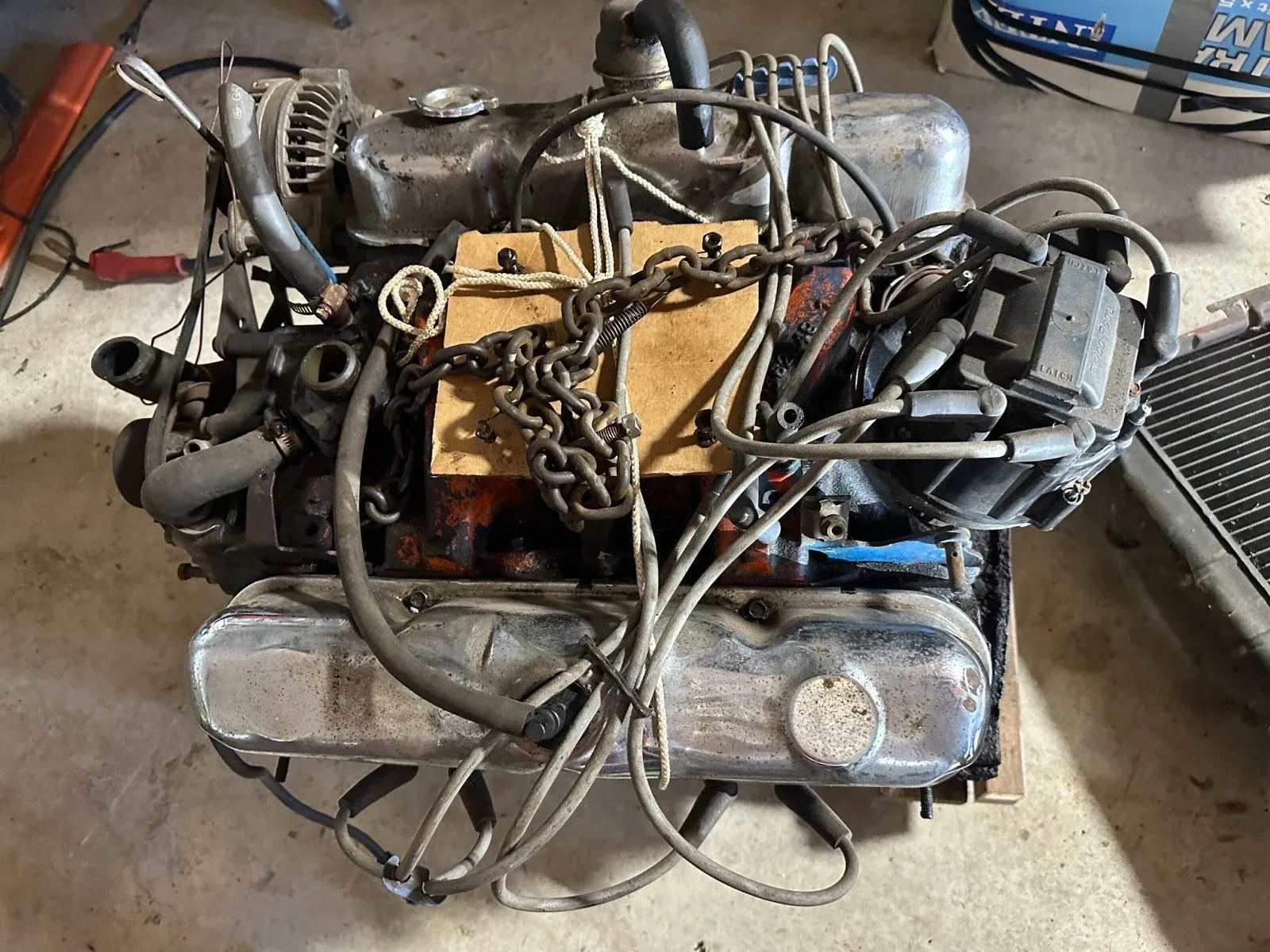
This particular 1976 Plymouth Volare Road Runner was parked for over 15 years after its engine was removed for a rebuild that was never completed. Despite the stalled project, the original engine remains with the car, offering a rare opportunity for restoration enthusiasts.
What makes this example especially notable is its 4-speed manual gearbox—a relatively uncommon configuration for Volare Road Runner models, most of which were sold with automatic transmissions. This detail alone increases its appeal among collectors who value driver-focused setups.
Design, Condition, and Restoration Potential
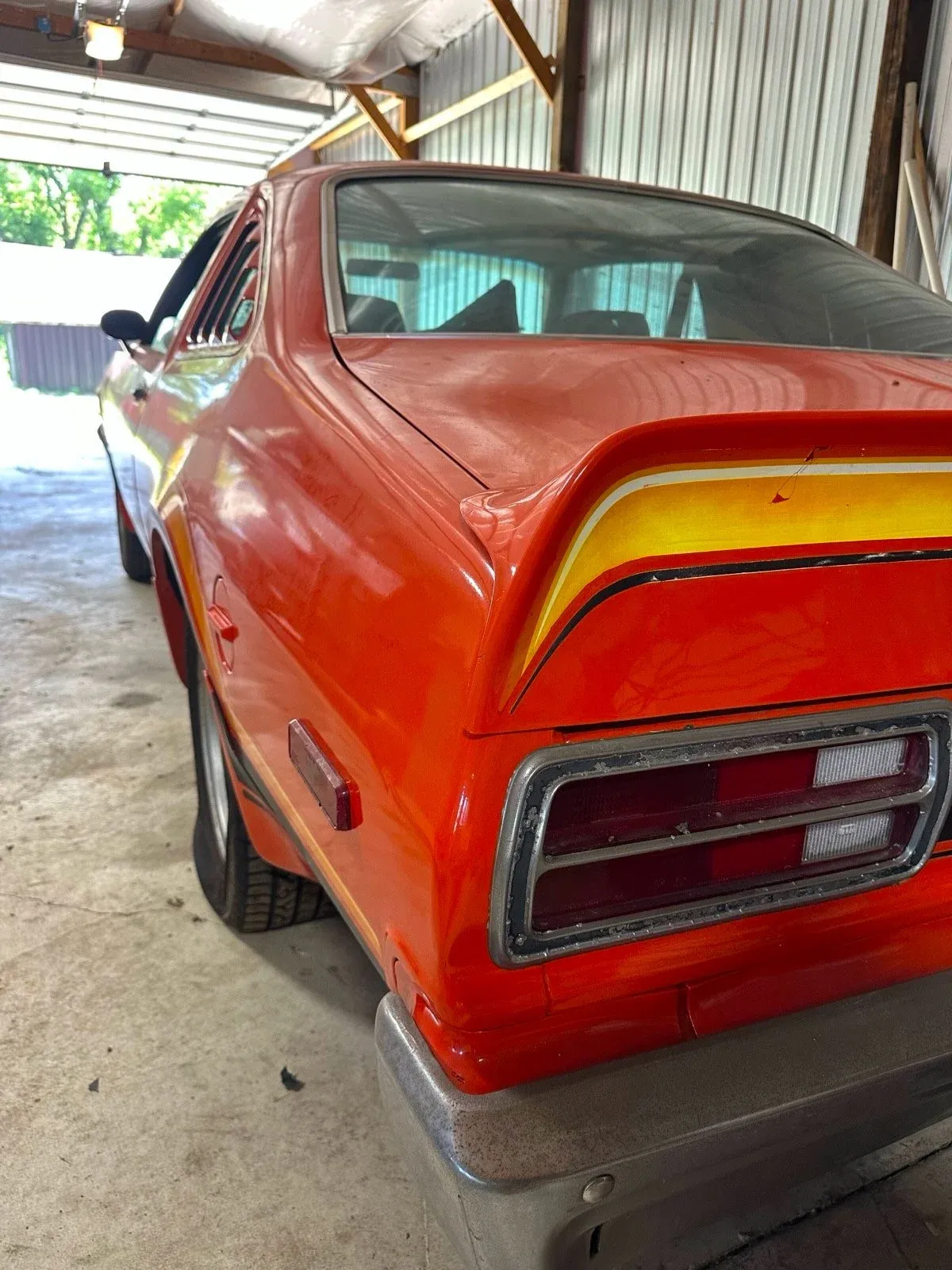
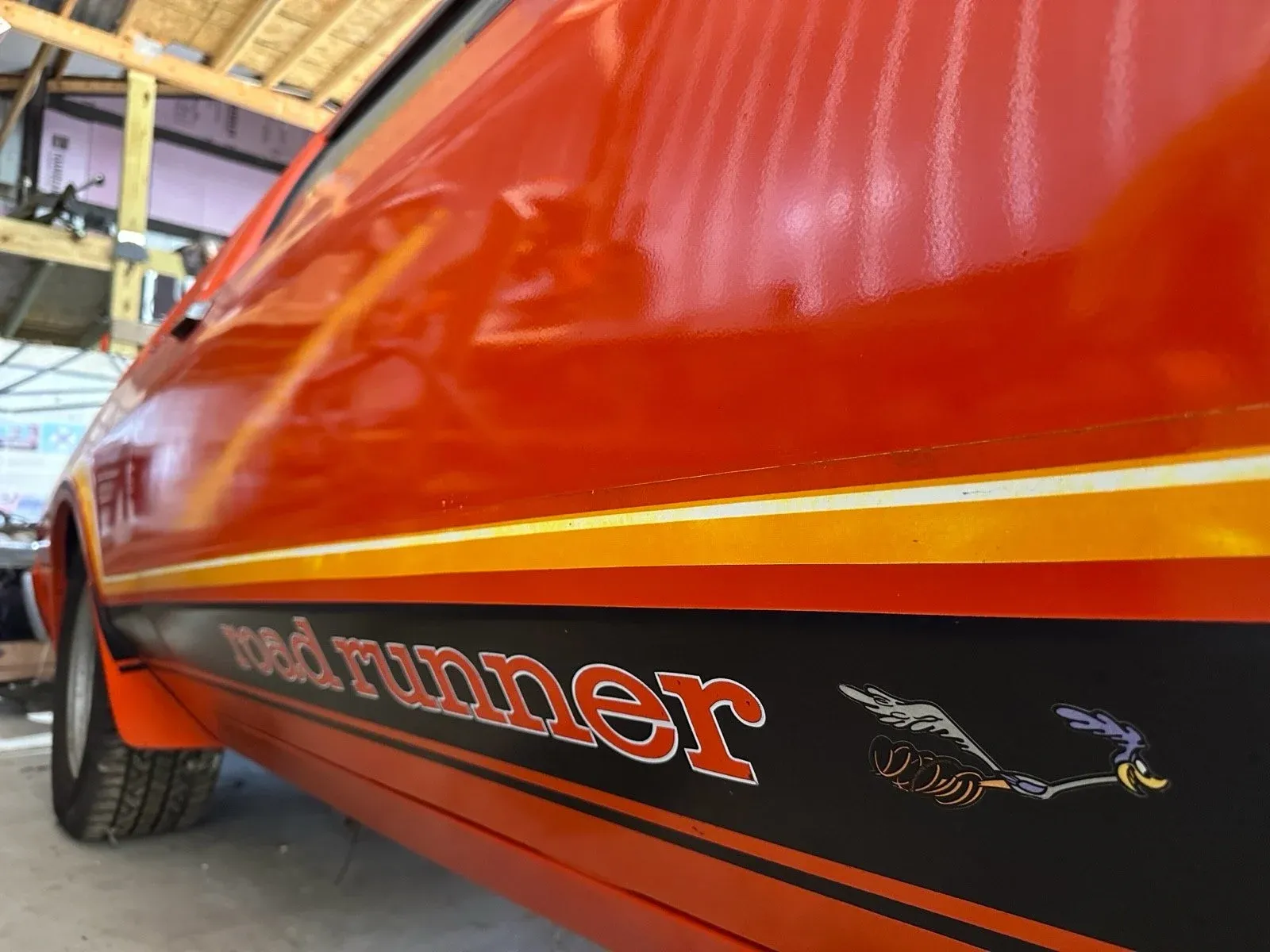
Visually, the Volare Road Runner retains classic Mopar styling cues such as bold striping, rally wheels, and distinctive badging. However, its compact proportions and softer design language reflect the changing priorities of the 1970s automotive market.
Despite its age and long storage period, the car remains largely intact. For restoration builders, this presents both challenges and opportunities:
- Original drivetrain components still available
- Engine included but requiring rebuild
- Rare manual transmission setup
- Strong potential as a period-correct restoration project
Enthusiasts often view barn finds like this as a blank canvas—especially when the vehicle retains its core mechanical identity.
A Rare Survivor from the End of an Era
 1976 Plymouth Volare Road Runner barn find exterior shot showing full vehicle condition after long-term storage
By the late 1970s, the Road Runner name was approaching its final years, eventually disappearing entirely by 1980. Unlike earlier generations that defined American muscle performance, the Volare-based models are often overlooked. However, they represent an important transitional phase in automotive history—where performance gave way to practicality and compliance.
This barn find stands as a physical reminder of that shift. While it lacks the brute force of its predecessors, it carries historical value as one of the last official Road Runners produced by Plymouth.
Conclusion
The 1976 Plymouth Volare Road Runner barn find is more than just a restoration project—it is a snapshot of a changing automotive era. With its rare 4-speed manual transmission, original engine presence, and largely complete condition, it offers enthusiasts a unique opportunity to preserve a fading piece of Mopar history.
For collectors and restorers, this car raises an important question: is it better to restore it to factory-original modest performance, or to reinterpret it with modern upgrades while respecting its heritage?
Either way, surviving examples like this ensure that the Road Runner name continues to live on, even in its final and most understated form.
References
- Chrysler Corporation historical archives on Plymouth Road Runner development
- Silodrome automotive feature article: “Barn Find: 1976 Plymouth Volare Road Runner 4-Speed”
- Automotive history analysis from Motor Trend and Road & Track retrospective muscle car reports
- FCA (Stellantis) heritage documentation on Plymouth model lineage