
The 1970 model year marked a high-water mark for American muscle cars, and standing proudly at the pinnacle was the Chevrolet Chevelle SS. With a bold new restyle and a range of potent powertrains, the 1970 Chevelle SS, particularly the SS 396, captured the spirit of an era where horsepower seemed to know no bounds. For enthusiasts and collectors today, understanding the nuances of this model—from its optional packages to its production numbers—is essential to appreciating its lasting legacy. This guide delves deep into the details that make the 1970 Chevelle SS 396 a truly iconic and sought-after vehicle.
The Restyled Icon: Design and Initial Impressions
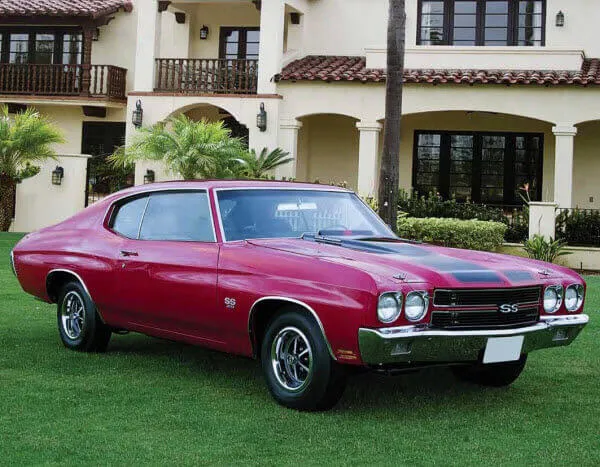
For 1970, Chevrolet gave the Chevelle a significant restyling, creating a more aggressive and muscular stance that perfectly complemented its performance capabilities. The Super Sport (SS) package, available on both hardtop coupes and convertibles, added distinctive visual elements that set it apart from standard models. The most recognizable feature was the hood, which sported a large, prominent bulge at the rear center. This wasn’t just for show; it was a design cue that hinted at the power lurking beneath. Hood stripes were available as an extra-cost option, adding a further layer of visual aggression. For those seeking the ultimate in both style and function, the “Cowl Induction” option was the pinnacle. This system featured emblems on either side of the hood bulge and a functional air door on top that would automatically open when the engine demanded extra air, feeding cooler, denser air directly into the carburetor for a performance boost.
Under the Hood: The “396” That Was Actually a 402
The nomenclature of the 1970 SS 396 is a point of fascination for many muscle car aficionados. While officially marketed as the “SS 396,” the engine itself underwent a change. Sometime in late 1969, the venerable 396 cubic-inch big-block V8 received a 0.030-inch larger bore, increasing its actual displacement to 402 cubic inches. However, for the sake of model recognition and marketing consistency, Chevrolet continued to badge all SS 396 cars as such. This creates a unique piece of trivia for collectors: the “396” in a 1970 Chevelle is technically a 402.
There were two distinct SS packages offered in 1970 for the Chevelle, each signifying a different engine option:
- Z25 SS 396: This package was for the 396/402 cubic-inch engines.
- Z15 SS 454: This was the newly introduced, monstrous 454 cubic-inch V8, marking a new era of displacement wars.
For the SS 396, buyers had two engine choices:
- L34: A 350 horsepower version.
- L78: A more potent 375 horsepower version, which came standard with the Cowl Induction system.
A very limited number of 1970 SS Chevelles were produced with the high-performance 375 HP 396 engine equipped with the desirable “L89” aluminum cylinder heads, making these rare and highly valuable variants today.
Performance and Mechanical Specifications
The performance credentials of the 1970 SS 396 were backed by a robust mechanical package. The SS 396 option included more than just a powerful engine; it was a comprehensive performance upgrade. Standard equipment for the SS 396 package included:
- A 350-bhp 402-cid V8 engine.
- Power front disc brakes, a crucial upgrade for the car’s substantial weight and speed.
- The F41 heavy-duty suspension package, which included stiffer springs, shocks, and a larger front sway bar for improved handling.
- Polyglas F70x14 tires mounted on the same styled wheels used on the 1969 models.
Transmission choices were plentiful. The big-block 396 could be paired with the robust Turbo Hydra-Matic (TH-400) three-speed automatic or a Muncie three-speed or four-speed manual transmission. In earlier models like the ’68, a two-speed “PowerGlide” automatic was also available. The rear axle was a heavy-duty 12-bolt unit, standard for big-block applications. While a Positraction limited-slip differential was not standard, it was a popular and highly recommended option. The only exception was if a buyer opted for the 4.10 (or higher) rear axle ratio, in which case Positraction was mandatory to handle the increased torque.
Identifying a True 1970 SS 396
For collectors and buyers, authenticating a 1970 Chevelle as a genuine SS 396 is paramount, as many replicas exist. The most reliable method is through documentation. Since the SS package did not alter the vehicle identification number (VIN) in a way that definitively identifies it as an SS (unlike some other manufacturers), original paperwork is critical. Key documents include:
- The Build Sheet: A factory document that lists every option installed on the car.
- Warranty Card or Protect-O-Plate: These will show the engine suffix code, which can be cross-referenced with the car’s VIN to confirm it came with a 396 or 454 engine from the factory.
Visual cues can be helpful but are not foolproof, as they can be replicated. These include the cowl induction hood, hood pins (present on all ’70-’72 SS cars except some very early ’70 models built before April 1970 that were not ordered with Cowl Induction), and specific badging. It’s important to note that contrary to popular belief, the tachometer/gauge package was not a standard part of the SS package but was an extra-cost option.
Market Values and Collector Trends
The 1970 Chevelle SS 396 remains a highly desirable collectible, with values showing consistent appreciation. According to recent market data, values for various models are on the rise, reflecting their enduring appeal. The current trends in Chevelle values are as follows:
- SS 396/350 Coupes: Up 2%
- SS 396/375 Coupes: Up 3%
- SS 396/350 Convertibles: Up 3%
- SS 396/375 Convertibles: Up 4%
- SS 454 Coupes: Up 3%
- SS 454 Convertibles: Up 3%
These figures demonstrate a strong and stable market, with the higher-horsepower 375 HP models and convertibles commanding a slight premium in appreciation. The rarity of options like the L89 aluminum heads and the cowl induction system further drives value for top-tier examples. With a total of 49,862 SS 396 Chevelles produced in 1970, they were sold for an incredible price of $3,439 for the coupe and $3,639 for the convertible—a testament to their premium status even then.
Conclusion: A True American Legend
The 1970 Chevelle SS 396 is more than just a classic car; it is a symbol of a golden age in American automotive history. Its aggressive restyling, powerful engine options, and comprehensive performance package combined to create a vehicle that was as thrilling on the highway as it was stunning to behold. For today’s collectors and enthusiasts, it represents a tangible piece of an era when horsepower was king and the sky seemed to be the limit. Whether you are a seasoned collector looking for a rare L89-equipped convertible or a muscle car fan appreciating its legacy from afar, the 1970 Chevelle SS 396 remains a beast that defined its generation and continues to command respect on the road and in the collector car market.
Are you passionate about classic American muscle cars? Share your thoughts and experiences with the 1970 Chevelle SS 396 in the comments below, and explore our other in-depth articles to learn more about the icons of automotive history.
References
- Auto Appraisal Group. (n.d.). 1970 Chevelle SS 396. Auto Appraisal Group.
- HowStuffWorks. (n.d.). How Car Suspension Works. HowStuffWorks Auto.