
The 1966 Pontiac GTO represents a pivotal moment in automotive history—the golden age of American muscle cars. This iconic two-door coupe embodies the spirit of raw performance, bold engineering, and cultural rebellion that defined the mid-1960s. With its legendary 389-cubic-inch V8 engine and distinctive design, the GTO became more than just a car; it became a symbol of American automotive ambition and the muscle car revolution that would captivate enthusiasts for decades to come.
The Genesis of the Muscle Car
The Pontiac GTO’s story begins with the 1964 model year, when Pontiac engineers made a revolutionary decision that would change automotive history forever. The first-generation GTO was created by mating the most powerful engine available at the time—a 389-cubic-inch V8 with 335 horsepower—to the lighter, mid-sized Pontiac Tempest body. This combination delivered an unprecedented power-to-weight ratio that thrilled drivers and sparked the birth of what became known as the “muscle car” segment.

Pontiac deliberately named the car “GTO,” borrowing the designation from Ferrari’s Gran Turismo Omologato racing program. This name carried significant prestige, suggesting that the GTO had been homologated—officially approved for racing competition—and was being offered to the public as a street-legal performance machine. This naming strategy brilliantly positioned the GTO as a legitimate performance car that combined race-derived engineering with everyday usability, appealing to performance-hungry drivers who couldn’t afford exotic European sports cars.
Technical Specifications and Performance
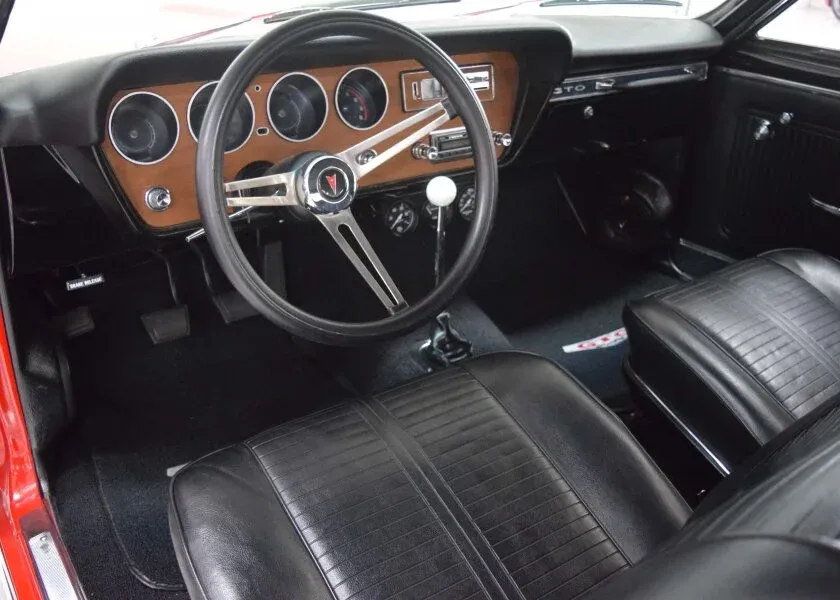
The 1966 GTO was available in three distinct body styles: the two-door hardtop, the convertible, and the two-door coupe currently displayed in the museum collection. Our featured example showcases the engineering excellence that made the GTO legendary among muscle car enthusiasts.
Engine Performance Specifications:
- Engine Type: 389-cubic-inch V8 (6.37 liters)
- Horsepower: 335 at 5,000 RPM
- Torque: 430 foot-pounds
- Transmission: Four-speed manual transmission
- Configuration: Longitudinal front engine layout
- Exhaust System: Dual exhaust setup
The 1966 GTO’s mechanical package represented cutting-edge performance technology. The 389-cubic-inch V8 engine, equipped with multiple carburetors, delivered impressive power figures for the era. Most significantly, 1966 was the final model year before General Motors implemented restrictions limiting intermediate-sized vehicles to engines no larger than 400 cubic inches—regulations that would substantially impact the GTO’s competitive position in the muscle car marketplace.

Market Dominance and Muscle Car Leadership
The 1966 Pontiac GTO achieved remarkable commercial success, becoming the most popular muscle car during the first half of that model year. The GTO outsold every competing performance model on the market, capturing the imagination of American drivers who craved accessible, high-performance vehicles. Sales data reflects the GTO’s market dominance: 1966 proved to be the most successful year in Pontiac GTO history, with an astounding 96,000 units sold—a testament to consumer appetite for affordable muscle car performance.
However, the GTO’s market leadership faced a significant challenge later in the 1966 model year when Chrysler introduced their legendary 426-cubic-inch Hemi engine. This powerful new contender threatened the GTO’s sales momentum, though the damage would be more pronounced in subsequent model years. Despite this competitive pressure, the 1966 GTO established itself as the definitive muscle car blueprint that competitors would emulate for the next decade.
Engineering Innovation and Special Options
The 1966 GTO featured several advanced engineering innovations that distinguished it from conventional family sedans of the era. The Tri-Power option package—featuring three two-barrel carburetors mounted on a specially designed intake manifold—represented a significant engineering achievement. This exclusive package delivered enhanced airflow and impressive performance gains, commanding an additional investment of $113 from buyers seeking maximum performance. Notably, 1966 marked the final year that the Sports Car Club of America (SCCA) permitted multi-carburetor configurations on intermediate-sized vehicles, excluding only the high-performance Chevrolet Corvette.
The GTO’s dual exhaust system not only contributed to its aggressive performance but also created the distinctive muscular exhaust note that became synonymous with American muscle cars. This combination of engineering sophistication and raw mechanical power made the GTO a driver’s car that rewarded enthusiasts with genuine performance capabilities unavailable in competing models at similar price points.
The Cultural Legacy and Nickname
Beyond its impressive technical specifications, the 1966 Pontiac GTO earned a distinctive nickname that reflected its bold, aggressive character: “The Goat.” This informal designation, born from the automotive enthusiast community, became closely associated with GTO models for decades, conveying the car’s powerful, untamed nature and its reputation for delivering exhilarating performance. The nickname perfectly captured the GTO’s personality—a muscular, no-nonsense performance machine that prioritized straight-line acceleration and driving excitement.
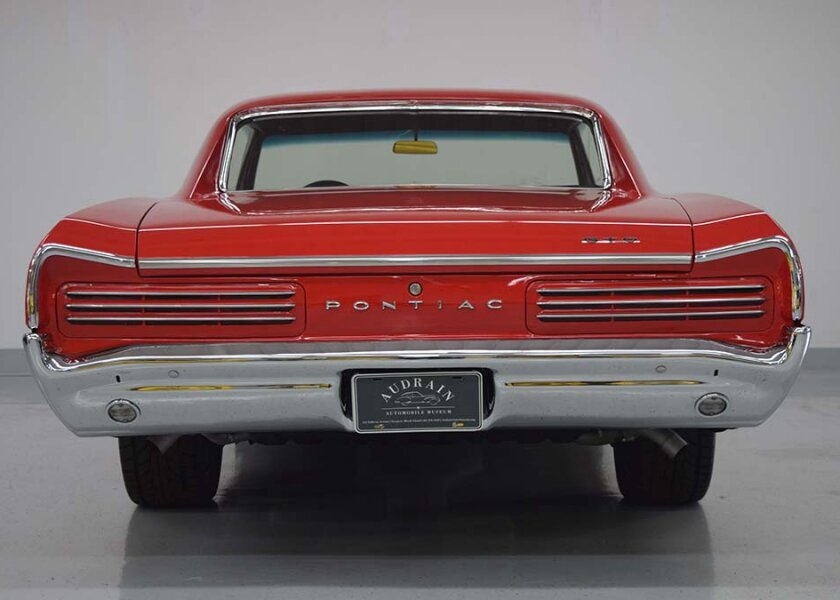 1966 Pontiac GTO rear quarter and side profile
Historical Significance and Automotive Impact
The 1966 Pontiac GTO stands as one of the most historically significant American automobiles ever produced. This model year represents the apex of the GTO’s initial dominance in the muscle car marketplace, a position earned through brilliant engineering, aggressive marketing, and genuine performance capabilities. The 1966 GTO validated the muscle car concept—proving that buyers would enthusiastically embrace powerful, affordable performance vehicles that challenged exotic sports cars on public roads.
The GTO’s influence extended far beyond Pontiac. Competitors including Dodge, Plymouth, Chevrolet, Buick, and others rushed to develop their own muscle car offerings, each attempting to capture a portion of the lucrative performance vehicle market that the GTO had created. By establishing the fundamental parameters of the muscle car segment—mid-sized bodies paired with full-size engines—the 1966 GTO essentially defined an entire automotive category that would generate billions in sales throughout the late 1960s and 1970s.
Conclusion
The 1966 Pontiac GTO “Goat” remains a defining vehicle in American automotive history, representing the innovative spirit and performance obsession that characterized the muscle car era. With its potent 389-cubic-inch V8 engine, aggressive styling, and accessible performance capabilities, the GTO captured the hearts of American drivers and established itself as the template for muscle car excellence. Whether you’re a dedicated collector, a serious enthusiast, or simply someone who appreciates significant automotive achievements, the 1966 GTO deserves recognition as the car that launched a thousand muscle car dreams. Have you experienced the raw thrills that made the muscle car generation unforgettable, or would you like to learn more about the iconic performers that followed the GTO’s legendary debut?