
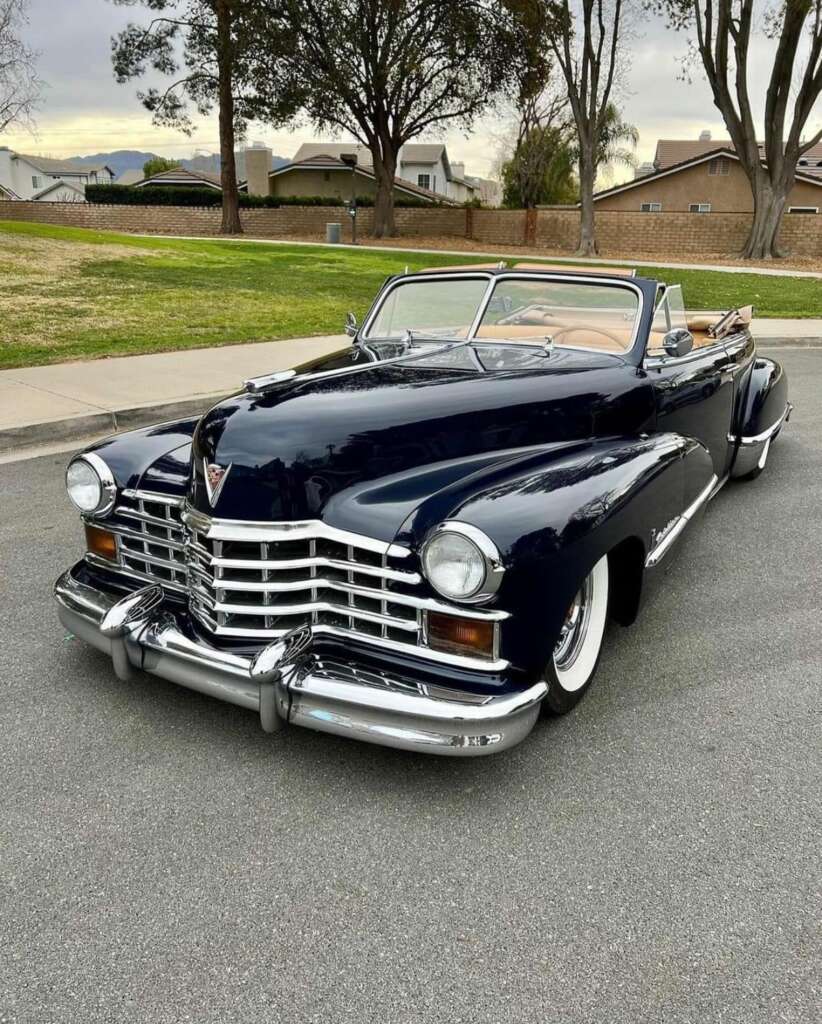
The 1940 model year marked a significant point for Packard, a brand synonymous with luxury and engineering prowess. With an advertising slogan proclaiming, “The more you look . . . the more you’ll want one,” Packard aimed to capture the attention of discerning buyers. This iteration of the Packard Eight introduced notable styling updates and engineering refinements, solidifying its position in the high-end automotive market. This analysis delves into the specifics of the 1940 Packard, exploring its design, mechanical enhancements, and the historical context of its production within the broader Packard lineup.
Evolution of Design and Engineering in the 1940 Packard
Packard’s Eighteenth Series, introduced in August 1939, presented a refreshed aesthetic. The traditional Packard grille was now complemented by two vertical side grilles, a distinct visual upgrade. Furthermore, the integration of sealed-beam headlights directly onto the fenders, with parking lights positioned on the fender crowns, gave the vehicle a more modern and streamlined appearance. While external changes were noticeable, internal modifications focused on enhancing performance and practicality. Redesigned cylinder heads improved intake gas flow, contributing to better engine efficiency. The hood length was extended, facilitating an easier installation of optional side-mount spare tires, a popular feature for those seeking enhanced preparedness for long journeys. The options list for the 1940 models was notably extensive, offering buyers a wide array of customization possibilities to tailor their vehicles to individual preferences.
The Super Eight and Custom Super Eight: Packard’s Senior Series in 1940
For 1940, the Super Eight line continued its role as Packard’s sole “Senior Series,” representing the pinnacle of the brand’s offerings. This series was further stratified into two distinct lines: the One-Sixty Series, which succeeded the previous Super Eight designation, and the new Custom Super Eight, also known as the Series One Eighty. The Custom Super Eight ascended to the flagship position, replacing the discontinued V-12 models. Both the One-Sixty and Custom Super Eight models were powered by a newly engineered engine. This powerplant was essentially a refined L-head, straight-eight-cylinder unit. With a displacement of 356 cubic inches, it produced a robust 160 horsepower at 3,500 rpm, offering a compelling blend of power and smooth delivery characteristic of Packard’s luxury vehicles. The Senior Packards shared three available chassis lengths, offering wheelbases of 127, 138, and 148 inches, providing buyers with options to suit their desired ride comfort and passenger space. A groundbreaking innovation for the era was the availability of optional air conditioning, priced at $275.00, marking the first time this feature was installed on production vehicles, further underscoring Packard’s commitment to luxury and comfort.
Production Realities: Junior vs. Senior Series
The automotive landscape was evolving, and Packard’s production strategy reflected this shift. The majority of Packard’s output in 1940 was concentrated on the more affordably priced “Junior Series” models. This strategic focus aimed to broaden the brand’s market appeal and sales volume. In stark contrast, the higher-end Senior Series saw significantly lower production numbers. Packard manufactured 90,438 Junior models, while the Senior Series, encompassing both Super Eights and Custom Super Eights, accounted for only 7,562 units. Within this senior segment, 5,662 were Super Eights and 1,900 were Custom Super Eights. These comparatively low production figures for the Senior Series contribute significantly to their desirability among collectors and enthusiasts today, making them rare and sought-after examples of automotive artistry.
A Meticulously Restored 1940 Packard
The Packard featured here is a testament to dedicated preservation, having undergone a no-expense-spared restoration completed in the spring of 2007. The process began with the car being stripped to bare metal, after which it was resprayed in a classic and elegant Black finish. During the restoration, original Budd all-steel doors were utilized, alongside numerous original New Old Stock (NOS) parts, ensuring a high degree of authenticity. The documented engine rebuild was expertly handled by D&D Engine Service of Cincinnati, Ohio. The silky-smooth Packard inline-eight engine is paired with an overdrive transmission, a feature that significantly enhances highway cruising comfort and fuel efficiency. Further enhancing its distinguished appearance and practicality are the dual-sidemount spare tires, a convenient trunk rack, and the optional two-tone Riviera cloth interior. This interior is finished in Laidlaw Tan and Light Tan, complemented by twin burl walnut mirror sets elegantly fitted into the back of the front seats. The exquisite interior work was meticulously carried out by Bryant’s Upholstery in Ohio.
Provenance and Presentation
Demonstrating its exceptional quality and appeal, this restored Packard was showcased at several prestigious concours events in 2007, including the Meadowbrook Concours, Keenland Concours, Dayton Concours, and the Cincinnati Concours. These appearances highlight the car’s adherence to concours standards and its ability to impress automotive connoisseurs. The vehicle is now poised to once again grace concours show fields, offering its new owner the opportunity to experience and present a magnificent piece of automotive history.
References:
- Packard Automobile Classics, Inc. “Packard Parts & Information.”
- “Standard Catalog of American Cars 1805-1942.”