

The best used luxury cars for sale under $15,000 include the Lexus ES 350 (2013-2015), Lexus GS 350 (2013-2015), Mercedes-Benz E350 W212 (2010-2013), BMW 328i/335i F30 (2012-2015), and Audi A6 C7 (2012-2014). Lexus models offer the lowest ownership risk and repair costs, while German brands deliver stronger performance and features at a higher maintenance cost.
You want a luxury sedan or SUV without a luxury-sized payment, but you’re not sure which older BMW, Mercedes-Benz, Audi, or Lexus will reward you with dependable ownership instead of a string of repair bills. This guide walks through specific used luxury cars for sale under $15,000, the ownership costs each one tends to carry, and the inspection steps that separate a smart buy from a budget trap. By the end, you’ll have a shortlist matched to your priorities and a checklist you can bring to any test drive or dealer lot.
For most shoppers, the sweet spot for used luxury cars for sale under $15,000 sits among 2012 to 2016 model-year sedans such as the Lexus ES 350, Lexus GS 350, Mercedes-Benz E-Class (W212), BMW 3-Series (F30), and Audi A6 (C7), typically found with 65,000 to 110,000 miles on the odometer. Lexus models tend to carry the lowest ownership risk and the cheapest routine maintenance in this group, while the German alternatives offer stronger driving dynamics and more advanced features in exchange for higher annual repair exposure. The right pick depends less on badge prestige and more on service history, mileage pattern, and how much repair budget you’re willing to hold in reserve after the sale closes.
Top Affordable Luxury Cars Under $15,000: Models That Balance Price and Reliability
Every model on this shortlist was chosen because it clears $15,000 with room to spare in most regions, not because it sits right at the ceiling. That matters: leaving a buffer between your purchase price and your budget cap gives you room to negotiate and still fund a pre-purchase inspection.
Certain nameplates hold value better in this bracket simply because parts are cheap and mechanics are familiar with them. A Lexus ES or GS depreciates like any other used sedan, but because routine service is inexpensive and widely available, resale demand stays steadier than it does for German competitors carrying a reputation for costly repairs. Premium features like heated leather seats, adaptive cruise control, and upgraded audio systems are common across this group, so feature access isn’t really the differentiator at this budget. Ownership risk is.
Before you commit to any of the vehicles below, plan on paying for an independent pre-purchase inspection. It typically costs $150 to $250 and is the single highest-leverage step you can take, because it converts guesswork about hidden problems into a documented list you can act on.

Model Comparison: Price, Mileage, and Reliability
| Model | Typical Year | Avg. Price | Mileage Range | Reliability Score (1-5) | Common Repair Cost |
|---|---|---|---|---|---|
| Lexus ES 350 | 2013-2015 | $12,500-$14,500 | 70,000-95,000 mi | 4.5 | $400-$700/year (brakes, fluids) |
| Mercedes-Benz E350 (W212) | 2010-2013 | $11,000-$13,500 | 85,000-110,000 mi | 3.5 | $800-$1,500/year (air suspension, oil leaks) |
| BMW 328i/335i (F30) | 2012-2015 | $10,500-$13,000 | 75,000-100,000 mi | 3.0 | $900-$1,800/year (timing chain, water pump) |
| Audi A6 (C7) | 2012-2014 | $11,500-$14,000 | 80,000-105,000 mi | 3.5 | $700-$1,400/year (timing chain, electronics) |
| Lexus GS 350 | 2013-2015 | $13,000-$14,800 | 65,000-90,000 mi | 4.5 | $450-$750/year (brakes, suspension bushings) |
| Infiniti Q50 | 2014-2016 | $11,000-$13,500 | 70,000-95,000 mi | 4.0 | $500-$900/year (steering rack, CVT service) |
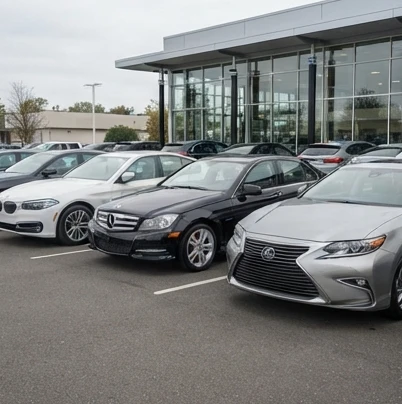
These figures are general estimates drawn from typical ownership patterns for each platform rather than guarantees for any specific vehicle. Condition, climate, prior service history, and local labor rates can shift these numbers considerably.
Mercedes-Benz E-Class (W212) and Audi A6 (C7) Under $15k
At this price, a W212 E-Class typically means a 2010-2013 E350 with a V6, a genuinely comfortable ride, and an interior that still feels several tiers above a comparable non-luxury sedan. The trade-off is the air suspension system on many trims, which is one of the more expensive components to repair on the entire platform once it starts leaking or losing pressure.
The Audi A6 (C7) generation offers similar cabin quality with the added benefit of Quattro all-wheel drive on many trims, which matters if you live somewhere with real winters. Its main long-term risk is the timing chain tensioner, a known weak point on the supercharged and turbocharged V6 engines used in this generation; when it fails, it can cause expensive internal engine damage if ignored.
Both cars deliver features you simply won’t find on a $13,000 non-luxury sedan: adaptive cruise control, premium sound systems, and heated and ventilated seating are common even at this budget tier. Weigh that against the fact that both platforms carry meaningfully higher annual repair exposure than the Lexus alternatives in the same price range, as reflected in the table above.
BMW 3-Series (F30) and Lexus ES 350 as Budget Luxury Sedans
The F30-generation BMW 328i and 335i reward drivers who care about handling feel and steering response more than any other car in this list. Ride quality is firmer than the Mercedes or Audi, which some buyers prefer and others find tiring on longer commutes.
The N20 and N55 engines used across this generation are known for timing chain guide wear that can produce a rattling noise on cold start, a repair that frequently runs into four figures if the chain itself has stretched. This is a documented failure mode buyers should specifically listen for during a cold start test drive, not a rare fluke.
The Lexus ES 350, by contrast, is built for comfort-focused daily commuting rather than back-road engagement. It uses a naturally aspirated V6 with a long service track record and none of the turbo-related complexity that drives up German repair bills. If your priority is a quiet, low-drama daily driver rather than a car you look forward to pushing hard on weekends, the ES is generally the lower-stress choice between the two.
How to Compare Used Luxury Vehicles: Reliability, Mileage, and Ownership Costs
Comparing luxury cars by sticker price alone is how buyers end up with an $11,000 car that costs more to keep on the road than a $14,000 alternative. A more useful comparison weighs purchase price against expected repair frequency, parts availability, and how the specific mileage on that VIN lines up with major service intervals.
Public reliability data from sources like J.D. Power and Consumer Reports can help you sanity-check a model’s general dependability trend, but treat those ratings as directional rather than a guarantee for any individual car. A well-documented, single-owner example will almost always outperform its model’s average reliability score, and a neglected one will underperform it.
Annual Maintenance and Parts Overview
| Brand/Model | Annual Maintenance | Common Repairs (Cost) | Parts Availability | Suitability |
|---|---|---|---|---|
| Lexus ES 350 | $500-$800 | Brake rotors ($400), struts ($600) | High (Toyota parts) | Best for low-stress daily commuting |
| Mercedes E350 | $1,200-$2,000 | Air suspension ($1,500), oil leaks ($800) | Medium (dealer or indie specialist) | Best for buyers who prioritize ride comfort and can budget for repairs |
| BMW 328i/335i | $1,400-$2,200 | Timing chain ($1,800), water pump ($900) | Medium (dealer or indie specialist) | Best for driving enthusiasts willing to accept higher repair frequency |
| Audi A6 | $1,100-$1,900 | Timing chain ($1,600), mechatronics unit ($1,200) | Medium (dealer or indie specialist) | Best for tech-focused buyers who want AWD and premium interior |
These are general estimates, not measured figures from any specific vehicle, and actual costs vary by region, shop, and the individual car’s condition.
Risk-Adjusted Ranking System for Pre-Owned Luxury Autos
A simple way to compare candidates is to score each one from 1 to 5 across three factors: reliability history for that model, typical repair cost when something does fail, and how much feature value you get for the price. Add the three scores together and you get a rough risk-adjusted rank instead of a price-only rank.
This is where mileage assumptions can mislead beginners. A 2014 Lexus GS 350 with 80,000 miles and full dealer service records can reasonably outscore a 2012 BMW 5-Series with only 60,000 miles, because the Lexus platform’s failure points are cheaper and less frequent even at higher mileage, while the BMW’s complexity carries risk regardless of how lightly it’s been driven. Lower mileage does not cancel out a platform’s known weak points.
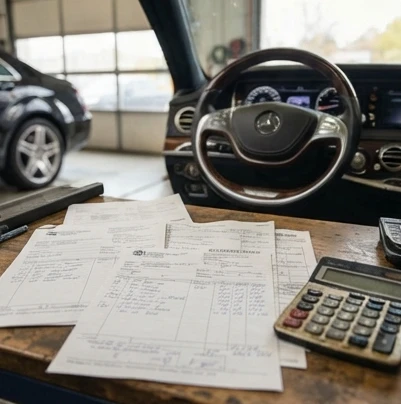
Maintenance history should shift your score more than the odometer does. A car with 100,000 miles and a stack of service receipts for timing chains, fluids, and suspension components is a lower risk than a car with 60,000 miles and no records at all, because the second car’s true condition is unknown rather than confirmed good.
As a worked example: a Mercedes E350 at $12,000 might score 3 for reliability, 2 for repair cost, and 5 for feature value, totaling 10. A Lexus ES 350 at $13,500 might score 5, 4, and 4, totaling 13. The higher total suggests the Lexus carries less ownership risk relative to its price, even though it costs more upfront.
Mileage Sweet Spot and Deferred Maintenance Warning Signs
For luxury cars under $15,000, a mileage range of roughly 60,000 to 90,000 miles tends to offer the best balance between purchase price and remaining service life before the next round of major maintenance. Below that range, prices usually climb past budget; above it, you’re closer to a second round of timing components, suspension bushings, and major fluid services all at once.
Several services cluster predictably at specific mileage thresholds, and knowing them helps you judge whether a listed price already accounts for upcoming work. Expect timing belt or chain inspection around 60,000 to 90,000 miles depending on the engine, transmission fluid service around 60,000 miles, brake fluid and coolant flushes roughly every two to three years, and spark plug replacement typically in the 60,000 to 100,000 mile window.

Deferred maintenance leaves signs in the paperwork before it shows up as a mechanical failure. A vehicle history report or service folder with large gaps of a year or more between visits, or one that shows only oil changes with no mention of fluid flushes or brake work, is a signal that other scheduled items may have been skipped.
When mileage and price both look attractive but the service history is thin, industry practice suggests treating the difference between that car and a fully documented one as your inspection budget, not as free savings.
Estimated Maintenance and Repair Costs for Luxury Cars Under $15,000
The purchase price of a used luxury car is only the entry fee. What determines whether it’s actually a good deal is the total you’ll spend keeping it running over the next one to three years, and that number varies significantly by brand, platform age, and how the previous owner treated it.
Older luxury cars are, by definition, out of their original factory warranty, which means every repair comes out of your pocket unless you buy an aftermarket policy. This is one of the clearest ways a cheap purchase price can be misleading: an $11,000 Mercedes with deferred air suspension work can easily cost more over three years than a $14,000 Lexus that needs nothing beyond routine service.
A safer way to check whether a listing is realistically priced is to compare it against the maintenance table above and ask what the seller’s price already reflects. A used luxury car priced well below others in its class often means a repair is being priced into it, whether the listing says so or not.
Post-Purchase Budgeting: Setting Aside Money for Repairs and Maintenance
How much extra should you set aside beyond the purchase price? A reasonable starting reserve is 20 percent of the purchase price for immediate costs like registration, taxes, tires, and any urgent items flagged during inspection, on top of an annual maintenance reserve sized to the specific brand.
True Budget Formula: Total Budget Needed = Purchase Price + (Purchase Price x 0.20) + Annual Maintenance Reserve
- Purchase Price: the negotiated price of the vehicle, generally $11,000 to $14,500 in this budget tier.
- Purchase Price x 0.20: an immediate reserve for registration, taxes, title fees, and near-term repairs such as tires, brakes, or fluids due within the first three months.
- Annual Maintenance Reserve: money set aside each year for expected upkeep, roughly $500 to $800 for a Lexus and $1,200 to $2,200 for a German alternative based on the estimates above.
For a $13,000 Lexus ES 350, that works out to $13,000 plus a $2,600 reserve plus roughly $650 in annual maintenance, for a first-year total near $15,600. For a $12,000 BMW 328i, the math runs closer to $12,000 plus a $2,400 reserve plus around $1,800 in annual maintenance, landing near $16,200. These are planning estimates, not fixed costs, but they illustrate why two cars priced $1,000 apart can require very different total budgets.

Buyers who skip this step often assume the sticker price is the whole story. It rarely is.
Comparing Ownership Costs: German Luxury vs Japanese Luxury
Across a typical three-year ownership window, the gap between Japanese and German luxury brands in this price bracket tends to widen rather than narrow, because German parts and specialized labor stay expensive even as the car ages. Independent shops that work on BMW, Mercedes, and Audi platforms often charge more per hour than general shops, reflecting the specialized diagnostic tools these platforms require.
Insurance premiums also differ by brand and model, generally tracking repair cost and parts pricing rather than badge prestige alone; a Lexus ES typically insures more cheaply than a comparable BMW 3-Series in the same condition and coverage tier. That gap compounds with the maintenance difference over a multi-year ownership period.
Resale is the last piece of the comparison, and it favors the lower-maintenance option. When a car’s known weak points get expensive, private buyers start discounting it in negotiations, which means a Lexus with documented service tends to hold its asking price more firmly than a German car with the same mileage and a thinner service file.
Checklist for Inspecting an Older Luxury Car Before Purchase
A generic test drive will not reveal most of the expensive problems hiding in an older luxury car. The systems that fail on these platforms, like air suspension, timing components, and complex electronics, often show subtle warning signs long before they fail outright, and those signs are exactly what a structured inspection is designed to catch.
Bring a printed checklist. It keeps you from getting swept up in leather seats and a smooth idle while skipping the boring checks that actually matter.
Pre-Purchase Inspection: 10 Warning Signs of Deferred Maintenance
- Request full service records; walk away if there’s no documentation for oil changes, brakes, or major services.
- Check for warning lights on startup, including check engine, ABS, air suspension, and transmission; all should clear within about 5 seconds.
- Inspect panel gaps and paint consistency; uneven gaps or mismatched paint indicate prior collision repair.
- Test every interior control, including seat motors, window switches, climate control knobs, and the infotainment touchscreen response.
- Listen for timing chain rattle on cold start on BMW N20/N55 engines, or whining from the transmission on Audi DSG-equipped cars.
- Verify air suspension operation by raising and lowering the vehicle and listening for compressor strain or a slow response.
- Check underneath the car and around valve covers, the oil filter housing, and the oil pan for active leaks.
- Test transmission shift quality; delays, harsh shifts, or slipping all indicate internal wear.
- Review the VIN history report for odometer discrepancies, accident damage, or title issues.
- Have an independent mechanic run a pre-purchase inspection, typically $150 to $250, before you commit to the purchase.

Mechanical and Electrical Inspection Checklist
Start the inspection cold if at all possible. Many of the most telling symptoms, like chain rattle, rough idle, or delayed suspension response, are most obvious in the first few minutes before the engine and fluids reach operating temperature.
With the engine running, walk around and check for leaks at the valve cover gaskets, oil pan, and around the timing cover, since these are common failure points across most of the models in this guide. A faint burning smell alongside visible oil residue is a stronger warning sign than a small stain alone.
Electronics deserve the same scrutiny as mechanicals on these cars, because luxury trims pack in more sensors, motors, and modules than a base-model economy car. Cycle every window, seat position, mirror fold, and climate zone individually; a single unresponsive function can point to a failing control module that costs far more to diagnose than to ignore during a test drive.
How to Read a Vehicle History Report and Service Records
A Carfax or AutoCheck report won’t tell you everything, but it will flag accident history, title branding, and reported service intervals that you can cross-reference against the mileage sweet spot discussed earlier. Look specifically for a title marked salvage, rebuilt, or flood, any of which should end negotiations on a luxury car in this price range unless you fully understand and accept the risk.
Odometer accuracy is worth a second check beyond what the report shows. Compare the mileage on the title, the dashboard, and any recent service stickers or inspection stickers on the windshield; a mismatch is a red flag worth walking away from.
Open recalls are free to check through the manufacturer’s VIN lookup tool and cost nothing to verify before you buy. A car with unresolved safety recalls isn’t necessarily a bad buy, but it’s a bargaining point and a task you’ll need to schedule immediately after purchase.
Luxury Features to Prioritize and Which Ones to Avoid in This Price Range
Not every luxury feature is worth chasing at this budget, and some of the most impressive-sounding options are also the most likely to become expensive problems. The goal is separating features that genuinely improve daily comfort from those that mainly add complexity and repair exposure.
Comfort, Convenience, and Safety Features Worth the Investment
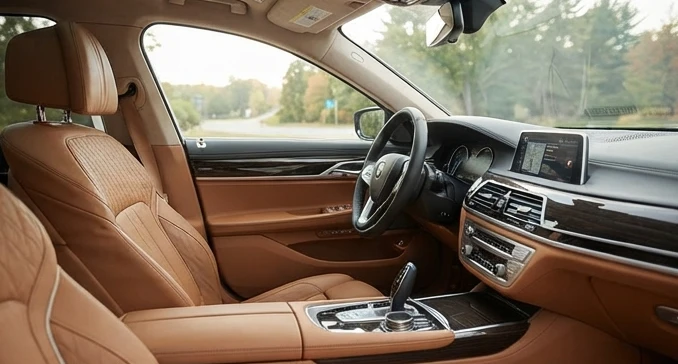
Heated and ventilated seats, along with upgraded audio systems, are generally reliable and worth prioritizing because their failure modes tend to be simple and inexpensive to fix, such as a blown fuse or a worn switch rather than a major component failure.
Basic driver-assist features like blind-spot monitoring and lane-keep assist have matured enough by the 2012-2016 model years covered in this guide to be reasonably dependable, though it’s still worth testing them during your drive rather than assuming they work from the spec sheet alone. Infotainment and navigation systems from this era are functional but dated; many buyers end up using a phone mount and a modern navigation app instead of the factory system, so don’t overpay for a car specifically because it has built-in navigation.
A sunroof or panoramic roof adds real day-to-day enjoyment, but it’s also a documented source of water leaks as the drainage channels age and clog. Ask the seller to run the sunroof through a full open-close cycle, and check the headliner and door sills for water staining that would suggest a past leak.
High-Maintenance Options That Can Break the Budget
Air suspension is the single feature most likely to turn a good deal into a bad one on this list. Compared to traditional coil springs, a full air suspension repair on a Mercedes or Audi can run well over $1,000 per corner if compressors or air struts need replacement, so a car with springs instead of air suspension is often the lower-risk choice for a budget buyer who wants to avoid that specific expense.
Multi-zone climate control systems add comfort but multiply the number of blend door actuators and sensors that can fail; when one zone stops responding to temperature changes while the others work fine, that’s usually an actuator issue rather than a full system failure, and it’s worth budgeting a few hundred dollars for the fix.
Radar-based adaptive cruise control and other advanced driver-assist sensors are expensive to recalibrate or replace if the front bumper has ever been in a collision, since the sensor typically needs recalibration by a shop with the right equipment. Rare options like night vision or active steering look impressive on a spec sheet, but parts and specialized repair knowledge for them are scarce enough at this price tier that a failure can leave the feature permanently disabled rather than economically repairable.
Where to Search for Used Luxury Cars and How to Negotiate the Best Price
Finding the right listing matters almost as much as finding the right model, because the same car can be priced very differently depending on where and how it’s sold.
Online Marketplaces and Local Dealerships for Budget Luxury
Autotrader, Cars.com, CarGurus, and Facebook Marketplace each index a different mix of dealer and private-party listings, so it’s worth checking more than one when you’re shopping affordable luxury vehicles on a fixed budget. Filter by price cap, mileage, model year, and specific features rather than browsing broadly, since luxury listings under $15,000 turn over quickly in most markets.
Certified pre-owned, or CPO, programs offer factory-backed inspection and an extended warranty, but they rarely appear at this price point since CPO eligibility is usually limited to newer, lower-mileage cars than what fits a $15,000 budget. Independent luxury specialists, meanwhile, tend to know platform-specific weak points better than a general used-car lot and may pre-screen out cars with obvious problems, which can be worth a slightly higher asking price.
Negotiating Price with Repair Cost Data as Leverage
The maintenance and repair estimates covered earlier in this guide aren’t just for your own budgeting; they’re a legitimate negotiating tool. If an inspection turns up early signs of air suspension wear or a rattling timing chain, citing the realistic repair cost range gives you a concrete, defensible reason to ask for a lower price rather than a vague appeal to the seller’s generosity.

A listing priced noticeably below comparable cars in the same table above deserves a closer look rather than excitement, since it often means the seller already knows about a costly issue.
Be direct in the conversation: point to the specific inspection finding, reference the typical repair cost range, and propose a number that accounts for it. If the seller won’t budge on a car with a documented mechanical red flag, that’s usually a sign to walk away and keep looking rather than to compromise on price alone.
Decision Guide: Matching Your Priorities to the Right Luxury Vehicle
At this point you’ve seen the models, the costs, and the inspection steps. What’s left is matching those facts to what actually matters to you, since the "best" car under $15,000 depends entirely on which trade-offs you’re willing to accept.
5-Point Luxury Priority Framework: Score Your Needs Before Shopping
- Rate each dimension below from 1 to 5 based on your personal needs, where 1 means not important and 5 means critical.
- Comfort: ride smoothness, seat quality, noise isolation, and climate control.
- Performance: acceleration, handling, steering feel, and transmission response.
- Tech: infotainment usability, driver aids, connectivity, and premium audio.
- Space: rear-seat legroom, trunk capacity, and cargo versatility.
- Predictability: reliability history, repair cost consistency, parts availability, and resale value.
- Add up your scores; the two highest-scoring dimensions point toward which model category to prioritize, with Lexus generally strongest on Predictability and Comfort, BMW on Performance and Tech, Mercedes on Comfort and Tech, and Audi on Tech and Performance.
Best Luxury Sedans and SUVs by Buyer Preference
Once you know your top two priorities, matching them to a specific model becomes far more concrete than picking a badge.
| If your top priority is… | Then… |
|---|---|
| Minimizing unexpected repair frequency, and you plan to drive 12,000+ miles per year | Choose the Lexus ES 350 or GS 350; these carry the highest reliability scores in this guide, the lowest annual maintenance, and tend to be the easiest to resell later. |
| Driving engagement, and you can budget $1,500 or more per year for repairs | Choose the BMW 328i/335i (F30); it offers the strongest handling and engine response on this list, but accept a higher repair frequency and cost in return. |
| Ride comfort and a premium interior at the lowest entry price | Choose the Mercedes E350 (W212); it has the softest suspension and most luxurious cabin here, but budget specifically for air suspension and oil leak repairs. |
| Technology and all-weather capability in this price range | Choose the Audi A6 (C7) with Quattro; it offers the best infotainment and traction of the group, but verify timing chain and mechatronics unit health before buying. |

For buyers who need more interior space than a sedan offers, entities like the Audi Q5 or Mercedes-Benz ML350 extend this same logic to compact and midsize luxury SUVs, generally at slightly higher mileage for the same $15,000 budget. Families weighing luxury sedans against luxury SUVs should treat cargo and rear-seat space as a separate priority dimension in the framework above rather than assuming an SUV is automatically the better fit.
Final Shortlisting and Test Drive Considerations
Narrow your list to two or three candidates using the priority framework, then apply the inspection checklist from earlier in this guide to each one before comparing prices directly. A car that scores well on your priorities but fails several inspection points is not actually a better deal than a slightly pricier car with clean records.
During the test drive itself, pay attention to how the car behaves once it’s warmed up, not just in the first few minutes. Cold-start noises can mask or exaggerate certain issues, so a longer drive that includes some highway speed and a full stop-and-go cycle gives a more complete picture of transmission behavior and suspension response.
Bringing a trusted, independent mechanic along, or scheduling their inspection immediately after a promising test drive, remains the most reliable way to confirm what you’ve observed yourself. If the numbers from the inspection line up with the estimates in this guide and the price reflects any issues found, you’re in a reasonable position to move forward.
Pick one candidate from your shortlist today and book an independent pre-purchase inspection before you make an offer; that single $150 to $250 step is what actually determines whether the car you’ve chosen turns into a manageable luxury commuter or an expensive lesson in deferred maintenance.
FAQ
What are the best used luxury cars under $15,000?
Top picks include the Lexus ES 350 (2013-2015), Lexus GS 350 (2013-2015), Mercedes-Benz E350 W212 (2010-2013), BMW 328i/335i F30 (2012-2015), and Audi A6 C7 (2012-2014). These models balance price, features, and ownership costs within a $15,000 budget.
What is the most reliable used luxury car under $15,000?
The Lexus ES 350 and GS 350 are the most reliable choices in this price range. They consistently score highest for dependability, with lower annual repair costs and fewer major issues compared to German competitors like BMW or Mercedes.
Are cheap used luxury cars expensive to maintain?
Maintenance costs vary by brand. Lexus models average $500-$800 per year, while German brands like BMW, Mercedes, and Audi can cost $1,100-$2,200 annually. Older luxury cars are generally more expensive to maintain than non-luxury vehicles, especially if repairs are needed.
Which luxury sedans can you buy for under $15,000?
You can buy the Lexus ES 350, Lexus GS 350, Mercedes-Benz E350, BMW 3-Series (F30), Audi A6 (C7), and Infiniti Q50 for under $15,000. These sedans offer premium features, comfortable rides, and are commonly available in this budget range.
Where can you find used luxury cars for sale near you under $15,000?
Check online marketplaces like Autotrader, Cars.com, CarGurus, and Facebook Marketplace. Local independent luxury specialists and used car dealerships may also have listings. Filter by price, mileage, and model year to find options within your budget.
What mileage is considered high for a used luxury car?
For luxury cars under $15,000, 60,000 to 90,000 miles is the sweet spot. Mileage above 100,000 miles may increase the risk of major maintenance needs, while lower mileage often commands a higher price that may exceed the budget.
How much should I budget for repairs after purchasing an older luxury vehicle?
Budget 20% of the purchase price for immediate costs and an annual maintenance reserve of $500-$800 for Lexus or $1,200-$2,200 for German brands. For example, a $13,000 Lexus may require about $15,600 in the first year, including reserves.
Is it worth buying a 10-year-old BMW or Mercedes?
It can be worth it if you prioritize driving dynamics and luxury features, but you must budget for higher maintenance costs. Ensure a thorough pre-purchase inspection and verify service history. Lexus models are generally a lower-risk alternative for budget-conscious buyers.