
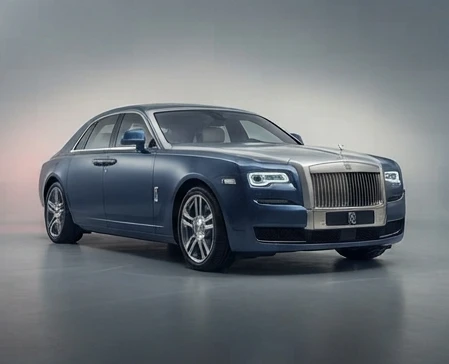
Searching for the new Rolls-Royce Ghost price usually turns up one headline number and little else. This guide breaks down what a new Ghost actually costs in 2026, how customization changes that figure, and how it compares with the Phantom, so you can budget with confidence before contacting a dealer.
As of 2026, a new Rolls-Royce Ghost in the U.S. market is generally estimated to start in the mid-to-high $300,000s before options. Rolls-Royce does not publish a fixed public price list the way mainstream automakers do, so that figure should be treated as a planning estimate rather than an official MSRP, and it shifts by model year, market, and dealer allocation. That starting estimate reflects a standard-specification Ghost with factory equipment included; buyers who add Bespoke personalization, Extended Wheelbase configuration, or Black Badge trim should expect the final invoice to run well above that starting point.
Two things drive most of the confusion when people ask how much does a new Rolls-Royce Ghost cost. First, Rolls-Royce prices vehicles market by market, so a starting estimate quoted for the U.S. will not match figures reported for the U.K. or the Middle East, and local taxes, duties, and destination charges are layered on top. Second, almost no Ghost leaves the factory in base specification. Even buyers who describe their build as modest typically select paint, wheel, and interior upgrades that move the transaction price upward before any Bespoke work is discussed.
For a quick frame of reference before the deeper breakdown later in this guide: a standard Ghost sits below a Ghost Extended Wheelbase, which sits below a Ghost Black Badge in most configuration comparisons, and all three sit meaningfully below a new Rolls-Royce Phantom. Rolls-Royce Ghost pricing is also not static year to year. A figure that circulated as the Ghost cost in an earlier model year should not be assumed accurate for a current order, since Rolls-Royce periodically adjusts starting estimates alongside equipment changes.
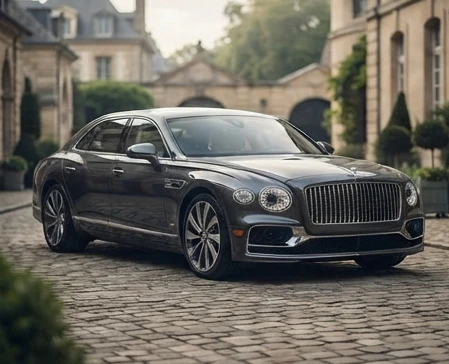
The rest of this guide walks through what actually inflates the number from that starting estimate to a final order price, why the manufacturer’s suggested figure and the number on a buyer’s invoice are rarely the same, how the Ghost’s price compares with the Phantom, and what it takes to plan a full purchase and ownership budget rather than just a headline sticker price.
Ghost MSRP versus the final purchase price
MSRP stands for manufacturer’s suggested retail price, and for most car brands it is a fairly reliable anchor for what a buyer will pay before tax and fees. For Rolls-Royce, that anchor is softer. The brand publishes limited pricing information publicly, dealers set their own advertised starting figures, and the large majority of orders involve some degree of customization before a final number is agreed. Treat any Rolls-Royce Ghost MSRP-style figure you encounter as a starting reference point rather than a quote — the number on a signed order sheet is shaped by the dealer’s allocation, current demand in that market, and every option the buyer adds on top.
Because Rolls-Royce does not publish a binding retail price list the way most manufacturers do, any final purchase price quoted publicly — including the ranges in this guide — should be read as a planning estimate rather than an official manufacturer figure. Only a signed order confirmation from an authorized dealer reflects the actual price for a specific build.
Standard equipment included in a new Ghost
A new Ghost’s starting estimate already includes a twelve-cylinder engine, air suspension tuned for a smooth ride, four-zone climate control, and a cabin trimmed in leather and wood veneer as standard equipment — these are not separately priced add-ons layered on top of a stripped-down base car. Rolls-Royce also bundles a substantial driver-assistance package into most current configurations, along with adaptive lighting and a premium audio system that many rivals charge extra for.
This matters when a buyer is comparing the Ghost’s starting estimate against a competing luxury sedan’s lower advertised price. The rival’s equivalent equipment list is often an extra-cost option box, not a standard inclusion, so a like-for-like comparison usually narrows the apparent price gap once both cars are configured to match.
Customization choices that raise the Ghost cost
Bespoke personalization is where the Ghost’s final price typically pulls away from the starting estimate. Paint alone can range from a handful of standard solid colors at little to no additional cost up through fully custom-matched or coach-line finishes that require extra studio time. Interior choices — unique leather colors, embroidered emblems, wood veneers sourced to match a personal request — stack in a similar way, moving from modest upgrades to full bespoke commissions.
As a planning estimate rather than a measured figure, industry commentary commonly frames modest personalization, such as an upgraded paint color plus one or two interior upgrades, as adding a low double-digit percentage to the base estimate. Extensive full-bespoke commissions — unique color development, custom marquetry, one-off embroidery — can add 20 to 30 percent or more on top of that. A practical decision rule follows from this: if your wishlist includes more than three or four discrete Bespoke selections, start the budget conversation with the dealer earlier in the process rather than after a build sheet is already drafted, since Bespoke lead times can extend the order timeline independently of price.
To estimate the total budget for a personalized Ghost order, separate the cost into three steps:
- Use the base Ghost starting estimate as the vehicle reference point, not the final transaction price.
- Add configuration choices such as Extended Wheelbase or Black Badge, then add paint, interior materials, and Bespoke selections from the build sheet.
- Add taxes, fees, financing costs, and ownership expenses separately so the purchase budget reflects the full financial commitment.
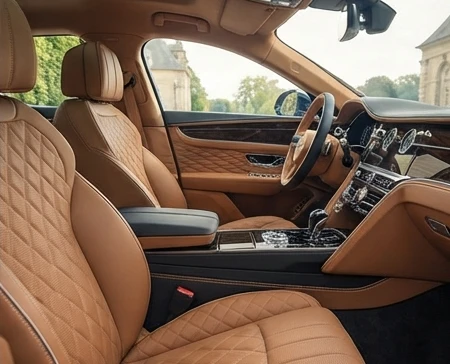
Two buyers can start from the same Ghost base vehicle price and end with very different final invoices because the configuration and Bespoke layers create the gap. Actual transaction pricing varies by market, taxes, dealer arrangements, and the specific options selected, so treat this as an illustration of how the layers stack rather than a quote for either buyer’s final number.
Ghost configurations and pricing differences buyers should know
Beyond Bespoke personalization, the Ghost itself comes in a small number of distinct new Rolls-Royce Ghost trim levels, and choosing between them is usually a bigger swing in the final price than any single option box. The standard Ghost, the Ghost Extended Wheelbase, and the Ghost Black Badge each start from a different price tier before any personalization is added, and they serve genuinely different buyers rather than just different budgets.
Rolls-Royce Ghost versus Ghost Black Badge
Black Badge is Rolls-Royce’s performance and design variant, applied across the Ghost, Wraith, and other models in the lineup. On the Ghost, it brings a firmer suspension tune, retuned power delivery, and a darker aesthetic — blackened metal trim, unique wheel designs, and a more graphic interior finish — rather than a full mechanical overhaul of the car underneath.
The price premium for Black Badge over a standard Ghost is commonly framed, as a planning estimate, as a meaningful double-digit percentage over the base configuration once comparable equipment levels are matched. The exact gap moves with whatever options each specific build carries, so two Black Badge quotes from different dealers can look quite different even before Bespoke choices enter the picture. A practical way to sanity-check a quote: if the Black Badge premium you’re shown is close to what you’d expect from a handful of options rather than a distinct model tier, ask the dealer to itemize the build sheet, since Black Badge pricing should reflect drivetrain and trim changes, not just badge-level cosmetics.
Ghost versus Ghost Extended Wheelbase
The Extended Wheelbase variant adds length behind the B-pillar, which goes almost entirely into rear legroom and a more formal rear-seat experience — reclining seats, additional privacy glass options, and rear-console features that the standard-wheelbase Ghost either omits or offers in reduced form.
That added length and equipment carries its own price step above the standard Ghost, independent of Black Badge or Bespoke choices. Buyers who plan to be driven more often than they drive should weigh that step against a standard Ghost with a comparable options list, rather than comparing sticker prices in isolation.
A decision rule worth applying here: if rear-seat comfort for a third passenger on trips over roughly 30 minutes matters more than the driving experience from the front seat, the Extended Wheelbase step is usually worth pricing out before defaulting to the standard-wheelbase car.
Ghost configuration comparison
| Configuration | Main differences | Price impact | Best suited buyer |
|---|---|---|---|
| Ghost | Core luxury sedan configuration with a balanced focus on comfort, refinement, and discreet styling | Starting configuration before major personalization choices | Buyer seeking understated luxury and a highly customizable sedan |
| Ghost Extended Wheelbase | Longer body design with additional rear passenger space | Higher cost due to increased size and configuration changes | Buyer prioritizing rear-seat comfort and chauffeur-oriented use |
| Ghost Black Badge | Performance-focused tuning, darker styling details, and more expressive design elements | Premium over standard Ghost due to additional engineering and visual upgrades | Buyer wanting a more dynamic and distinctive Ghost specification |
Ghost price comparison with the Rolls-Royce Phantom
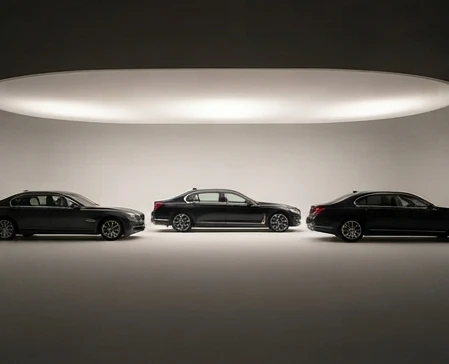
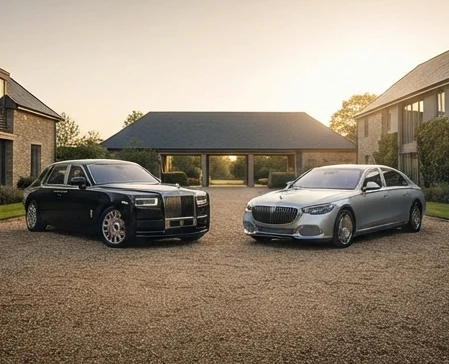
The Ghost and the Phantom are both Rolls-Royce luxury sedan models, but they are not priced or positioned as alternatives to each other the way two trims of the same car would be. As a planning estimate, the Phantom’s starting figure is commonly cited well above the Ghost’s — often described as running from roughly 30 to 60 percent higher before options, depending on configuration — reflecting its position as the brand’s flagship rather than a simple size or feature upgrade.
That gap exists because the Phantom is built and marketed as Rolls-Royce’s most formal, most chauffeur-oriented offering, while the Ghost is positioned as the more usable, more frequently owner-driven car in the current lineup. Buyers deciding between them are rarely choosing based on price alone.
The practical question is not simply which car costs less. It’s which ownership pattern the buyer actually expects to have.
A buyer who drives themselves most days and wants a highly personalized but comparatively discreet luxury sedan tends to gravitate toward the Ghost, where the starting estimate leaves more room for Bespoke spending within a given total budget. A buyer whose primary use case involves being driven, or who wants the most recognizable flagship presence at events, tends to weigh the Phantom’s higher starting point as a positioning decision rather than a pure value comparison.
Ghost and Phantom decision guide
| If | Then |
|---|---|
| The buyer wants a luxury sedan with a lower profile and daily usability | Prioritize Ghost specifications and evaluate personalization options within the Ghost budget |
| The buyer wants the most recognizable flagship Rolls-Royce sedan positioning | Compare Phantom pricing and features before finalizing a Ghost order |
| The buyer values rear passenger space and executive travel features above compact proportions | Evaluate Phantom and Extended Wheelbase options rather than focusing only on the Ghost entry price |
Rolls-Royce sedan comparison
| Model | Positioning | Typical buyer | Key distinction |
|---|---|---|---|
| Ghost | Luxury sedan focused on refinement with a more understated presence | Buyer seeking personalized luxury for regular driving or executive use | Balances comfort, customization, and a less formal character |
| Phantom | Flagship Rolls-Royce sedan positioned at the highest level of the lineup | Buyer seeking maximum prestige and flagship status | Offers a more commanding presence and flagship positioning |
| Ghost Extended Wheelbase | Rear-passenger-focused Ghost variant | Buyer needing additional cabin space without moving fully to Phantom | Adds passenger-focused practicality within the Ghost range |
Budget planning before ordering a new Rolls-Royce Ghost
A useful way to avoid sticker shock partway through an order is to think about the total spend in three layers rather than one number.
- Start with the base vehicle allocation — the starting price estimate discussed earlier — as your reference point, before any options are added.
- Add the configuration and Bespoke selections layer on top: wheelbase choice, Black Badge if applicable, paint, interior materials, and any bespoke commissions.
- Plan ownership expenses as a separate, third layer rather than folding them into the purchase budget — insurance, maintenance, and other running costs draw from a different part of the household or business budget than the transaction price does.
Buyers who skip the third layer are the ones most likely to be surprised a year into ownership, not by the purchase price itself but by costs that were never part of the original budget conversation.
Ordering process and availability change the practical cost picture as much as any option box does. New Ghosts are generally built to order through an authorized Rolls-Royce dealer rather than pulled from a large dealer lot, and lead times from order confirmation to delivery commonly run several months, with more involved Bespoke commissions extending that window further. Buyers working against a specific delivery date should start the ordering conversation with enough runway to absorb a longer-than-expected build queue.
Regional allocation also matters. Some markets receive a limited number of build slots in a given year, and dealers in high-demand markets may have less flexibility to negotiate on price or to prioritize a rushed build. A practical signal worth checking: if a dealer quotes a delivery window notably shorter than what similar buyers in that market have reported elsewhere, treat it as worth double-checking rather than assuming it reflects unusually fast production.
Financing and lease options exist for the Ghost through Rolls-Royce’s captive finance arm and through independent luxury-vehicle lenders, though most retail buyers at this price point use some mix of financing and cash rather than a single approach. Lease terms on a car in this category tend to carry higher money factors and lower residual-value assumptions than a mainstream luxury lease, which is worth modeling before assuming a lease payment will land close to what a comparably priced mainstream vehicle would cost per month. Amortization schedules on financed purchases at this price point also front-load interest more heavily in the early years, so a buyer comparing a 60-month and an 84-month term should look at total interest paid, not just the monthly payment, before choosing.
Luxury tax and destination-related fees are also easy to underestimate. Depending on the buyer’s state and any applicable federal or local luxury-goods provisions, taxes and fees can add a substantial five-figure amount on top of the vehicle’s transaction price, and that add-on is calculated on the final configured price — including Bespoke options — not the starting estimate. Confirming the applicable tax treatment with a dealer or tax advisor before finalizing a build avoids a mismatch between the budgeted number and the number on the final invoice.
Depreciation is the part of the budget conversation buyers most often postpone until after the purchase, which is backwards. As a general planning pattern for ultra-luxury sedans in this segment, a meaningful share of value is commonly understood to be lost in the first two to three years of ownership, with the rate slowing considerably after that window. That pattern is driven less by mechanical wear and more by the shrinking pool of buyers willing to pay near-new prices for a car that is no longer the current model year.
Highly bespoke, unusually specified builds can depreciate faster than more conventionally configured cars. A future buyer has to want the exact combination of choices the original owner selected, and unusual personalization narrows that pool.
Ownership costs beyond the Ghost purchase price
The purchase price is the number buyers negotiate, but it is not the number that determines what owning a Ghost costs over time. Insurance, maintenance, and day-to-day running costs are a separate budget line, and they scale with the vehicle’s declared value rather than with the base starting estimate alone — a heavily Bespoke Ghost typically costs more to insure than a comparably aged standard-specification car, because insurers price against replacement value.
As a planning estimate rather than a quoted rate, annual insurance premiums for vehicles in this category are commonly estimated as a percentage of the vehicle’s insured value, and that percentage moves with the owner’s driving record, location, and how the car is used. Get a real quote before finalizing a build, since the difference between a low estimate and a high one can be significant at this price point.
Scheduled maintenance on a Rolls-Royce V12 is also a different budget category than a mainstream luxury sedan. Service intervals are typically annual or mileage-based, whichever comes first, and a missed interval is one of the more common ways owners end up facing a larger repair bill than expected, since components under warranty coverage can lose that coverage if servicing lapses.
- Estimate insurance costs separately from the initial vehicle purchase budget, using the car’s insured value rather than the base starting estimate as the reference point.
- Create a maintenance and servicing category for scheduled ownership expenses, and calendar the annual or mileage-based service interval rather than relying on a dashboard reminder alone.
- Account for future customization or replacement options that may add ownership costs, such as re-trimming or updated technology packages a few years into ownership.
- Review depreciation expectations as a separate financial consideration from the purchase invoice, particularly if resale or trade-in within the first few years is part of the plan.
Before contacting a dealer, write down your own three-layer budget — base estimate, personalization wishlist, and a rough ownership-cost line — on a single page. Walking into that first conversation with your own numbers already sketched out is what turns a vague inquiry into a build sheet the dealer can actually price accurately.
FAQ
What is the new Rolls-Royce Ghost price?
A new Rolls-Royce Ghost in the U.S. market is generally estimated to start in the mid-to-high $300,000s before options. The final purchase price can rise significantly with Bespoke personalization, Extended Wheelbase configuration, Black Badge trim, taxes, fees, and other selected equipment.
How much does a Rolls-Royce Ghost cost in 2026?
The 2026 Rolls-Royce Ghost cost is generally planned from a starting estimate in the mid-to-high $300,000s before options. Because Rolls-Royce pricing varies by market and most vehicles receive customization, the final invoice depends on configuration choices, dealer allocation, taxes, and ownership-related costs.
What is the Rolls-Royce Ghost MSRP?
The Rolls-Royce Ghost does not have a simple publicly fixed MSRP in the way many mainstream vehicles do. Public pricing figures should be treated as starting estimates, while the actual purchase price is determined by the specific build, dealer arrangement, market, and selected options.
How much is a brand-new Rolls-Royce Ghost?
A brand-new Rolls-Royce Ghost is generally estimated to begin in the mid-to-high $300,000s before options in the U.S. market. Buyers should budget beyond that starting figure because Bespoke choices, trim selection, taxes, fees, and ownership expenses can add substantially to the total cost.