

Richard Gere and dog Hachiko are connected through Hachi: A Dog’s Tale (2009), a film inspired by the true story of Hachiko, an Akita dog in Japan. Richard Gere plays a fictional owner in the movie, while the real Hachiko became known for returning to Shibuya Station after his owner died.
Richard Gere and Hachiko are connected through Hachi: A Dog’s Tale (2009), a film adaptation inspired by the true story of Hachiko, an Akita dog in Japan known for returning to a train station after his owner died. Many readers confuse the movie plot with the historical events, so this guide separates the real Hachiko dog story from the Richard Gere film version and explains how the story became a global symbol of loyalty. The broader Hachiko movie story connects the historical dog with the many adaptations that introduced the tale to audiences worldwide.
Richard Gere and Hachiko: the real dog and the film connection
The connection between Richard Gere and Hachiko comes from the 2009 film Hachi: A Dog’s Tale, which introduces international audiences to a story based on the real Akita dog. A useful way to understand the story is to separate the historical record, cultural storytelling, and the Hollywood adaptation.
The movie should be viewed as an emotional film adaptation, not as a documentary. The real story provides the foundation, while the screenplay reshapes events for a different audience and location.
The real Hachiko story from adoption to Shibuya Station
Hachiko’s history begins with an Akita dog born in Japan in 1923. The dog was adopted by Hidesaburo Ueno, and their daily routine eventually became the basis for one of Japan’s best-known loyalty stories.
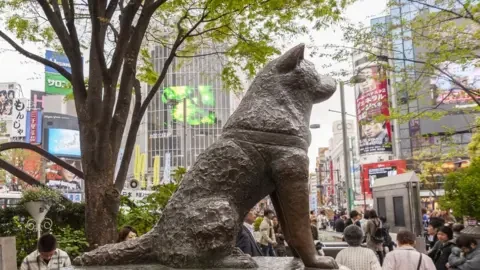
After Hidesaburo Ueno died, Hachiko continued going to Shibuya Station, the place associated with his owner’s daily return. The key historical point is not a single dramatic reunion scene but a repeated behavior over many years: the dog kept returning to a familiar location connected with his former routine.
How Hachi: A Dog’s Tale changes the true events
Hachi: A Dog’s Tale keeps the central idea of a dog waiting for a lost owner but changes several important elements. These changes help the film connect with a wider audience while making it a separate story from the original Japanese account.
The largest adaptation change is the identity of the owner. Richard Gere does not play Hidesaburo Ueno; he plays Professor Parker Wilson, a fictional character created for the film. Readers looking for more details about the adaptation can explore the dog Richard Gere movie and its connection to Hachi: A Dog’s Tale.
Richard Gere’s role in Hachi: A Dog’s Tale
Richard Gere plays Parker Wilson, a professor who discovers Hachi and forms a strong bond with the dog. His role gives the film a human perspective by showing the relationship between an owner and a pet before the story shifts toward Hachi’s waiting.
Hachiko’s cultural impact in Japan and worldwide
Hachiko became famous not only because of the waiting itself, but because people transformed the story into a shared symbol of loyalty and remembrance. The connection between the dog, Shibuya Station, and public memorials helped preserve the story across generations.
Why Hachiko remains meaningful after the movie
Hachiko remains meaningful because the story combines a real historical event with a universal theme: the connection between people and animals. The movie helped spread awareness globally, but the dog’s cultural importance began with the original events in Japan.
The most reliable way to discuss Hachiko is to keep both parts visible. The historical dog represents a documented relationship and public memory, while films such as Hachi: A Dog’s Tale represent creative interpretations designed to communicate that meaning through cinema.