
Bringing a new puppy home is exciting, but puppy potty training is often one of the first real challenges every owner faces. Puppies naturally don’t understand where they are supposed to go, and accidents indoors can happen frequently in the early weeks. The key is choosing a consistent method that fits your lifestyle and your puppy’s learning pace.
Two of the most common approaches are using indoor pee pads or training your puppy to go outside from the start. Each method has clear advantages and drawbacks, and understanding both will help you build a cleaner, more structured routine for your dog.
Puppy Potty Training with Pee Pads
Pee pad training is a popular choice for many dog owners, especially those living in apartments or without quick access to outdoor spaces. The method involves placing absorbent pads in a consistent area where your puppy is encouraged to eliminate.
To begin, keep your puppy on a leash indoors and closely observe their behavior. Puppies often show signs like circling or sniffing before they need to go. At that moment, guide them to the pad and use a consistent command such as “go potty.” When they succeed, reward them immediately with praise or treats to reinforce the behavior.

One important aspect of pee pad training is consistency. Feeding schedules should be regular, and puppies should be monitored closely, especially 5–15 minutes after eating or drinking. Over time, they begin associating the pad with the correct elimination spot.
Pros of Pee Pad Training
- Useful for owners who cannot frequently take puppies outside
- Helps reduce accidents in unwanted areas of the home
- Pads are relatively inexpensive and easy to replace
Cons of Pee Pad Training
- Puppies may become too dependent on pads and struggle transitioning outdoors
- Some dogs confuse carpets or rugs with pee pads
- Can delay the development of a fully outdoor potty routine
Potty Training Outside
Outdoor potty training is widely considered the long-term ideal because it helps puppies clearly understand where they should eliminate. Unlike indoor pads, outdoor training reduces confusion by keeping one consistent location for all bathroom behavior.
Start by observing your puppy indoors and guiding them outside at the first sign they need to go. Use the same command phrase each time, such as “go potty,” and reward them immediately after they succeed outdoors. Positive reinforcement plays a major role in building long-term habits.
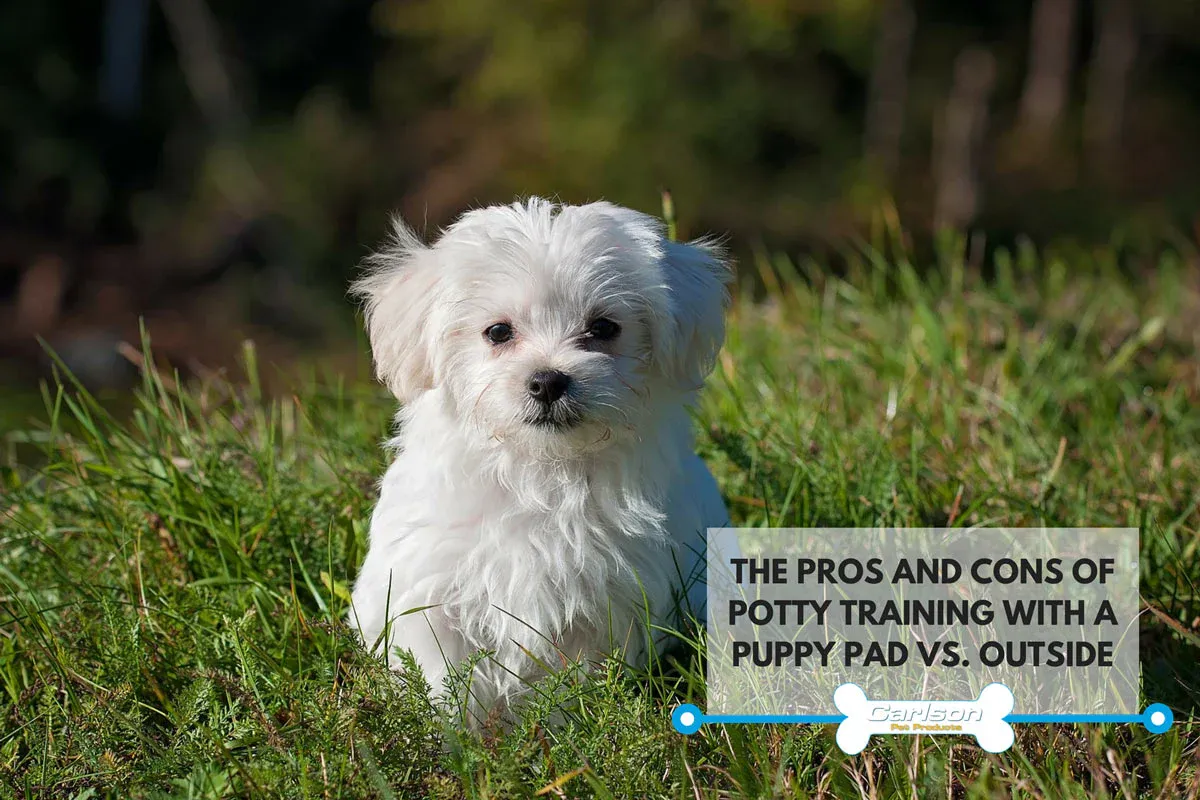
Outdoor training requires routine and commitment. Puppies should be taken out frequently—especially after meals, naps, and playtime. Over time, they begin to associate going outside with bathroom behavior, which leads to more reliable house training.
Pros of Outdoor Training
- Creates clear and consistent bathroom boundaries
- Encourages long-term good habits and faster full house training
- Eliminates confusion between indoor surfaces and toilet areas
Cons of Outdoor Training
- Requires strict scheduling and frequent outdoor access
- Difficult for owners with limited mobility or apartment living
- Accidents may happen if timing is inconsistent
Combination Training Approach
Some owners find success using a hybrid method that combines pee pads and outdoor training. This approach is especially helpful during early development or in environments where going outside is not always immediately possible.
The process starts by training the puppy to consistently use a pee pad in a fixed indoor location. Once they become reliable, the pad is gradually moved closer to the door over time. Eventually, it is placed outside, helping the puppy transition naturally from indoor to outdoor elimination.

This gradual transition reduces confusion and helps puppies adapt without stress. However, it still requires consistency, supervision, and positive reinforcement at every stage. Owners should avoid mixing too many methods at once, as this can slow down learning.
Key Principles for Successful Training
Regardless of the method you choose, certain principles remain essential in all puppy potty training routines:
- Consistency in timing and routine
- Clear verbal commands used every time
- Immediate rewards for correct behavior
- Patience during early learning stages
Puppies learn through repetition and association, so maintaining a stable routine is more important than the specific method chosen.
Conclusion
Choosing between pee pad training and outdoor training depends largely on your living situation, schedule, and your puppy’s adaptability. Pee pads offer convenience in limited spaces, while outdoor training builds long-term clarity and stronger habits. A combination approach can also provide flexibility during the early stages of development.
No matter which method you select, success comes from consistency, supervision, and positive reinforcement. With the right routine, your puppy will gradually learn where to go and develop reliable bathroom habits that last into adulthood.
References
- American Kennel Club (AKC) – Puppy House Training Guidelines
- Humane Society of the United States – House Training Basics for Dogs
- Veterinary Behavior Guidelines on Positive Reinforcement Training Methods