
Walks are a cornerstone of your dog’s daily routine, providing essential exercise, mental stimulation, and bonding time. However, a walk can quickly become a frustrating tug-of-war without proper training. Whether you’re guiding a new puppy or reinforcing good habits with an adult dog, mastering the art of dog walking training is key to transforming stressful outings into enjoyable adventures.
This comprehensive guide explores ten essential techniques to help you and your dog master the art of the walk. From foundational commands to advanced methods, these strategies will set you up for success.
1. Always Reward Good Leash Behavior
Positive reinforcement is the most effective tool in any dog walking training program. The principle is simple: when your dog walks calmly on the leash, reward them immediately. Use high-value treats, enthusiastic verbal praise, or a favorite toy to create a positive association with the behavior you want to see.
Consistency is crucial. By rewarding the desired action every time it occurs, you are clearly communicating to your dog that walking politely by your side is a rewarding experience. Over time, this reinforces the habit, making walks more pleasant for both of you and strengthening your bond.
2. Teach the “Leave It” Command
Distractions are everywhere on a walk, from discarded food on the sidewalk to squirrels darting across the path. The “leave it” command is an invaluable tool in your dog walking training arsenal. It teaches your dog to ignore potential hazards or unwanted distractions and refocus their attention on you.
Common situations where “leave it” is essential include:
- Trash, food scraps, or unknown substances on the ground
- Other animals, such as dogs, cats, or wildlife
- Unfamiliar objects or people that might cause anxiety or overexcitement
If your dog starts to pull or fixate on something, use the “leave it” command in a firm but calm tone. The moment they redirect their focus back to you, reward them generously. This reinforces that looking to you is more rewarding than the distraction itself.
3. Let Your Pup Sniff Around
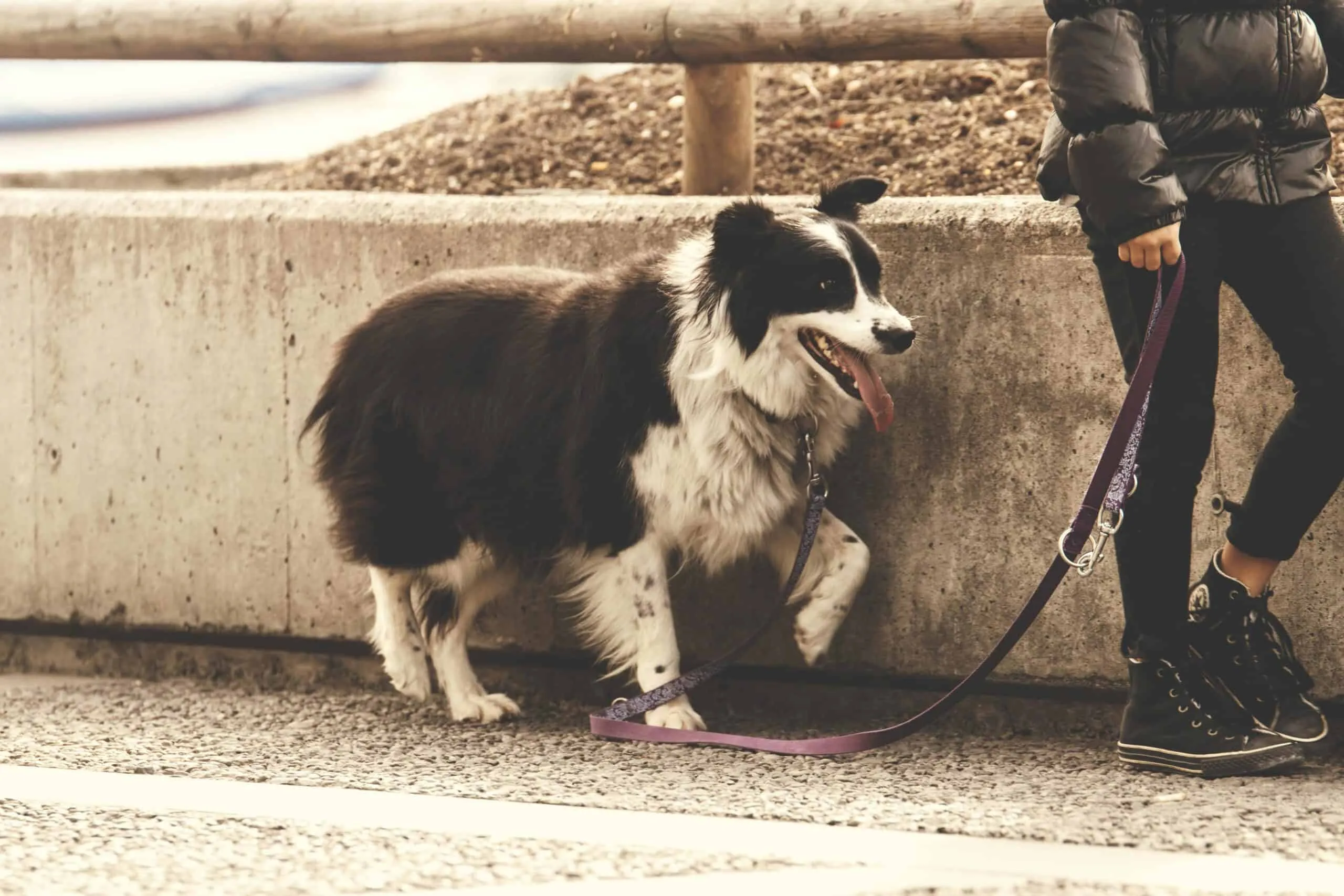
While a focused walk is the goal, it’s important to remember that sniffing is a fundamental way for dogs to explore their world. A successful walk often involves a balance between structured walking and allowing your dog to engage their powerful sense of smell.
To incorporate sniffing without encouraging pulling or wandering, establish clear boundaries. Use a specific cue, like “go sniff,” to indicate when it’s okay to explore. Allow for short, routine sniffing breaks as part of your walk, but when the break is over, use a cue like “let’s go” to signal it’s time to resume walking. This structured approach satisfies your dog’s curiosity while maintaining your control.
4. Practice in a Controlled Environment
Before you venture into high-distraction areas like busy streets or crowded parks, begin your dog walking training in a calm, controlled environment. Your backyard, a quiet corner of a park, or even inside your home are ideal starting points. This allows your dog to focus on learning the basic mechanics of leash walking without being overwhelmed.
Once your dog reliably follows commands like “heel,” “leave it,” and maintains a loose leash in this low-distraction setting, you can gradually introduce more challenging environments. This step-by-step approach builds confidence and ensures a solid foundation before you tackle the real world.
5. Reward Check-Ins
A key technique for maintaining focus during walks is to reward your dog for “checking in.” This occurs whenever your dog voluntarily looks at you, listens to a command, or returns to your side without being prompted.
During your walk, make a habit of rewarding these check-ins with praise or a small treat. This does two things: it reinforces that staying connected with you is a positive action, and it helps prevent your dog from getting too focused on distractions ahead. This technique strengthens your communication and ensures your dog views you as the leader of the walk.
6. Stick to a Routine
Dogs are creatures of habit and thrive on predictability. Establishing a consistent walking schedule is one of the simplest yet most effective dog walking training strategies. A regular routine helps regulate your dog’s energy levels, ensures they get adequate exercise and mental stimulation, and sets clear expectations.
A consistent schedule also helps you stay accountable. To build a routine, try setting a daily alarm on your phone to prompt you for walks, keeping a log to track your progress, or using a specific cue (like jingling the leash) to signal to your dog that it’s time for their daily outing.
7. Use a Cue for Walking
Incorporate a verbal cue, such as “let’s go,” “walk time,” or “forward,” to signal the start of your walk. This is a powerful tool in dog walking training because it establishes clear communication and creates a predictable expectation for your dog.
Using a specific cue reduces anxiety and confusion, helping your dog understand exactly what is expected. To maximize its effectiveness, pair the verbal cue with the action of grabbing the leash. This helps your dog quickly associate the command with the activity, making the transition from home to the walk seamless and focused.
8. Consider the Weather
Weather conditions play a significant role in your dog’s comfort and behavior during walks. A negative experience with extreme weather can create a lasting aversion to walks. Being mindful of the conditions is an often-overlooked aspect of dog walking training.
- In hot weather: Pavement can become scorching hot and burn your dog’s paws. Walk during cooler parts of the day, test the pavement with your hand, and consider using protective booties or walking on grass.
- In cold weather: Some breeds are susceptible to cold and frostbite. A dog coat or sweater can provide necessary warmth. Be mindful of ice and snow, which can be slippery and hide hazards like salt or sharp objects.
9. Avoid Retractable Leashes
While retractable leashes may seem appealing for giving your dog freedom, they are generally not recommended for effective dog walking training. They can inadvertently encourage pulling, as the constant tension teaches the dog that pulling extends their range.
Standard leashes (typically 4 to 6 feet long) offer several advantages for training:
- Better control: You have more control over your dog’s movements in all situations.
- Reduced pulling: A consistent length discourages the habit of pulling to gain more freedom.
- Prevention of tangling: They are less likely to get tangled around your legs, objects, or other dogs.
- Consistent pace: They help establish a steady walking rhythm, which is calming for your dog.
10. Implement the “Stop and Go” Method
One of the most effective techniques for curbing pulling is the “stop and go” method. This technique is simple: the moment your dog pulls on the leash, you stop walking immediately. You do not move forward until your dog releases the tension on the leash.
Wait patiently for your dog to look back at you, relax, and return to your side. Once the leash is slack, you can resume walking. This method teaches your dog that pulling is counterproductive—it doesn’t get them where they want to go. Conversely, walking calmly with a loose leash is what allows the walk to progress.
Dog Walking Training Techniques Specifically for Puppies
Training a young puppy to walk on a leash requires a slightly different approach than training an older dog. Their attention spans are shorter, and the world is a brand new, exciting place. Here are a few tips tailored for puppy dog walking training:
- Keep walks short and sweet: Start with short sessions of 10-15 minutes. Puppies have lots of energy but tire quickly and can become overwhelmed. Short, positive experiences are key to building a lifetime of good habits.
- Use high-value treats for focus: To compete with all the exciting distractions, use extra-special, high-value treats. Reward your puppy frequently for looking at you or staying by your side.
- Use the “follow me” technique: Instead of trying to force a young puppy to walk in a perfect heel, use a happy, excited voice and walk slowly ahead of them. Encourage them to follow you, rewarding them when they do. This turns the walk into a fun game of following their favorite person.
Choose a Professional Partner for Advanced Dog Training
Ready to elevate your dog’s training beyond the basics? Professional guidance can be invaluable in addressing specific behavioral challenges or mastering advanced skills. Expert trainers use a blend of fun and effective techniques, including clicker training, marker training, and positive reinforcement, to build a strong foundation of obedience and trust.
Investing in professional dog walking training and obedience classes can provide you with the tools and support needed to ensure a lifetime of happy, well-managed walks and a stronger bond with your canine companion.

For more expert dog walking training tips and to learn about comprehensive training programs that can help you and your pup succeed, reach out to a trusted professional team today.