
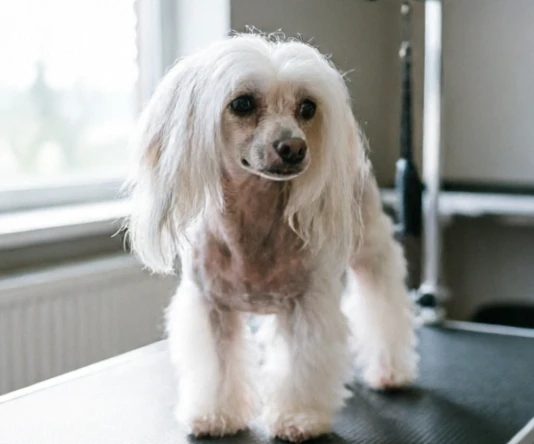
Grooming a Chinese Crested Powder Puff involves brushing before bathing, washing with dog shampoo, drying while separating the hair, and trimming the ears, face, paws, and sanitary areas as needed. Daily checks for tangles, weekly deep brushing, and regular trims keep the silky double coat clean, comfortable, and free of mats.
A Chinese Crested Powder Puff can develop tangles, mats, and coat damage when its long, delicate hair is not maintained with a consistent routine. Many owners struggle because they know brushing is necessary but lack a clear sequence for choosing tools, bathing, drying, and trimming safely. This guide explains how to groom a Chinese Crested Powderpuff at home with a complete care plan that helps you maintain a healthy double coat, handle basic trims, and build a repeatable grooming schedule.
Grooming a Chinese Crested Powder Puff involves regular brushing, careful bathing, thorough drying, and controlled trimming of areas that need hygiene maintenance. The Powderpuff has a soft double coat with a silky outer layer and shorter undercoat, so the main goal is preventing tangles and mats while keeping the coat clean, comfortable, and manageable.
Complete Powderpuff grooming routine from start to finish
The easiest way to maintain a Powderpuff coat is to treat grooming as a sequence rather than a collection of separate tasks. Brushing before washing, drying correctly, and trimming only after the coat is prepared reduces the chance of creating tighter knots or uneven cuts.
A complete session usually follows this order:
- Inspect the coat and identify tangles, mats, and sensitive areas.
- Brush and detangle the coat before adding water.
- Bathe with suitable dog shampoo and rinse thoroughly.
- Dry while separating the hair to prevent new tangles.
- Trim areas that need hygiene or lifestyle adjustments.
- Finish with a final comb check and coat inspection.
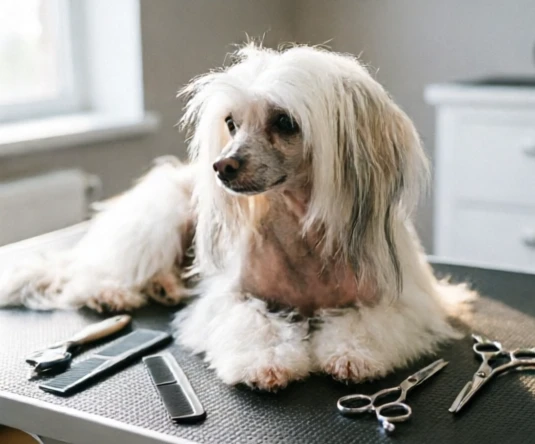
Preparation matters because water can tighten existing tangles. A small knot that is easy to separate when dry may become much harder to remove after bathing.
Before grooming, prepare a calm workspace with a non-slip surface, grooming tools within reach, and enough time to avoid rushing through sensitive areas. Check behind the ears, under the legs, around the collar area, and near the tail because these locations commonly collect friction-related tangles.
Step-by-step brushing, bathing, and trimming process
A reliable routine begins with coat preparation. Before reaching for shampoo, make sure the hair is separated and loose enough that washing and drying will not trap existing knots.
A practical pre-bath preparation sequence is:
- Inspect the coat section by section and locate tangles before adding water.
- Apply detangling spray to areas where hair catches, rubs, or begins forming knots.
- Brush and separate the coat fully before starting the bath.
- Dry the coat while checking for sections where tangles may tighten during grooming.
Brushing the double coat without causing damage
Brushing a Powderpuff Chinese Crested is not just about removing loose hair. The goal is to keep the long guard hairs separated from the shorter undercoat while avoiding excessive pulling on the skin.
Start by dividing the coat into manageable sections. Lift the top layer of silky hair and work through smaller areas underneath. Brushing only the visible surface can leave hidden knots close to the skin, especially around the neck, chest, legs, and behind the ears.
Use gentle strokes that move from the ends of the hair upward when working through tangles. Pulling directly from the roots can make the dog uncomfortable and may break fragile hair strands.
In practical grooming routines, the easy-to-miss step is checking the coat after brushing with a metal comb. A brush may glide over the top layer while missing a small knot underneath, so the comb acts as a final test that the hair is separated all the way through.
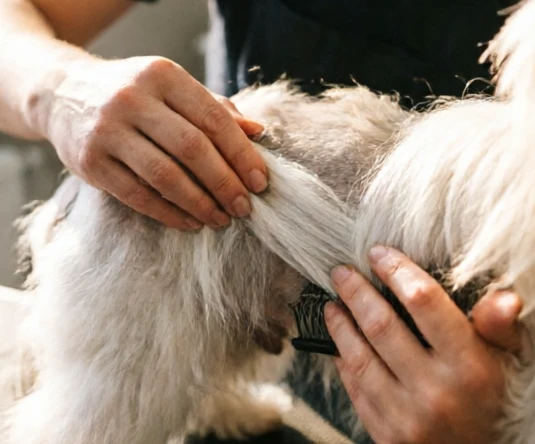
Small tangles should be loosened gradually. If a knot does not move with gentle handling, avoid repeated force because the issue may be a tight mat close to the skin rather than a simple surface tangle.
Bathing and drying the silky hair correctly
A Chinese Crested Powder Puff bath routine should focus on cleaning without leaving the coat difficult to manage afterward. Choose a dog shampoo based on the coat condition, such as whether the hair needs general cleansing, conditioning support, or help maintaining appearance.
Some grooming references suggest diluting certain coat-care shampoos before application, with examples using approximately five parts water to one part shampoo for easier distribution and reduced static.
The basic bath process is:
- Brush out tangles before wetting the coat.
- Wet the coat completely and apply dog shampoo evenly.
- Massage gently through the hair without aggressively rubbing sections together.
- Rinse until no product residue remains.
- Apply conditioner if needed for coat manageability.
- Dry thoroughly while separating the hair.
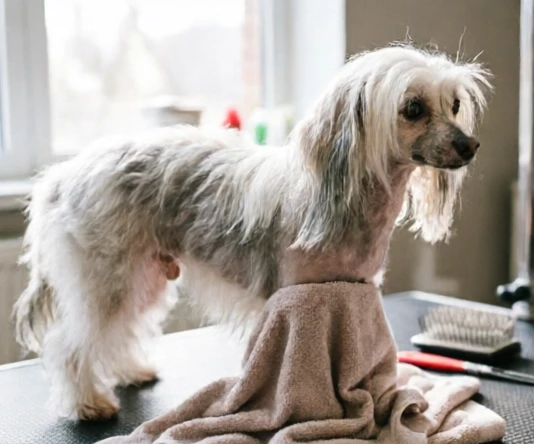
Drying is where many beginners accidentally create future matting problems. Allowing the coat to air dry without brushing support can leave the hair clumped together as it dries.
Use a towel to remove excess water without rough rubbing. Then dry the coat while brushing small sections so the hair dries in a separated, flowing condition. Check the areas that normally tangle first, such as behind the ears and between the legs.
Grooming tools and when each one works best
Choosing tools by coat problem is more useful than buying a large collection of grooming equipment. Each tool has a different role, and using the wrong tool at the wrong stage can make grooming slower or less comfortable.
| Tool | Best use | Coat problem solved | When to use |
|---|---|---|---|
| Pin brush | General brushing through the longer coat | Loose hair, surface tangles, coat alignment | During routine coat preparation before deeper detangling |
| Slicker brush | Working through small knots with controlled strokes | Minor tangles and areas where hair begins to clump | After sectioning the coat and before bathing |
| Metal comb | Final check after brushing | Hidden tangles near the skin and missed knots | After brushing to confirm the coat is fully separated |
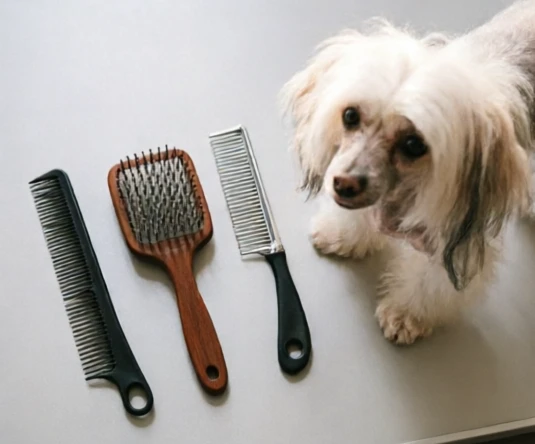
Brush types for different coat maintenance tasks
The best brush for a Chinese Crested Powder Puff double coat depends on what problem you are solving.
A pin brush is usually the starting point for regular coat maintenance because it helps move through the longer outer hair without immediately focusing on knots. It works well when the coat is already mostly free of tangles.
A slicker brush is more useful when small tangles appear in areas where the hair starts grouping together. It should be used with controlled strokes rather than repeated aggressive brushing over the same spot.
A metal comb is the inspection tool. After brushing, run it through the coat near the skin. If the comb stops, that area needs more attention before the grooming session is considered complete.
Essential supplies beyond brushes
Brushes handle the coat, but a complete grooming setup also includes tools for hygiene and finishing tasks.
Common supplies include:
- Nail clippers or a nail grinder for regular nail maintenance.
- Dog-safe ear cleaning supplies for routine ear care.
- Small grooming scissors or clippers for controlled hair trimming.
- Tools for paw pad trimming and sanitary trimming when appropriate.
- Dog shampoo and conditioner selected for coat needs.
Face trimming, ear trimming, and sanitary trimming require extra caution because these areas are sensitive and easy to cut unevenly. Beginners should make small adjustments rather than attempting dramatic changes in one session.
Grooming schedule for daily, weekly, and monthly care
A Powderpuff coat stays easier to manage when care is distributed throughout the week instead of waiting until large mats appear.
A practical maintenance schedule looks like this:
- Daily: Check friction areas for new tangles, especially after outdoor activity, wearing collars, or contact with bedding.
- Weekly: Complete a deeper brushing session using sectioning, a brush, and a comb check.
- Bathing: Bathe when the coat becomes dirty, develops odor, or needs routine cleaning based on lifestyle and coat condition.
- Trimming: Adjust timing based on hair growth, hygiene needs, and the chosen haircut style.
The correct brushing frequency depends on coat length and lifestyle. A long flowing coat needs more frequent attention because loose hair and friction create more opportunities for tangles. A shorter trim reduces detangling workload but does not eliminate brushing or hygiene checks.
Use the coat itself as the guide. If the comb catches repeatedly in the same areas, the routine needs more frequent maintenance. If the coat remains separated, clean, and comfortable between sessions, the schedule is likely working.
| Checkpoint | What to do |
|---|---|
| Longer coat inspection | Check beneath the visible top layer for hidden tangles before they become mats |
| Shorter trim maintenance | Continue brushing checks because shorter hair can still collect knots and debris |
| Hygiene routine | Maintain paw, ear, face, and sanitary care regardless of coat length |
| Schedule adjustment | Increase grooming attention when knots appear faster than the current routine prevents them |
Chinese Crested Powder Puff haircut styles by lifestyle
Chinese Crested Powder Puff haircut styles should match the owner’s available grooming time, not only the desired appearance. A longer coat can create a flowing look, but it requires more attention to brushing and coat separation.
| Style | Maintenance level | Suitable owner | Coat upkeep |
|---|---|---|---|
| Short practical trim | Lower daily maintenance | Owners prioritizing easier upkeep | Less daily detangling, but regular brushing and hygiene care remain necessary |
| Medium trim | Moderate maintenance | Owners wanting balance between appearance and convenience | Requires routine brushing to prevent knots while keeping more coat length |
| Long flowing coat | Higher maintenance | Owners prioritizing coat appearance | Needs more frequent brushing attention and regular trimming to maintain condition |
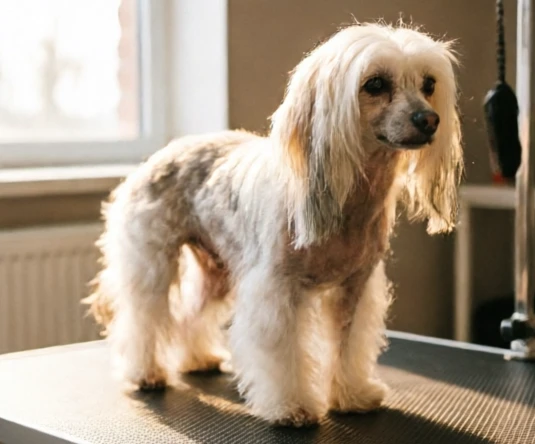
Low-maintenance trims for busy owners
A shorter practical trim can reduce the amount of time spent separating long sections of hair. This option suits owners who want easier daily upkeep while still maintaining the Powderpuff’s coated appearance.
However, shorter does not mean maintenance-free. The skin still needs observation, nails still require care, and remaining coat areas can still tangle around friction points.
A useful decision rule is simple: if the owner regularly finds mats before the next planned grooming session, reducing coat length may make the routine more realistic.
Longer styles for owners wanting more coat
A longer Powderpuff coat can create the classic flowing appearance associated with the breed’s fully coated variety. The trade-off is that more length means more areas where tangles can hide.
Owners choosing longer styles should be prepared to spend more time on section-by-section brushing and regular coat checks. The visible surface of the coat is not enough; the undercoat and areas close to the skin also need attention.
Fixing common Powderpuff grooming problems
Most grooming problems become easier to solve when owners identify the cause instead of only treating the visible symptom. A mat, for example, is not just a knot; it is often a sign that friction, moisture, or missed brushing has allowed hair to compact.
From an editorial review of coat-care guidance, the recurring failure mode is treating all tangles the same way. Small loose knots and tight mats require different decisions.
| If | Then |
|---|---|
| The mat is small, loose, and moves away from the skin | Separate the hair gently and work through it with controlled brushing or combing |
| The mat is close to the skin and tightly attached | Avoid forceful pulling and use careful trimming methods or seek grooming assistance |
| The mat causes pain, skin pulling, or distress during handling | Stop trying to remove it at home and consider professional grooming support |
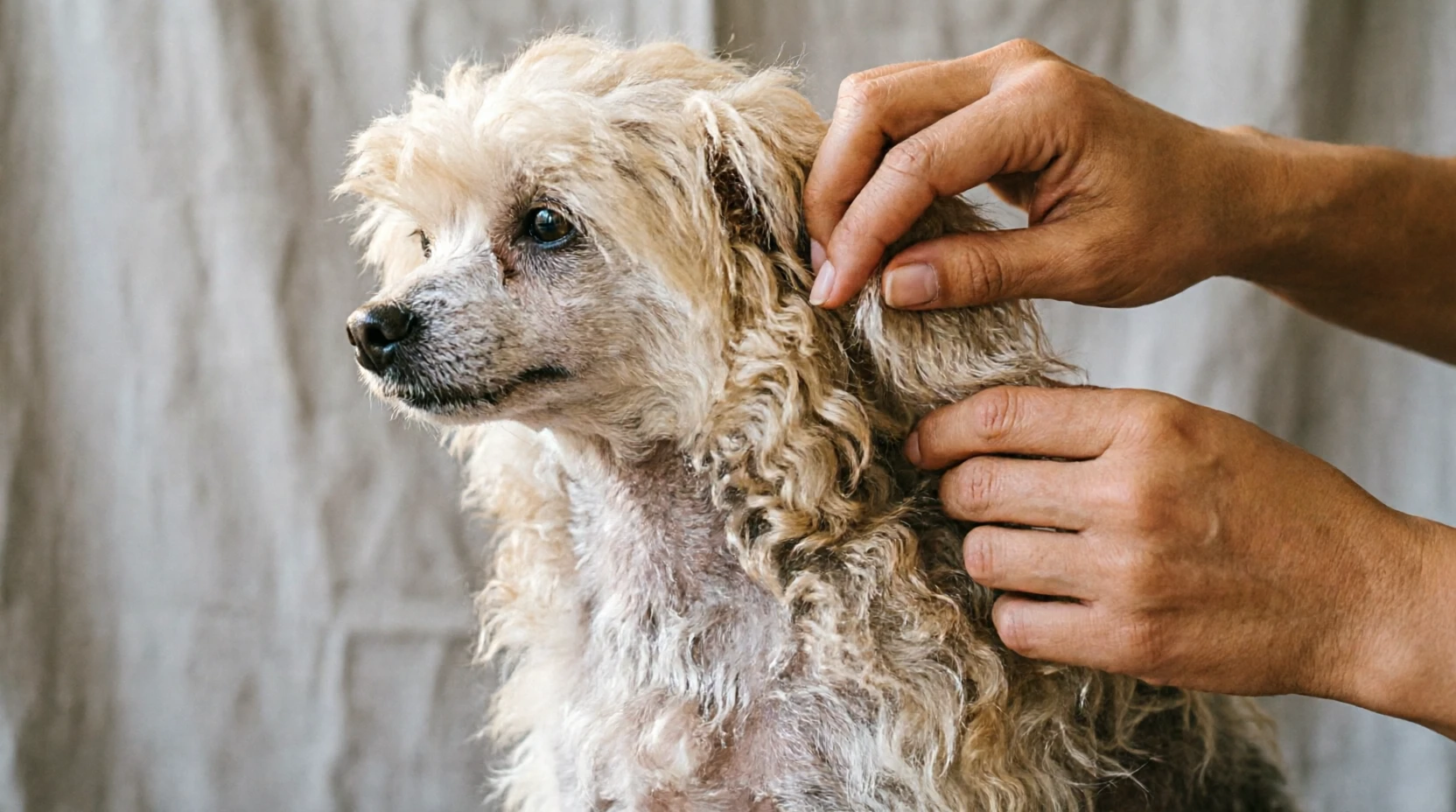
Handling stubborn mats and difficult tangles
Small mats can sometimes be loosened by separating surrounding hair, applying detangling spray, and working slowly from the outer edge toward the center. The observable sign of progress is that the knot begins to separate without pulling the skin.
A common mistake is brushing harder when a knot does not move. This can increase discomfort and may break the coat around the damaged area.
If the skin underneath looks irritated, the dog reacts strongly, or the mat is tightly attached near the skin, avoid aggressive removal attempts. A grooming professional may be needed to remove the mat safely.
Managing face, ears, paws, and sanitary areas
Sensitive areas require slower handling than large body sections. Face trimming and ear trimming should focus on maintaining visibility and hygiene rather than removing large amounts of hair quickly.
For paw pad trimming, keep the goal practical: remove excess hair that interferes with cleanliness or movement while avoiding cuts close to the skin. Sanitary trimming should also be approached carefully because the area is sensitive.
Common beginner mistakes include:
- Cutting while the dog is moving suddenly.
- Holding scissors too close to skin folds.
- Removing too much hair because the first cut appears uneven.
- Skipping a final check for small sharp ends or leftover tangles.
Coat health factors that affect grooming results
Good grooming results depend on more than appearance. Coat condition can also reveal whether the current routine is suitable for the individual dog.
A healthy-looking Powderpuff coat is generally easier to separate, feels soft rather than sticky, and does not contain repeated areas of compacted hair. Changes in texture, increased scratching, unusual odor, or visible skin irritation can indicate that the grooming routine or product choice needs review.
Powderpuff and hairless grooming differences
The Chinese Crested Powderpuff and hairless varieties require different care approaches because one has a full coat while the other has exposed skin areas.
The Powderpuff requires attention to brushing, undercoat management, and mat prevention. Hairless Chinese Cresteds require more focus on skin protection and direct skin care because they do not have the same coat barrier.
Owners should avoid applying the same routine to both varieties. The grooming priority changes depending on whether the main challenge is coat maintenance or skin maintenance.
Skin allergies and coat health warning signs
Coat problems can sometimes be connected with skin issues rather than grooming technique alone. Watch for signs such as persistent scratching, redness, unusual flakes, recurring irritation, or discomfort during brushing.
If grooming causes repeated distress or the skin appears unhealthy, consider veterinary guidance before changing products or increasing grooming intensity. A different shampoo or a more frequent bath schedule is not always the correct solution for a skin concern.
Keep a simple coat-care record for changes: note when irritation appears, which products were used, and whether the coat condition improves or worsens. This information can help identify patterns and support discussions with a veterinary professional if needed.
Set up your next grooming session today by gathering a pin brush, slicker brush, metal comb, and detangling spray, then inspect the coat section by section before bathing; this first check reveals hidden tangles early and prevents small knots from becoming harder problems later.
FAQ
What is a Chinese Crested Powderpuff?
The Chinese Crested Powderpuff is the fully coated variety of the Chinese Crested breed, with a soft double coat made up of a silky outer layer and a shorter undercoat. Unlike the hairless variety, it needs regular brushing and coat care to prevent tangles and mats, rather than the skin-focused care hairless Cresteds require.
How much grooming does a Chinese Crested Powderpuff need?
A Powderpuff needs daily checks of friction areas like behind the ears, under the legs, and near the collar, plus a deeper weekly brushing session using sectioning, a brush, and a comb check. Bathing and trimming frequency depend on coat condition, lifestyle, and the haircut style you choose, with longer coats needing more frequent attention.
How often should you bathe a Powderpuff Chinese Crested?
Bathe your Powderpuff when the coat becomes dirty, develops odor, or needs routine cleaning based on its lifestyle and coat condition, rather than on a fixed schedule. Always brush out tangles before wetting the coat, since water can tighten existing knots, then dry thoroughly while separating the hair to prevent new tangles from forming.
Do Chinese Crested Powderpuffs shed a lot?
Chinese Crested Powderpuffs are generally not known for heavy shedding; their main coat challenge is tangling and matting rather than hair loss around the home. The soft double coat, with its silky outer layer and shorter undercoat, tends to catch loose hair within the coat itself, which is why regular brushing and coat checks matter more than shedding control.