
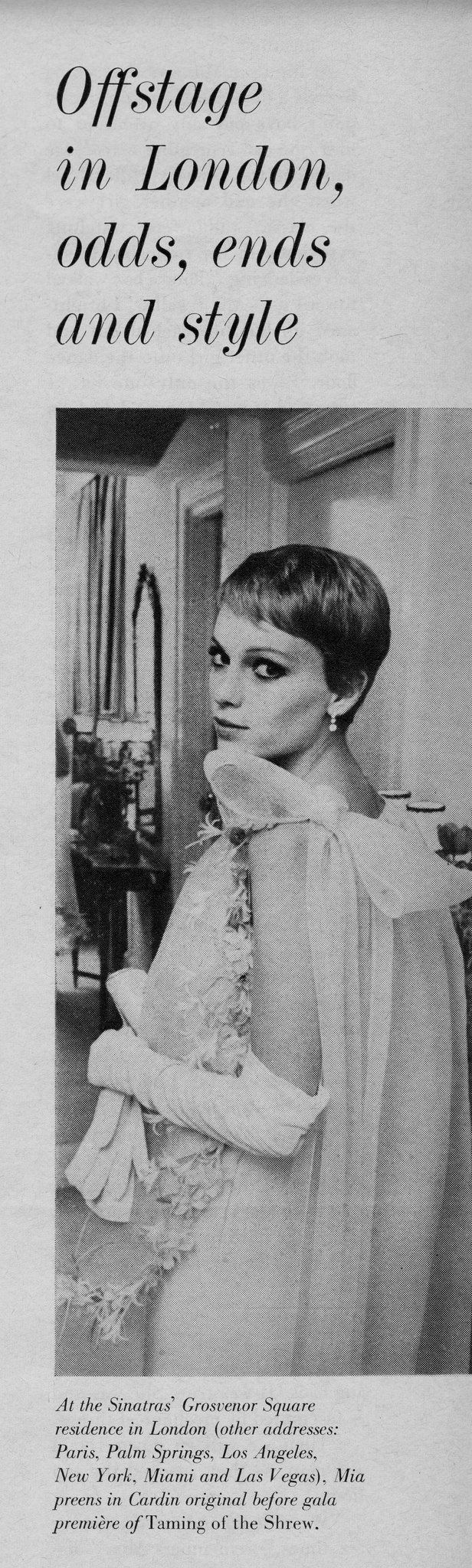
Mia Farrow’s life has been a tapestry woven with threads of fame, personal turmoil, and profound dedication to humanitarian causes. From her early days as a television and film star to her current role as a tireless activist, Farrow’s journey is a testament to resilience and a commitment to making a difference. This exploration delves into the multifaceted life of Mia Farrow, touching upon her significant acting career, her complex personal relationships, and her impactful work as a UNICEF ambassador.
Early Life and Rise to Stardom
Born into a Hollywood family, Mia Farrow’s childhood in Beverly Hills and London, with her actress mother Maureen O’Sullivan and writer-director father John Farrow, seemingly set the stage for a life in the public eye. Her own rise to prominence began at the remarkable age of 19 when she landed a role in Peyton Place. This groundbreaking prime-time soap opera, which premiered in 1964, became a cultural phenomenon and instantly launched Farrow into stardom. Her early career was marked by a series of notable roles, cementing her status as a sought-after actress in Hollywood.
Tumultuous Relationships and Personal Life
Farrow’s personal life often mirrored the dramatic narratives of the films and television shows she starred in. Her marriage to the legendary singer and actor Frank Sinatra, when she was 21 and he was 50, was a significant event that captured public attention. Their relationship, however, was short-lived, and their divorce was finalized during the filming of Rosemary’s Baby in 1968, a role that earned her a Golden Globe nomination.
Following her divorce from Sinatra, Farrow married composer-conductor André Previn. This marriage, lasting over a decade, saw the couple raise six children: three biological sons and three adopted Asian daughters. Even during her marriage to Previn, Farrow maintained a connection with Sinatra. Her relationship with filmmaker Woody Allen, which began in the 1980s, became a subject of intense media scrutiny, particularly due to a highly publicized scandal involving one of her adopted daughters, Soon-Yi Previn, and allegations of inappropriate behavior towards her youngest daughter, Dylan.
A Protective Mother’s Fears
The allegations brought forth by Dylan Farrow against Woody Allen in 1992, accusing him of sexual assault, sent shockwaves through Hollywood and the public. Mia Farrow, deeply concerned for her children’s safety, reportedly sought reassurance from Frank Sinatra. In a poignant recollection, Farrow described a clandestine meeting arranged by Sinatra’s associates, where she was assured of protection, offering a glimpse into the lengths she went to safeguard her family during a period of intense fear and vulnerability. This episode underscores the profound challenges Farrow faced as a mother navigating personal crises amidst public attention.
A New Chapter: Activism and Humanitarianism
Two decades after the intense media frenzy surrounding the Allen scandal, Mia Farrow, now in her late sixties, has largely stepped away from the acting world. Her focus has shifted dramatically towards activism, particularly in Africa. As a dedicated UNICEF ambassador, she has undertaken over twenty missions, with a significant emphasis on the Darfur region of Sudan and neighboring Chad.
Championing Human Rights on a Global Stage
Farrow’s activism extends beyond her work with UNICEF. She has become a vocal critic of China’s involvement in Sudan, linking the mass killings in Darfur to China’s tacit support of the Sudanese government and its veto power within the UN Security Council. Her powerful condemnation of the 2008 Beijing Olympics as “the genocide Olympics” ignited international debate and raised global awareness of the atrocities in Darfur. In this crusade, she has found a dedicated partner in her son, Ronan Farrow, who has followed in his mother’s footsteps, working on global youth issues and human rights.
Legacy and Enduring Influence
Mia Farrow’s life story is one of remarkable evolution. From a beloved actress gracing the silver screen to a fierce advocate for human rights, she has consistently used her platform to shed light on critical issues. Her journey, marked by both personal triumphs and profound struggles, continues to inspire. Her dedication to humanitarian causes, particularly in regions ravaged by conflict, demonstrates an enduring commitment to making a tangible impact on the world. Her legacy is not solely defined by her cinematic achievements but by her unwavering voice for the voiceless and her tireless efforts to foster a more just and compassionate world.
References:
- Vanity Fair archives. (Information pertaining to the 1992 scandal).