
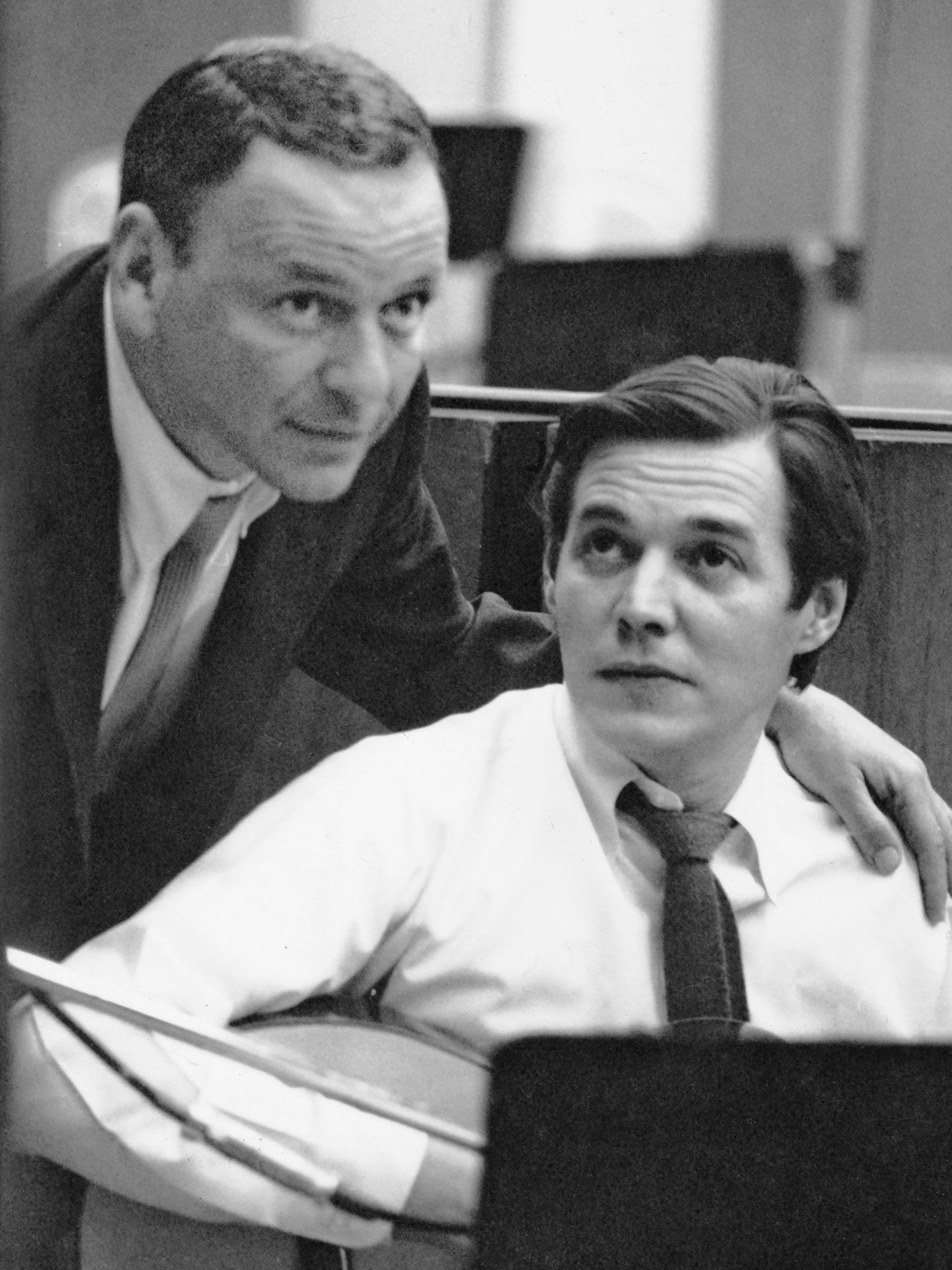
Frank Sinatra, the epitome of masculine suavity during his Rat Pack era, embarked on a remarkable collaboration with a Brazilian music maestro, resulting in one of his most exquisitely tender albums. Fifty years since its initial release, Francis Albert Sinatra & Antonio Carlos Jobim remains as captivating as ever. A recently remastered anniversary edition further enhances the depth of Claus Ogerman’s orchestrations, which elegantly frame Sinatra’s voice. The album, recorded in Hollywood in the winter of 1967, captures both artists at their creative and popular peaks. Sinatra was enjoying a highly successful period with his Reprise label, having released acclaimed albums like Sinatra at the Sands and the Top 10 hit That’s Life. Meanwhile, Jobim, a master pianist, guitarist, and composer, was at the forefront of the global bossa nova craze, following the success of Getz/Gilberto, an album that significantly popularized his compositions, including the smash hit “The Girl From Ipanema.”
The 50th-anniversary edition of Francis Albert Sinatra & Antonio Carlos Jobim has been released in various formats, including vinyl. This edition also features two previously unreleased tracks: a live medley from a television special and a segment from a session reel of “The Girl From Ipanema,” performed as a duet by Sinatra and Jobim. Sinatra’s directive at the beginning of the first take, “Don’t let it run away, fellas, with the tempo. Just hold it down, let it settle down. Because it’s got a lot of — it’s got a gang of words,” highlights his meticulous approach. His decisive, almost brusque, command starkly contrasts with the airy, delicate quality of the singing that follows.
The burgeoning commercial appeal of bossa nova likely fueled Sinatra’s interest in Jobim, perhaps as a strategic move in a music scene increasingly dominated by The Beatles. However, Sinatra’s engagement with this music transcended mere opportunism. While bossa nova offered him a new avenue as a vocalist—he quipped during the sessions, “I haven’t sung so soft since I had the laryngitis”—he clearly viewed the style as more than a fleeting trend. As Will Friedwald notes in his biography Sinatra! The Song is You: A Singer’s Art, “No other American pop star would so thoroughly immerse himself in the world of bossa. He not only recorded two whole albums’ worth of the stuff but sacrificed his signature stylistics in order to more smoothly fit into the new vernacular.”
Consider the delicate phrasing of Sinatra’s rendition of “Quiet Nights of Quiet Stars,” the English-lyric version of Jobim’s “Corcovado,” with lyrics by Gene Lees. The flawless balance between Sinatra’s voice and the orchestration has become iconic; when Diana Krall released her own bossa nova album in 2009, she titled it Quiet Nights and enlisted Claus Ogerman as her arranger, earning him a Grammy for his work.
In its original release, Francis Albert Sinatra & Antonio Carlos Jobim achieved significant commercial success, reaching the Top 20 and spending 28 consecutive weeks on the Billboard album chart. Michael Bourne, host of WBGO’s Singers Unlimited, viewed this album as further validation for bossa nova within the American pop mainstream. He remarked that even after the Grammy win for Getz/Gilberto, “the Sinatra/Jobim album was a musical apotheosis, a blessing of Jobim’s songs from America’s musical Pope.” Despite its acclaim, the album did not secure the Grammy for Album of the Year, an award Sinatra had won in the preceding two years for September of My Years (1965) and A Man and His Music (1966). While Francis Albert Sinatra & Antonio Carlos Jobim was nominated and considered a strong contender, the top honor ultimately went to another landmark album of that year: Sgt. Pepper’s Lonely Hearts Club Band.
This collaboration stands as a testament to Sinatra’s artistic curiosity and his ability to adapt and connect with evolving musical landscapes, while also solidifying the international appeal of bossa nova. The enduring legacy of Francis Albert Sinatra & Antonio Carlos Jobim invites listeners to rediscover these timeless melodies and the unique synergy between two musical giants. Explore this remarkable fusion of American and Brazilian music and experience the sophisticated charm that continues to resonate today.
References
- Chinen, Nate. “Revisiting A Masterpiece: When Frank Sinatra Collaborated With Antonio Carlos Jobim.” NPR, April 7, 2017.
- Friedwald, Will. Sinatra! The Song is You: A Singer’s Art.
- “Fixing A Hole: Sgt. Pepper Remixed and Reissued For 50th Anniversary.” NPR, April 5, 2017.