
If he were still alive today, Elvis Presley would be blowing out 85 candles on his birthday cake. Sadly, a love of cheeseburgers and prescription medication cut his life short, but his style legacy refuses to die. In just 42 years on this earth, “The Memphis Flash” singlehandedly changed the way men dress. From rockabilly cool to more-is-more jewelry, Elvis remains one of those rare icons whose fashion influence has outlived his career. Granted, most of us aren’t wearing lamé jumpsuits these days—but the King remains as powerful an influence on modern wardrobes as ever, and his impact on oldies music culture continues to shape how we understand the golden era of American pop.
Elvis Was the Godfather of Bling
Born dirt-poor in a wooden shack in the Deep South, Elvis rocketed out of his impoverished childhood when he scored his first Billboard number one, “Heartbreak Hotel,” at just 21 years old. That success let him fully indulge his taste for ostentatious style, and as designer Tommy Hilfiger once described him, Elvis quickly became “the first white boy to really bling it up.”
He did this spectacularly in 1957, donning a gold lamé suit for the cover of the album 50,000,000 Elvis Fans Can’t Be Wrong. The dazzling outfit, which cost $10,000 at the time, was a forerunner to modern bling culture—proof that this poor boy from Mississippi was ready to claim his throne as the golden boy of entertainment. During his lifetime, Elvis also splashed out on more than 260 cars, including a limousine painted with crushed diamonds (worth roughly half a million dollars in today’s money), private jets with gold-plated bathrooms, and mountains of diamond jewelry that he tossed to fans at concerts like confetti.
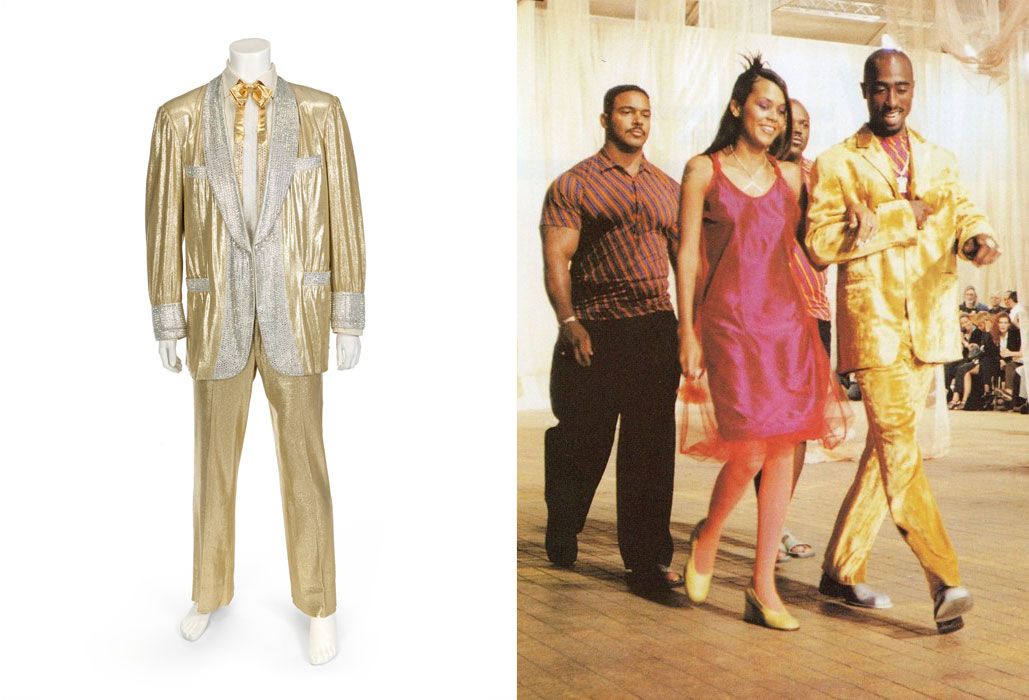
Where Elvis led, others followed. Hip-hop’s love of gold and diamonds owes an obvious debt to him, but the King’s gold suit specifically has proven especially influential. Artists as varied as Tupac Shakur and Brandon Flowers have since given their tailoring the Midas touch, fashion houses like Versace and Costume National have sent models down the runway in head-to-toe gold, and pop stars including Justin Bieber, Bruno Mars, and Jared Leto have echoed the look in metallic gold blazers with Elvis-style black lapels.
Elvis Pioneered Gender-Fluid Fashion
When Elvis burst into—and arguably helped birth—American pop culture in the mid-1950s, he bent the era’s rigid gender rules and encouraged young men to experiment with clothing, something that had previously been considered a purely female pursuit. In a cultural climate defined by Brooks Brothers conformity, Elvis’s fondness for bubble-gum pink clothing, lace, heavy mascara (he was such a pro at makeup that he’d apply it for his girlfriends too), and navel-baring cropped shirts disrupted the status quo entirely. He championed gender fluidity decades before the term existed, laying groundwork that later performers like Harry Styles, with his hot-pink suits, would build upon.
Elvis pushed gender boundaries throughout his career, famously making floral prints cool in the 1960s when he wore a red hibiscus-print shirt in the film Blue Hawaii. Fashion houses including Prada, Dior, and Saint Laurent have since reinterpreted that Aloha style on their own runways.
But the King’s most memorable boundary-breaking look remains his flamboyant, body-skimming jumpsuits, which opened the door for a new generation of male performers unafraid of dramatic self-presentation. David Bowie pushed Elvis’s jumpsuit silhouette to new extremes with spandex catsuits, and Mick Jagger performed in a white dress at a Hyde Park concert while losing none of his rock-star masculinity. As British tailor Edward Sexton put it, “The flamboyance of Elvis’s stage-wear liberated men to wear clothes that were more outrageous than they had worn since the nineteenth century.” More than fifty years later, audiences are still enjoying the sartorial freedom he helped usher in—one of the lasting cultural gifts of the golden era of America music.
Elvis Was the Original Rockabilly Rebel
Even for those who’ve never embraced the full pompadour look, rockabilly’s fashion influence is undeniable—perhaps most visible today in the camp-collar shirts that have remained popular for years. That trend, too, traces back to Elvis. The classic mid-century Elvis look—slicked-back quiff, a two-tone bowling shirt with a popped collar, a drape jacket, pegged trousers, and penny loafers—remains Presley’s most iconic and accessible style. It’s best captured in the 1957 film Jailhouse Rock, where Elvis appears in all his lip-curling, double-denim glory. If you’re ever dressing as Elvis for a costume party, this is the look to choose. But it’s far more than costume material.
As the late designer Joe Casely-Hayford once put it, “Elvis was at the forefront in defining a new anti-establishment visual language.” He was the original rebel, but crucially, he made rebellion accessible. “Aside from good looks, he knew the appeal of being an outsider,” Casely-Hayford continued. “Even today, a distilled version of his look has filtered down into the wardrobes of any self-respecting teenage rebel.”
Elvis’s brand of subcultural cool reached far beyond American shores, influencing Britain’s Teddy Boys, who in the 1950s folded a dash of Edwardian dandyism into their own sartorial mix. Rockabilly style has since been reclaimed by every new generation. Recent interpretations have come from pompadour-wearing musicians like Alex Turner and La Roux, while on the runway, Bottega Veneta has channeled the look through nostalgic brothel creepers and Western-style ties. Comme des Garçons even pushed the boyish Elvis quiff to parody-level heights during its beatnik-inspired SS19 show.
Elvis Made Leather Cool
It remains one of the defining moments in rock ‘n’ roll history: Elvis, dressed head-to-toe in provocative black leather, commanding the stage during the ’68 Comeback Special. After years spent churning out increasingly forgettable Hollywood films, Presley faced enormous pressure to prove to the world that he was still culturally relevant.
The moment Elvis stepped onto that stage, he was no longer a has-been—he was back, and undeniably dangerous. Like Marlon Brando before him, or Beyoncé paying homage to the Black Panthers during her 2016 Super Bowl performance, Elvis understood that slipping into a layer of leather is an inherently empowering act.
Since that performance, black leather has become the go-to choice for any struggling performer looking to reinvent themselves with an outlaw edge. Stars including Suzi Quatro, Bono, Robbie Williams, Britney Spears, and Lady Gaga have all worn their own interpretations of Elvis’s seductive leather suit, cementing its place in fashion history, while brands from Saint Laurent to John Lawrence Sullivan have sent all-over leather looks down their own runways.
The King’s Legacy Lives On
More than four decades after his death, Elvis Presley’s influence on fashion remains as vivid as his influence on oldies music itself. From his gold lamé bravado to his gender-defying stage costumes, from his rockabilly rebellion to his leather-clad reinvention, Elvis proved that a performer’s image could be just as revolutionary as their sound. Musicians, designers, and everyday fans continue to borrow from his playbook, whether they realize it or not, every time a pop star dons a metallic blazer or a rebellious teenager slicks back a quiff.
For anyone drawn to the golden age of American music and the larger-than-life figures who defined it, Elvis’s story is essential listening—and essential viewing. Dive back into his classic recordings, watch his old performances, and discover why, decades later, the King’s style and sound still refuse to fade.