
We owe an enormous debt to history’s greatest inventors. Every time you flip on a light switch, pick up a telephone, iron your clothes, or scroll through your phone, you’re benefiting from the ingenuity of someone who came before you. From visionaries who transformed agriculture to engineers who launched the digital age, famous inventors have shaped the modern world in ways both large and small. Whether their names appear in textbooks or remain lesser known, their contributions to science and technology continue to ripple through everyday life.
Madam C.J. Walker
Born Sarah Breedlove in 1867, Madam C.J. Walker invented a revolutionary hair care treatment specifically formulated for Black women. She traveled the country demonstrating the “Walker Method,” a system combining a specially formulated pomade, brushing techniques, and heated combs. Walker developed the treatment in response to her own experience with a condition that caused significant hair loss. Her business acumen transformed her invention into a nationwide enterprise, making her one of the most remarkable self-made entrepreneurs in American history.
Thomas Edison
Arguably the most famous inventor in American history, Thomas Edison is credited with creating the first commercially viable incandescent lightbulb. Yet the lightbulb was only one entry on a staggering list of achievements. Edison also invented the Universal Stock Printer, which synchronized stock ticker transactions, the quadruplex telegraph, and the phonograph. By the end of his career, he had been granted more than 1,000 U.S. patents — a record that speaks to the extraordinary breadth of his creative genius.
Alexander Graham Bell
Alexander Graham Bell is best known as the primary inventor of the telephone, a device that fundamentally transformed human communication. He founded Bell Telephone Company in 1877 and subsequently turned his attention to other ambitious projects, including flying machines. Beyond his inventions, Bell made lasting institutional contributions, establishing Volta Laboratory, the American Association to Promote Teaching of Speech to the Deaf, and Science magazine.
Frederick Jones
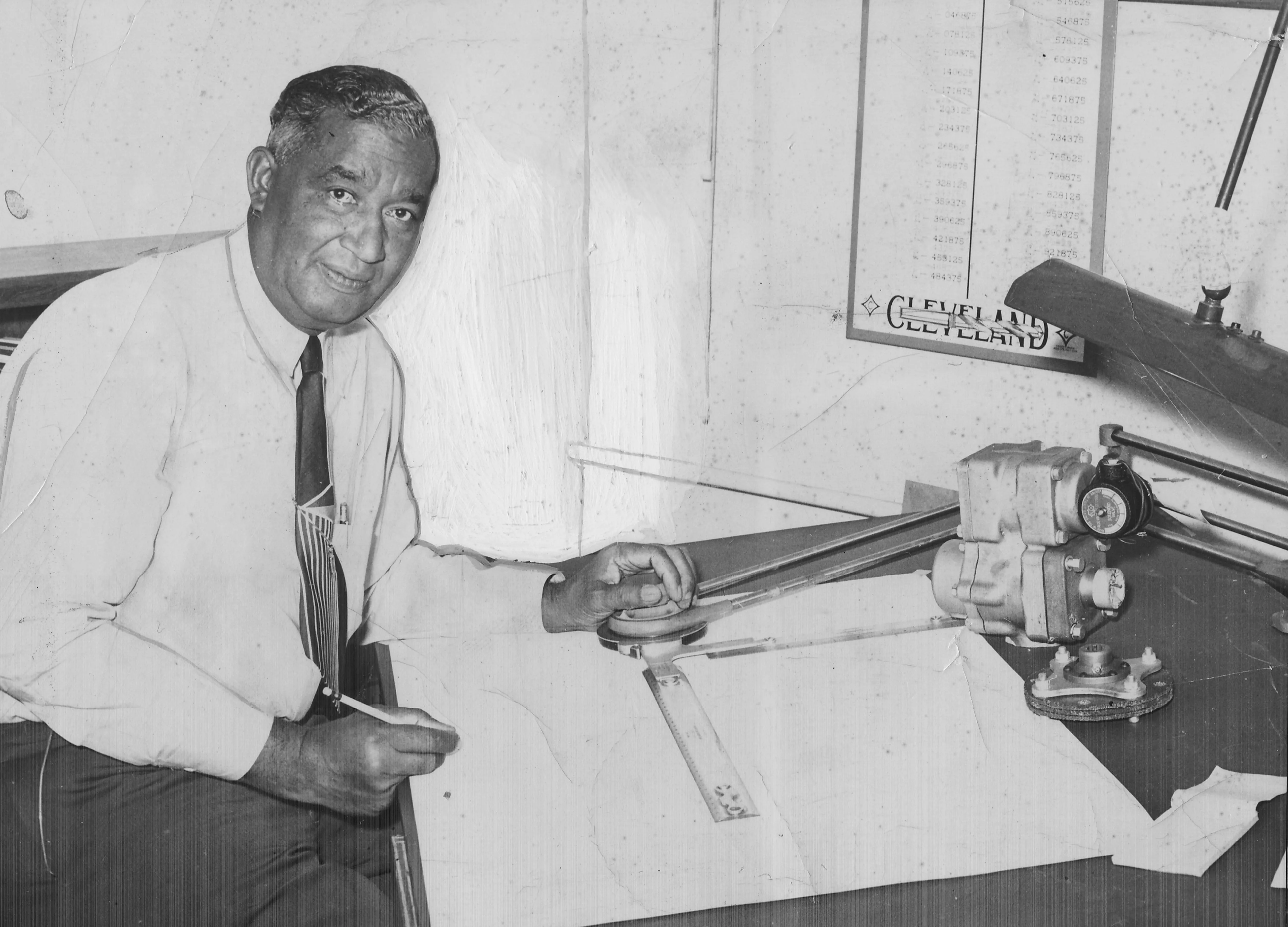
Frederick Jones was a self-taught engineer whose greatest contribution — portable refrigeration units — proved indispensable during World War II. His units allowed military trucks to transport food, blood, and medicine safely to army hospitals and soldiers at the front. Over the course of his career, Jones received more than 60 patents spanning refrigeration technologies, engines, sound equipment, and X-ray machines, cementing his legacy as one of the most productive inventors of the 20th century.
Joy Mangano
Joy Mangano created the Miracle Mop in 1990, an innovative self-wringing cleaning tool she marketed entirely on her own initiative. When she appeared on QVC to demonstrate the product, she sold more than 18,000 mops within a single half-hour — a testament to both the invention’s practicality and her natural talent for direct marketing. Mangano went on to develop several other successful products, including Rolykit, Huggable Hangers, and Forever Fragrant.
Nikola Tesla
Nikola Tesla’s most enduring contribution to civilization is the design of the alternating current (AC) electric system, which remains the global standard for electrical power distribution to this day. He also invented the first AC hydroelectric power plant and the Tesla coil, an inductor still used in radio technology. Tesla’s influence extends even into the present era — Elon Musk named his electric vehicle company Tesla Motors in honor of the pioneering inventor.
John Deere
John Deere’s path to invention began with a simple observation: he was constantly making the same repairs to the wooden and cast-iron plows used by local farmers. Determined to find a better solution, he experimented with more durable designs and eventually developed a steel plow that quickly gained widespread popularity. By 1850, his company was producing 1,600 plows annually and had expanded its product line to include other agricultural tools — the beginning of what would become one of the most recognized brands in farming history.
Charles Babbage
Though he never built the computer as we know it today, mathematician and inventor Charles Babbage conceived the fundamental ideas that made modern computing possible. His designs for mechanical calculating machines — the Difference Engine and the Analytical Engine — introduced concepts of programmable computation that engineers and scientists would eventually bring to life. For this reason, he is widely referred to as “the father of computing.”
Sarah Boone
Dressmaker and inventor Sarah Boone transformed a crude, improvised tool into a household essential. At a time when most dressmakers ironed clothes on a wooden plank balanced across two chairs, Boone designed a narrower, curved, padded board that could slip inside bulky dresses and fold flat for easy storage — essentially the modern ironing board still used in homes today. When she received her patent in 1892, she became one of the first Black women in American history to be granted one.
Jan Matzeliger
Born in Suriname (then known as Dutch Guiana), Jan Matzeliger revolutionized the footwear industry with his invention of the lasting machine in 1883. Before Matzeliger’s innovation, attaching the upper body of a shoe to its sole — a process called lasting — had to be performed by hand. His machine mechanically held the shoe in place and nailed the pieces together, enabling the production of up to 700 pairs of shoes per day, more than ten times the output of a skilled human worker.
Charles Goodyear
Inventor Charles Goodyear made one of history’s most consequential accidental discoveries in 1839 when he stumbled upon the process of vulcanizing rubber — a method of treating rubber with heat to make it durable, flexible, and resistant to temperature extremes. Though he struggled throughout his life to fully capitalize on the patent, his legacy endures through the Goodyear Tire & Rubber Company, which was founded nearly 40 years after his death in 1860 and named in his honor.
The Wright Brothers: Wilbur and Orville
Few inventions have changed the world as dramatically as the airplane, and we have Wilbur and Orville Wright to thank for it. In 1903, the brothers achieved the world’s first free, controlled, power-driven flight — sustaining the aircraft for 59 seconds over a distance of more than 800 feet. Wilbur later traveled to Europe in 1908 to promote and sell their invention, eventually serving as president of the Wright Company until his death in 1912.
Orville, the younger of the two, assumed the presidency of the Wright Company following Wilbur’s death. Finding the business side of operations less compelling than the engineering work, he sold the company in 1915, though his place in history as a father of modern aviation was already secure.
Philo T. Farnsworth
Philo T. Farnsworth created the first fully electronic television, though much of his career was consumed by legal disputes over the invention’s intellectual property. He ultimately reached an agreement with RCA that allowed them to manufacture and market electronic televisions for home consumers. Beyond television, Farnsworth continued working on advanced technologies including radar, infrared telescopes, and nuclear fusion, demonstrating a restless inventive drive that extended far beyond his most famous creation.
Steve Jobs and Steve Wozniak
The story of Apple Computers begins in a garage in 1976, where Steve Jobs and Steve Wozniak built a machine that would help democratize personal computing. Wozniak personally designed the Apple I and the landmark Apple II, which drove the company’s early dominance in the personal computer market. Jobs departed Apple in 1985 but returned in 1997, steering the company toward transformative products like the iPod and iPhone that redefined entire industries.
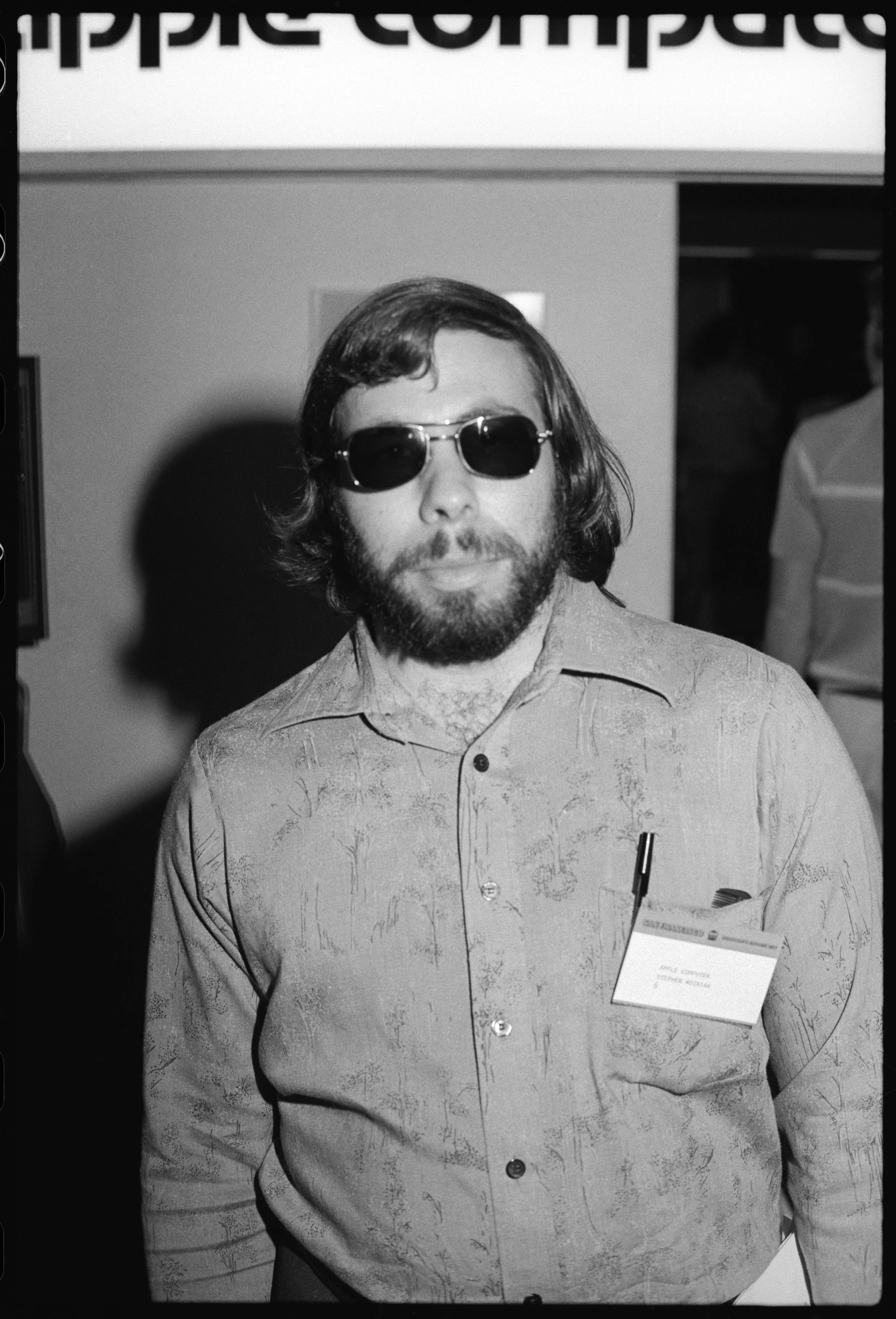
After leaving Apple, Wozniak remained active in the technology space, working on innovations related to universal remote controls and wireless GPS technology — a reminder that even after their most celebrated achievements, great inventors rarely stop creating.
Lonnie Johnson
Lonnie Johnson’s path to inventing the Super Soaker began with a completely different goal. A former U.S. Air Force officer and NASA engineer, Johnson was attempting to design an environmentally friendly heat pump that used water instead of Freon. When he tested the prototype in his bathroom and produced a powerful jet of water, he recognized the toy’s commercial potential. He sold the rights to the Larami Corporation in 1989, and the Super Soaker went on to become one of the best-selling toys in history.
Eli Whitney
Eli Whitney’s cotton gin — a device that rapidly separated cotton fibers from their seeds using a system of hooks, wires, and a rotating brush — transformed agricultural production in the American South. The invention was so practical and replicable that farmers began building unauthorized versions almost immediately, leaving Whitney mired in patent disputes and earning him little financial reward despite the device’s enormous impact. He subsequently turned his attention to manufacturing, championing the concept of interchangeable parts for weapons production — a principle that laid the foundation for modern industrial manufacturing.
Elijah McCoy
Mechanical engineer Elijah McCoy invented a lubrication device capable of automatically distributing oil over an engine’s moving parts. For the railroad industry, this was transformative: trains could now operate for extended periods without stopping for maintenance, dramatically increasing efficiency and reducing costs. McCoy’s devices became so trusted that engineers reportedly demanded “the real McCoy” when specifying lubrication equipment — a phrase that may have entered common usage as a result.
Samuel F.B. Morse
Samuel F.B. Morse invented both the telegraph and the dot-and-dash communication system that bears his name. Working alongside fellow inventor Alfred Vail, Morse demonstrated the telegraph’s capabilities at the U.S. Capitol in 1842. The pair subsequently oversaw the construction of a telegraph line between Washington D.C. and Baltimore, and in 1844, Morse transmitted the first official message over the line — the now-famous phrase “What hath God wrought!”
The Enduring Legacy of American Inventors
The inventors profiled here represent only a fraction of the brilliant minds whose work has shaped civilization. From the lightbulb to the personal computer, from the cotton gin to the electronic television, each invention on this list reflects not just technical ingenuity but a willingness to ask what could be improved and to act on that question. Many of these inventors faced significant obstacles — legal battles, financial hardship, racial discrimination, and skepticism from their contemporaries — yet their persistence ultimately prevailed.
Their stories are a reminder that invention is rarely a solitary flash of inspiration. It is, more often, the product of sustained curiosity, relentless experimentation, and an unshakeable belief that the world can be made better. The next time you use your smartphone, flick on a light, or cool your food in a refrigerator, you are living inside someone else’s dream brought to life.