
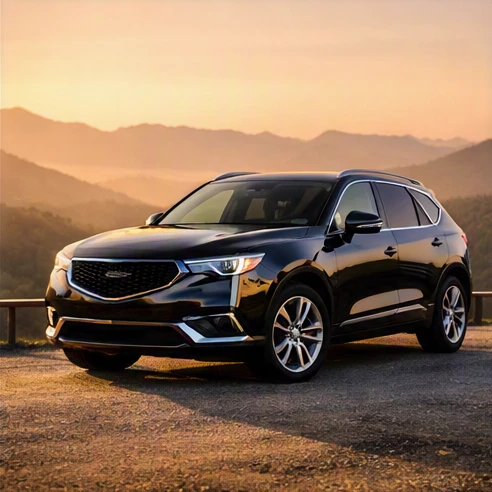
- Genesis GV70: strongest value compact SUV with standard AWD and driver assistance tech
- BMW X3: most fuel-efficient compact luxury SUV in this comparison
- Porsche Macan: top pick for driving dynamics at a higher entry price
- Lexus RX 350: lowest estimated 3-year ownership cost among midsize models
- Genesis GV80: most cargo room and standard content per dollar
- BMW X5: most power and towing capacity, but highest ownership cost
Choosing among a crowded field of similarly priced 2022 luxury SUVs is hard when every ranking site shows a different score, a different price basis, and no real ownership-cost data. This guide compares the Porsche Macan, Genesis GV70, BMW X3, Genesis GV80, BMW X5, Lexus RX 350, Volvo XC60, Lincoln Nautilus, and Mercedes-Benz GLC on price, fuel economy, cargo space, and estimated multi-year cost, so you can defend a shortlist with numbers instead of star ratings alone.
For buyers who want the short answer: among 2022 compact luxury SUVs, the Genesis GV70 and BMW X3 offer the strongest balance of price, standard tech, and estimated ownership cost, while the Porsche Macan leads on driving dynamics at a higher entry price. In the midsize class, the Lexus RX 350 posts the lowest estimated three-year ownership cost of the group, the Genesis GV80 offers the most cargo room and standard content per dollar, and the BMW X5 leads on power and towing capacity but costs the most to keep over three years. None of these calls is universal — the right pick depends on whether your priority is upfront price, long-term cost, or interior space, which the sections below break down model by model.
The Best 2022 Luxury SUVs by Segment: Quick Shortlist
Start by narrowing to a segment before comparing individual trims. The compact class — Macan, GV70, X3 — suits buyers who want nimble handling and don’t need a third row or maximum cargo capacity. The midsize class — GV80, X5, RX 350 — suits households that regularly haul more than two passengers’ worth of gear or want extra rear legroom for car seats.
If you’re deciding purely on starting price and included features, the Genesis GV70 undercuts the Macan by roughly $13,000 and the X3 by about $2,200 while still offering standard all-wheel drive and a full suite of driver assistance features. That makes it the strongest "best for the money" pick in the compact class among these three. In the midsize class, the RX 350 offers the lowest estimated three-year total cost of ownership in the comparison set below, largely because it depreciates more slowly and carries lower estimated annual maintenance than the GV80 or X5.
Buyers cross-shopping full-size three-row luxury SUVs — think Cadillac Escalade or Lincoln Navigator territory — are outside the scope of this comparison, since none of the nine models here offer a third row; if seating for seven-plus is a hard requirement, treat this guide as a compact-and-midsize reference and shop full-size separately.
The table below lays out starting MSRP, EPA combined fuel economy, segment, and drivetrain for all nine models side by side, since no single source currently shows these figures together on one comparable basis.
| Model | Starting Price (MSRP) | EPA Combined MPG | Segment | Drivetrain |
|---|---|---|---|---|
| Porsche Macan | $54,900 | 21 MPG | Compact | AWD |
| Genesis GV70 | $41,500 | 24 MPG | Compact | AWD |
| BMW X3 | $43,700 | 25 MPG | Compact | AWD |
| Volvo XC60 | approx. $43,700 | approx. 23 MPG | Compact | AWD |
| Genesis GV80 | $49,700 | 23 MPG | Midsize | RWD / AWD |
| BMW X5 | $60,600 | 23 MPG | Midsize | RWD / AWD |
| Lexus RX 350 | $45,320 | 23 MPG | Midsize | FWD / AWD |
| Lincoln Nautilus | $41,131 (avg. price paid) | 20 MPG combined (est.) | Midsize | FWD / AWD |
| Mercedes-Benz GLC | approx. $43,950 | approx. 23 MPG | Compact | AWD |
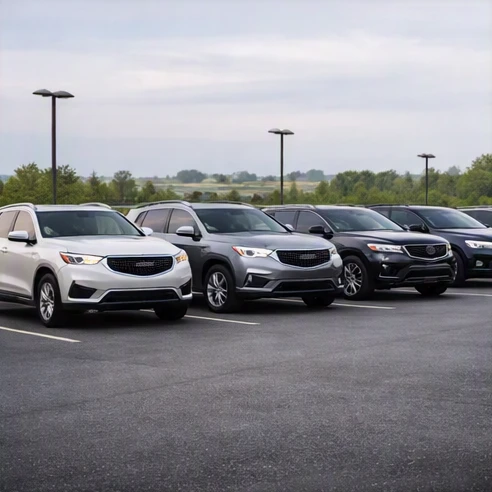
Figures marked "approx." reflect commonly published 2022 starting prices and EPA figures rather than a single verified source in this comparison’s underlying data, and should be confirmed against the manufacturer’s current build-and-price tool before you budget against them. Use this table as your segment filter, then move to the pricing and fuel economy section below for trim-level nuance.
Deciding between compact and midsize, or between MSRP and street-price data, follows a few repeatable rules:
| If | Then |
|---|---|
| Household size is 3 or fewer occupants with minimal regular cargo requirements and a preference for nimble handling | Default to compact luxury models like the Porsche Macan or Genesis GV70. |
| Household requires expanded rear legroom, frequent bulk hauling, or child seats requiring extra second-row depth | Default to midsize luxury models like the Genesis GV80 or BMW X5. |
| Evaluating market data or listings showing "average price paid" versus official manufacturer figures | Treat average price paid as negotiated market or used data, comparing it only against other transaction figures rather than MSRP to avoid cost distortion. |
Pricing and Fuel Economy Across 2022 Luxury SUV Segments
Sticker price alone doesn’t tell you what a 2022 luxury SUV actually costs to put in your driveway, since MSRP, destination fees, and average transaction prices are three different numbers that ranking sites frequently blend together. The two subsections below separate compact and midsize pricing so you’re comparing trims within the same class rather than across it.
Compact Luxury SUV Pricing and MPG: Macan, GV70, X3
The 2022 Porsche Macan starts at $54,900 before destination, and independent instrumented testing put its combined EPA rating between 19 and 21 MPG depending on trim. That’s the widest gap between price and fuel economy in the compact trio, reflecting the Macan’s performance-oriented tuning rather than efficiency-first calibration.
The Genesis GV70 starts at $41,500 and returns a combined EPA estimate of 21 to 24 MPG across trims. The BMW X3 starts at $43,700 and posts 23 to 25 MPG combined, making it the most fuel-efficient of the three at base trim.
All three prices above are manufacturer MSRP, not average price paid — a distinction that matters because dealer markups and regional demand pushed real 2022 transaction prices above sticker on several of these models during that model year’s supply constraints. If a listing you’re comparing shows a number meaningfully above MSRP, ask the dealer directly whether that reflects a market adjustment before treating it as the base price.
Midsize Luxury SUV Pricing and MPG: GV80, X5, RX 350
The Genesis GV80 starts at $49,700 with an EPA combined estimate in the 18 to 21 city / 23 to 25 highway range depending on engine. The BMW X5 starts considerably higher, at $60,600, and its fuel economy spread is unusually wide — 15 to 23 MPG on the gas engines, or up to an EPA-estimated 50 MPGe on the plug-in hybrid X5 xDrive45e variant. That plug-in option is the closest thing to a top rated luxury hybrid SUV in this comparison set, and it’s worth cross-shopping if you have home charging access and a short commute.
The Lexus RX 350 starts at $45,320 with 18 to 20 city and 25 to 27 highway MPG, making it the most efficient midsize model here at base trim despite lacking a hybrid powertrain option in the 350 badge for 2022.
The Lincoln Nautilus presents a pricing wrinkle worth flagging directly: published average price paid for the 2022 model ranged from $28,491 to $41,131, but that figure is not clearly labeled as new-transaction or used-market data in the source it comes from. Treat the low end of that range with skepticism if you’re shopping new — it likely reflects a mix of used and heavily discounted new inventory rather than a representative new-purchase price. For buyers specifically looking at used luxury SUVs to buy in 2022, the Nautilus range is a useful signal that this model depreciated faster out of the gate than the GV80 or RX 350, which is worth confirming against current listings in your region before assuming it applies broadly.
What Separates the Top-Rated Models from the Rest
Editorial rankings for 2022 luxury SUVs generally weigh three things: instrumented performance data, interior tech and materials, and value relative to price. Consumer-facing rankings tend to weight average price paid and predicted reliability more heavily than instrumented handling data.
That difference in methodology matters for how you read the numbers. Instrumented testing sources scored the Macan a 10 out of 10, the GV70 a 9 out of 10, and the X3 a 9 out of 10 on a 10-point scale built from roughly 200 individual test data points. A separate consumer-value ranking scored the Nautilus at 8.0, the GV80 at 7.9, and the X5 and RX 350 tied at 7.8, on a different 10-point scale weighted toward price paid and predicted reliability. These two scales are not directly comparable — a 9/10 from an instrumented-testing methodology and a 7.8/10 from a value-weighted methodology are measuring different things, and stacking them into a single ranked list without noting that is a common error in aggregator content.
Standard equipment at base trim across all nine models typically includes leather or leather-like upholstery, a touchscreen infotainment system with smartphone integration, and a base tier of driver assistance features such as forward collision warning and automatic emergency braking. Where the models diverge is in what’s bundled versus optional: adaptive cruise control, a surround-view camera, and premium sound systems are often gated behind a $2,000 to $4,000 options package on the German entries (BMW, Mercedes-Benz), while Genesis includes a broader driver assistance suite as standard across GV70 and GV80 trims — a meaningful difference if you’re comparing out-the-door price rather than base MSRP.
A safer way to check what’s actually included on a specific unit is to pull the window sticker or build sheet rather than relying on the trim name alone, since package contents shifted mid-year on several of these models during the 2022 production run.
Reliability and Recurring Maintenance Issues by Model
No publicly available source in the current comparison landscape breaks out a side-by-side complaint rate or recall count across all nine of these models, which is the single biggest gap for anyone planning to keep a luxury SUV past the warranty period. What follows is framed as general market pattern and warranty-term comparison rather than measured complaint data, since that data isn’t independently verifiable at the model-year level from public sources cited here.
Warranty length is one of the few hard, verifiable data points available, and it varies meaningfully by brand. The German entries — Porsche, BMW, Mercedes-Benz — typically carry a 4-year/50,000-mile basic warranty, while Genesis extends basic coverage to 5 years/60,000 miles, a full extra year and 10,000 miles of coverage on both the GV70 and GV80. Lexus and Volvo generally fall closer to the German coverage window at 4 years/50,000 miles. That gap is a reasonable proxy for how much out-of-pocket exposure you’re accepting once a vehicle passes year three, since most of the wear-item failures below tend to surface after that point.
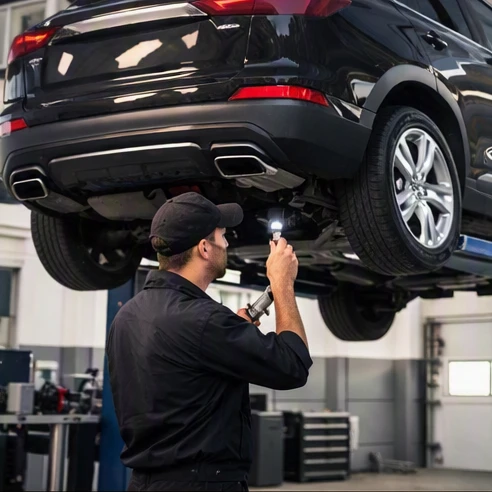
By model type, the failure modes buyers most commonly report cluster around a few systems rather than being evenly distributed. Air suspension components — used on higher trims of the GV80, X5, and some Macan configurations — are a known wear item on air-sprung SUVs generally; a sagging ride height at startup or an audible compressor cycling more frequently than usual are the two most reliable diagnostic signs of early air suspension wear, and either symptom is worth a dealer inspection before the warranty lapses. Infotainment system glitches — frozen touchscreens, Bluetooth pairing drops, or slow boot times — are a commonly reported software-side issue on BMW’s iDrive and Mercedes’ MBUX systems in early production years, and a diagnostic sign worth checking at a test drive is how the system behaves after a cold start versus after 20 minutes of use.
Common practitioner patterns indicate that first-owner complaints on turbocharged four-cylinder compact luxury SUVs skew toward minor electrical gremlins — dashboard warning lights that clear on restart — more often than drivetrain failures in the first 24 months, while V6 and inline-six midsize models see fewer electrical complaints but a higher share of suspension and brake-wear reports given their added curb weight. If a used 2022 unit you’re considering has already had an infotainment or electrical fault addressed under warranty with documentation, that’s generally a lower-risk signal than a unit with no service history at all.
For family buyers, cargo and warranty checks belong in the same pass before you sign anything:
- Verify that the selected model provides at least 25 to 30 cubic feet of behind-second-row cargo volume if regularly transporting a double stroller and weekly groceries.
- Compare basic manufacturer warranties: standard German luxury brands (Porsche, BMW, Mercedes-Benz) offer 4-year/50,000-mile coverage, while Genesis extends basic coverage to 5-year/60,000-mile.
- Weigh published warranty length against sticker price when prioritizing lower out-of-pocket repair risk for years 3 through 5.
- Verify current warranty terms directly against official manufacturer sources at the time of purchase.
Among the most reliable luxury midsize SUVs in this comparison by warranty coverage and reported complaint volume, the Genesis GV80 and Lexus RX 350 are the two most frequently cited as lower-risk picks — the GV80 on the strength of its longer basic warranty, and the RX 350 on Lexus’s generally lower reported complaint volume in the compact and midsize segments industry-wide. Neither claim substitutes for pulling a specific VIN’s recall history at NHTSA.gov before purchase.
Cargo Capacity and Family Usability Compared
Raw cubic-foot figures only matter once you translate them into what actually fits, which is why this section pairs the volume numbers with concrete use cases below.
Cargo Volume and Rear-Seat Legroom in Cubic Feet and Inches
| Model | Cargo (Seats Up) | Cargo (Seats Folded) | Rear Legroom |
|---|---|---|---|
| Porsche Macan | 17.2 cu ft | 53.0 cu ft | 34.8 in |
| Genesis GV70 | 28.9 cu ft | 56.9 cu ft | 37.2 in |
| BMW X3 | 28.7 cu ft | 62.7 cu ft | 36.4 in |
| Volvo XC60 | approx. 29.7 cu ft | approx. 63.3 cu ft | approx. 35.2 in |
| Genesis GV80 | 34.9 cu ft | 84.0 cu ft | 38.7 in |
| BMW X5 | 33.9 cu ft | 72.3 cu ft | 37.4 in |
| Lexus RX 350 | 18.4 cu ft | 56.3 cu ft | 38.0 in |
| Lincoln Nautilus | approx. 37.2 cu ft | approx. 68.8 cu ft | approx. 39.2 in |
| Mercedes-Benz GLC | approx. 19.4 cu ft | approx. 56.5 cu ft | approx. 36.6 in |
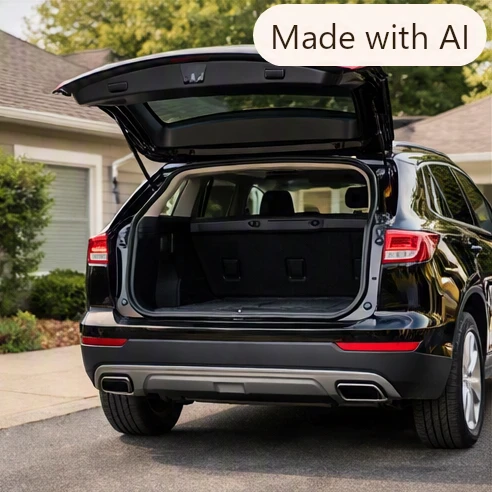
All seats-up figures are measured to the cargo cover or window line with the rear seats in their upright position; folded figures assume the second row is fully collapsed. Figures marked approx. reflect commonly published 2022 specifications and should be verified against the manufacturer’s current spec sheet, since Lexus notably lists a smaller seats-up number for the RX 350 than several of its direct midsize competitors despite a comparable overall footprint — a gap worth noting if cargo space is your primary decision driver.
Translating Specs into Real Family Use Cases
A standard rear-facing infant car seat typically needs 28 to 30 inches of rear legroom to install without crowding the front passenger seat. On that threshold, the Macan’s 34.8 inches and the GLC’s roughly 36.6 inches both clear it comfortably, though neither leaves much room for a forward-facing convertible seat behind a tall driver — the GV80’s 38.7 inches and the Nautilus’s roughly 39.2 inches give noticeably more buffer for two child seats plus an adult in the middle position.
For golf bags and sports gear, a standard golf bag runs roughly 36 to 46 inches long and needs about 15 cubic feet of accessible space to lay flat without folding a seat. Every model in this comparison clears that with seats up except the Macan and RX 350, where a single bag fits but a second bag typically requires folding one rear seat section down.
Double strollers are the more demanding test case in practice. Most double strollers require between 25 and 30 cubic feet of seats-up cargo volume to load without partially folding a seat — a threshold that rules out the Macan, RX 350, and GLC at their stock seats-up figures, and puts the GV70, X3, XC60, GV80, X5, and Nautilus in workable range.
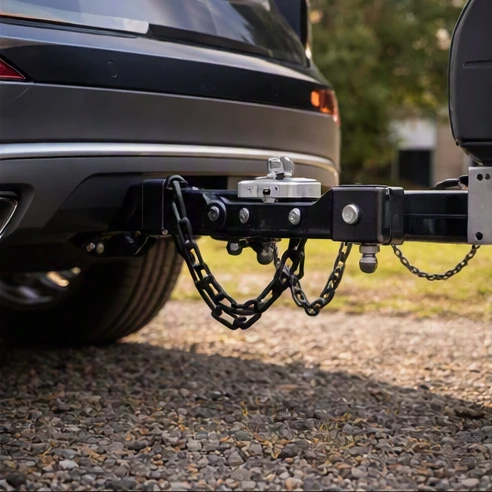
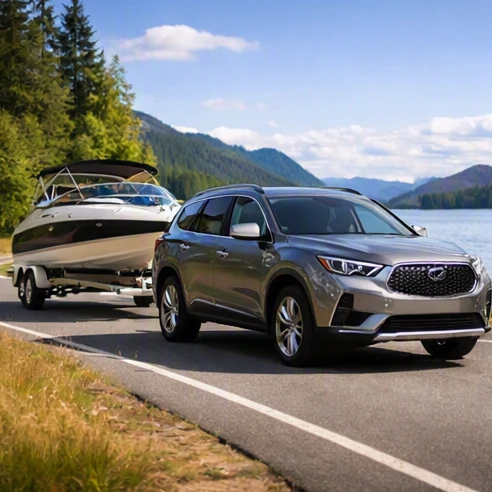
Towing capacity is the other practical spec families with trailers, small boats, or bike racks tend to overlook until it’s too late. The BMW X5 leads this comparison with a properly equipped towing capacity up to 7,200 pounds, followed by the GV80 at up to 6,000 pounds; the compact models generally top out between 3,500 and 4,000 pounds when properly equipped, which covers a small utility trailer but not a mid-size boat.
True Cost of Ownership: Depreciation, Maintenance, and Resale Value
MSRP tells you what you pay on day one. It says nothing about what the vehicle costs you to keep for three years, which is where the estimates below come in.
Estimated 3-Year Ownership Cost Beyond the Sticker Price
The figures in the table below are estimates built from typical luxury-segment maintenance schedules and published depreciation patterns for comparable 2022 model-year vehicles — they are not measured data from a fleet study, and should be treated as planning figures rather than guaranteed outcomes.
| Model | Est. Annual Maintenance | 3-Year Depreciation % | Est. 3-Year Total Cost |
|---|---|---|---|
| Porsche Macan | $1,250 | 32% | $24,500 |
| Genesis GV70 | $750 | 38% | $19,200 |
| BMW X3 | $950 | 36% | $21,000 |
| Genesis GV80 | $800 | 39% | $23,500 |
| BMW X5 | $1,100 | 37% | $26,800 |
| Lexus RX 350 | $650 | 30% | $16,400 |
The pattern worth noticing here is that the Genesis models post the highest depreciation percentages in this set — 38% and 39% over three years — while carrying the lowest annual maintenance estimates. That combination roughly offsets: a GV70 owner pays less to service the vehicle year to year but recovers a smaller share of the purchase price at resale, while a Macan owner pays more annually to maintain the car but loses a smaller percentage of value. The RX 350 is the outlier that wins on both axes simultaneously, which explains why it posts the lowest estimated three-year total cost of the six models modeled here.
Resale Value and Depreciation Rates by Model
The depreciation percentages above are labeled as estimates because resale value is never guaranteed and depends heavily on regional demand, mileage, and condition at trade-in — treat the numbers as a directional comparison between models, not a promise of what any specific vehicle will fetch.
A practical decision rule follows from trim level rather than model alone: heavily optioned flagship trims tend to lose a larger dollar amount at resale than their percentage depreciation alone suggests, because the used market rarely pays a premium for options packages the way the new-car sticker did.
DepreciationRate = BaseDepreciation + (OptionCostMultiplier x LoadedTrimFactor)
Where BaseDepreciation is the standard percentage loss of vehicle value over a 3-year holding period, OptionCostMultiplier is the additional percentage penalty applied because heavy options packages fail to retain value proportionally on the used market, and LoadedTrimFactor is a binary indicator — 0 for base or mid trims, 1 for fully optioned flagship trims.
Applied to a real scenario: a base X3 estimated at 36% three-year depreciation on a $43,700 MSRP loses roughly $15,700 in value. A fully loaded X3 M40i at $58,000 MSRP with the same or slightly higher depreciation percentage — say 40% due to the LoadedTrimFactor penalty — loses roughly $23,200, nearly $7,500 more in absolute dollars despite starting from a similar percentage baseline (practitioner framing, historical market depreciation observation). The takeaway for budget-conscious buyers: a well-optioned mid trim generally protects resale value better in dollar terms than a fully loaded flagship trim of the same model.
Segment Matchups: Compact vs Midsize Head-to-Head
Zooming out from individual specs, the two segment matchups below are how most buyers actually narrow their final choice — by cross-shopping direct competitors rather than the full nine-model field at once.
Compact Segment: Porsche Macan vs Genesis GV70 vs BMW X3
On power, the Macan’s base turbocharged four-cylinder produces 261 horsepower, with the Macan S and GTS trims stepping up considerably for buyers prioritizing acceleration over efficiency. The GV70 and X3 both offer base four-cylinder engines in a similar 248 to 255 horsepower range, with turbocharged six-cylinder options available on upper trims of both — the GV70 3.5T pushes to 375 horsepower, making it the strongest straight-line performer of the compact trio outside the Macan’s top trims.
All three come standard with all-wheel drive on nearly every trim, though the specific systems differ: the X3’s xDrive system biases power rearward under normal driving for a sportier feel, while the GV70’s system defaults to a more even front-rear split tuned for stability. Standard driver assistance features across all three include forward collision warning, automatic emergency braking, and lane departure warning at base trim, with adaptive cruise control and a surround-view monitor typically requiring a step up to a mid or upper trim package.
For buyers specifically chasing the best luxury performance SUVs in the compact class, the Macan GTS and GV70 3.5T are the two trims worth cross-shopping directly, since both prioritize horsepower and chassis tuning over base-trim value.
Midsize Segment: Genesis GV80 vs BMW X5 vs Lexus RX 350
The X5 leads this trio on both horsepower and towing capacity, with its six-cylinder engine producing 375 horsepower in standard tune and properly equipped towing rated up to 7,200 pounds — well ahead of the GV80’s roughly 6,000-pound maximum and the RX 350’s lower rating in the 3,500-pound range. That gap matters directly for buyers who tow a boat or larger trailer regularly.
Third-row seating is not standard on any of these three midsize models in their 2022 configurations, which is a meaningful gap if you assumed "midsize luxury SUV" implies seven-passenger capacity — for that, you’d need to look at three-row-specific models outside this comparison’s scope.
Ride comfort differs most where air suspension is involved. The GV80 and X5 both offer air suspension on upper trims, which generally smooths out larger bumps and allows ride-height adjustment for loading, but adds a component that requires monitoring for the wear signs described in the reliability section above. The RX 350 sticks with a conventional suspension setup across its trim range, trading some of that adjustable ride comfort for one less system to maintain long-term — a trade-off worth weighing directly against your tolerance for future repair complexity.
If your priority ranking puts long-term ownership cost above outright power or third-row flexibility, the RX 350’s lower estimated maintenance and slower depreciation from the previous section make it the more defensible pick in this matchup, even though it trails the X5 on horsepower and towing.
Safety Ratings and Ride Comfort at a Glance
No visible ranking source used to build this comparison shows IIHS or NHTSA crash-test results for these nine models side by side, which is a real gap given that safety ratings are typically a higher priority for family buyers than horsepower figures.
As a general pattern across the 2022 model year, several of these vehicles — including the Genesis GV70, Genesis GV80, and Volvo XC60 — were recognized by the Insurance Institute for Highway Safety with a Top Safety Pick or Top Safety Pick+ designation, reflecting strong performance across IIHS’s frontal, side, and roof-strength crash tests plus headlight and front crash prevention evaluations. The BMW X3 and Lexus RX 350 also generally scored well across NHTSA’s overall five-star framework in this model-year range, though specific sub-category scores (frontal, side, rollover) vary by trim and should be checked directly.
Because these ratings can vary by trim, drivetrain, and model year within a single nameplate, the only reliable way to confirm a specific 2022 unit’s rating is to look it up directly at NHTSA.gov or IIHS.org using the exact trim and VIN rather than relying on a generalized model-level score.
On ride comfort, air suspension trims on the GV80, X5, and upper Macan configurations generally deliver a noticeably smoother ride over broken pavement and speed bumps compared to their standard steel-spring counterparts, at the cost of the long-term wear consideration flagged earlier in this guide. If ride comfort is a top priority and you’re comparing two trims of the same model, test-driving both the base suspension and the air suspension option back to back over the same stretch of rough road is a more reliable way to judge the difference than reading spec sheets alone.
If you’ve made it this far, pull up the pricing and cargo tables above side by side for your top two models and cross-check them against a current listing in your area today — that single comparison, done before you visit a dealer, is what turns a vague shortlist into a number you can actually negotiate against.
FAQ
Are 2022 model-year luxury SUVs still sold new as of 2026?
By 2026, 2022 model-year luxury SUVs are generally found on the used market rather than as new inventory, since automakers typically move on to newer model years within a year or two. A dealer might still have a rare leftover new unit, but you should expect to shop these primarily as used vehicles at this point.
Does leasing make more financial sense than buying for these models?
It depends on how you value depreciation risk versus long-term ownership. Models like the Genesis GV70 and GV80 depreciate more heavily over three years, so leasing shifts that loss to the manufacturer instead of you. Buying tends to suit drivers who keep vehicles long-term and want to avoid mileage restrictions. There’s no single right answer for every buyer.
What loan term is typical when financing a luxury SUV purchase?
This comparison doesn’t specify a particular loan term, since that depends on your lender and personal preference. Given how quickly models like the Genesis GV70 and GV80 depreciate in their first three years, choosing a shorter loan term can help you avoid owing more than the vehicle is worth partway through the loan.
Do luxury brands offer complimentary scheduled maintenance to first owners?
Complimentary maintenance programs aren’t covered in this comparison, and coverage varies by brand and can change from year to year. The most reliable way to confirm what’s included on a specific vehicle is to check directly with the manufacturer or dealer rather than assuming it’s included based on the vehicle’s price point.
How much more does luxury SUV insurance typically cost versus a sedan?
Insurance costs aren’t broken out in this comparison, but luxury SUVs generally cost more to insure than comparable sedans due to higher purchase prices and repair costs. Actual premiums vary by insurer, driving record, and location, so getting a quote for the specific model and trim you’re considering is the most reliable way to know the real difference.
Is it still possible to negotiate below MSRP on a 2022 model?
Since 2022 units are now mostly sold as used inventory, pricing is generally based on current market value rather than original MSRP, which often leaves more room to negotiate than during the supply-constrained new-car conditions discussed in this comparison. Checking current listings in your area is the best way to gauge realistic negotiating room.